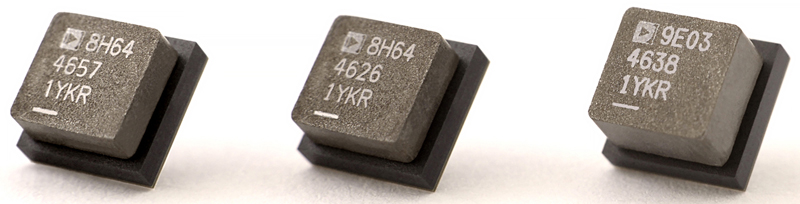
Figure 1. LTM4657, LTM4626, and LTM4638 offer different output current ratings using the same pinout. The LTM4657 and LTM4626 use lower profile inductors to reduce the overall height
The LTM4657 is part of the family of tiny, high efficiency, identical pin-out, step-down µModule® devices. The LTM4657 is designed to operate at lower switching frequencies than the LTM4626 and LTM4638 as it provides higher efficiency within its 8A output current range. The LTM4657 bridges the gap between the LTM4626 and LTM4638 by combining the higher efficiency of the LTM4638 with the lower profile of the LTM4626.
The LTM4657 provides up to 8A continuous output current from input voltages between 3.1V and 20V. The LTM4657 uses the same component-on-package (CoP) design as the LTM4626 and LTM4638, which helps keep the device cool while maintaining a tiny 6.25 mm × 6.25 mm footprint. The pin compatibility and identical footprint of the LTM4626, LTM4638, and LTM4657 provide opportunities for customers to leverage previous layout designs and simply choose the µModule device that fits their need.
The LTM4626, LTM4638, and LTM4657 lead the market in power density for step-down solutions. The attractive size and high efficiency of the µModule devices create flexible, turn-key solutions for a wide range of applications. The internal inductor, FETs, top feedback resistor, frequency resistor, and optional internal compensation allow for step-down solutions with minimal external components. Although capable of minimalist designs, the µModule technology offers a slew of optional features using a 49-lead BGA package to maximize the number of pins.
Click image to enlarge
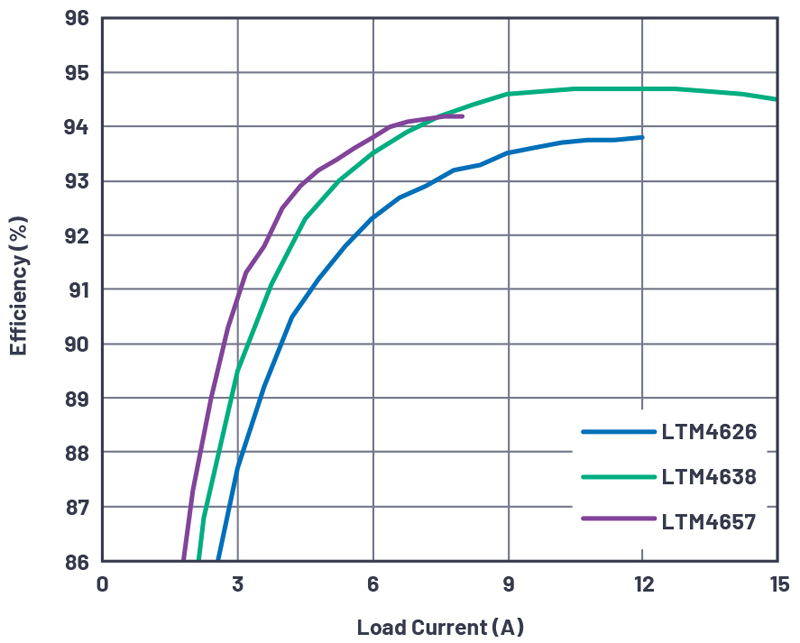
Figure 2. Efficiency comparison of LTM4626, LTM4638, and LTM4657 at VIN=12V, VOUT=5V using the recommended switching frequencies
Beyond some of the more common features from the PGOOD, RUN, and TRACK/SS pins, the LTM4657 includes CLKIN, CLKOUT, and PHMODE to improve parallel and EMI operation. A differential remote sense amplifier is also included for output voltage accuracy. Temperature sensing pins are also included to supplement the internal thermal protection.

Click image to enlarge
Figure 3. A tiny LTM4657 solution with input and output capacitors on a DC2989A demonstration board. A few ceramic capacitors and a resistor are placed on the back of the board
Applications
The LTM4657 uses a higher value inductor than the LTM4626 and LTM4638. This allows the device to operate at lower frequencies to decrease switching loss. The LTM4657 is the preferred solution for high switching losses and low conduction losses, such as in applications where the load current is low and/or the input voltage is high.
Click image to enlarge
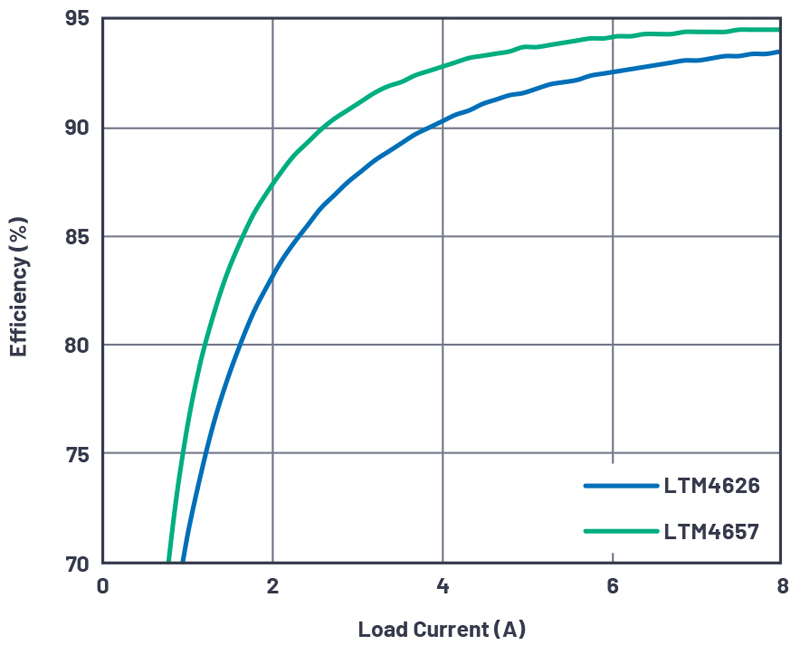
Figure 4. Efficiency comparison of the LTM4626 and LTM4657 at 1.25MHz with the same configuration on a DC2989A demonstration board
Figure 4 compares the LTM4626 and LTM4657 at the same switching frequency and with the same configuration on a DC2989A demonstration board. The 12VIN, 5VOUT configuration highlights the superior switching loss of the LTM4657. The LTM4657’s higher value inductor also reduces the output voltage ripple. However, the LTM4626 can supply more load current than the LTM4657.
Conclusion
The LTM46xx family supplies a range of load currents using the same footprint and pinout. With the addition of the LTM4657, customers can optimize performance for lower load current designs. Along with the LTM4626 and LTM4638, this tiny footprint family continues to grow in flexibility and performance.
The LTM4657 offers increased efficiency for customers who want low switching loss and high efficiency solutions in low to medium load applications (up to 8A). Offering a range of features in a tiny package, the LTM4657 can bring high efficiency to limited space designs without compromise.