Eliminating Battery Tradeoffs Through a Metal-Free Polymer Cathode
Figure 1: Pouch cells built to evaluate performance, cycle life, and safety characteristics
Global battery demand is experiencing exponential growth, driven by electric vehicles, data center backup power, and grid-scale energy storage. Currently, the battery market surpasses $150 billion.
Battery manufacturers face mounting pressure to improve performance while simultaneously reducing costs, enhancing safety, localizing supply chains, and lowering environmental impacts. In many cases, progress in one area comes at the expense of another. Higher energy density can increase safety concerns. Lower-cost materials can reduce performance. Domestic sourcing can sometimes carry cost premiums. These tradeoffs have long been viewed as unavoidable realities of battery development.
But what if many of these tradeoffs originate from a single component?
The cathode remains one of the most influential and underappreciated elements of battery design. It is also one of the industry's greatest opportunities for meaningful innovation.
Why the Cathode Matters
Within a battery, the cathode largely determines the cell's voltage, capacity, energy density, cycle life, and safety characteristics.
Its influence extends beyond performance, as the cathode typically represents about 50% of the cell material cost. In many ways, the cathode dictates not only how a battery performs but also how economically it can be manufactured and scaled.
Despite its importance, cathode innovation has progressed slowly compared to other areas of battery technology. Significant investment has gone toward improving anodes, electrolytes, separators, battery management systems, and cell architectures. Cathode development, meanwhile, has largely focused on refining existing metal-based chemistries such as nickel manganese cobalt (NMC), nickel cobalt aluminum (NCA), and lithium iron phosphate (LFP).
While these chemistries have delivered improvements over time, they continue to carry structural challenges that become more significant as battery deployment scales.
Many depend on complex international supply chains and critical mineral extraction. Most remain vulnerable to geopolitical disruptions and commodity price volatility. And importantly, contribute to thermal runaway risk, one of the most persistent safety concerns facing the battery industry today.
As demand accelerates, the question is whether entirely new cathode architectures can eliminate some of these longstanding constraints altogether.
Solving Thermal Runaway at Its Source
Thermal runaway remains one of the industry's most significant challenges. The consequences extend well beyond equipment damage. Thermal events can threaten human safety, disrupt critical operations, increase insurance costs, trigger regulatory scrutiny, and delay project approvals.
While battery manufacturers have developed sophisticated monitoring systems, cooling technologies, and containment measures to reduce risk, most of these solutions address thermal runaway after it begins rather than preventing it at the source.
The root cause often lies within the cathode itself. Conventional metal-based cathodes release oxygen as they degrade under elevated temperatures. That oxygen acts as fuel, accelerating combustion and making thermal events increasingly difficult to control.
A fundamentally different approach is possible with polymer cathodes. Instead of evolving oxygen, polymer cathodes release carbon dioxide during decomposition. Without oxygen feeding the reaction, the thermal runaway process is effectively interrupted before it can sustain itself. This shifts the conversation from managing thermal runaway to preventing it through chemistry design.
For applications where safety is paramount, addressing thermal runaway at the cathode level has the potential to dramatically improve operational safety.
Reducing Dependence on Critical Minerals
Beyond safety, supply chain resilience has become a strategic priority for governments and manufacturers alike.
Over the past several years, the battery industry has experienced repeated disruptions. Much of this vulnerability stems from the concentration of battery supply chains in a relatively small number of regions.
China currently dominates large portions of the global battery ecosystem, particularly in cathode processing and manufacturing. Even as battery production expands in North America and Europe, many manufacturers remain dependent on imported cathode materials and critical mineral supply chains.
This dependency introduces risk at every stage of production. Nickel, cobalt, manganese, and other metals are subject to price volatility, supply shortages, geopolitical uncertainty, and increasingly stringent sustainability requirements. LFP is also subject to similar uncertainty, even if the underlying materials are more broadly available, the highest quality cathode active LFP material is entirely dominated by China, and they have threatened export restrictions on it as geopolitical pressure too. As demand continues to rise, competition for these materials is expected to intensify.
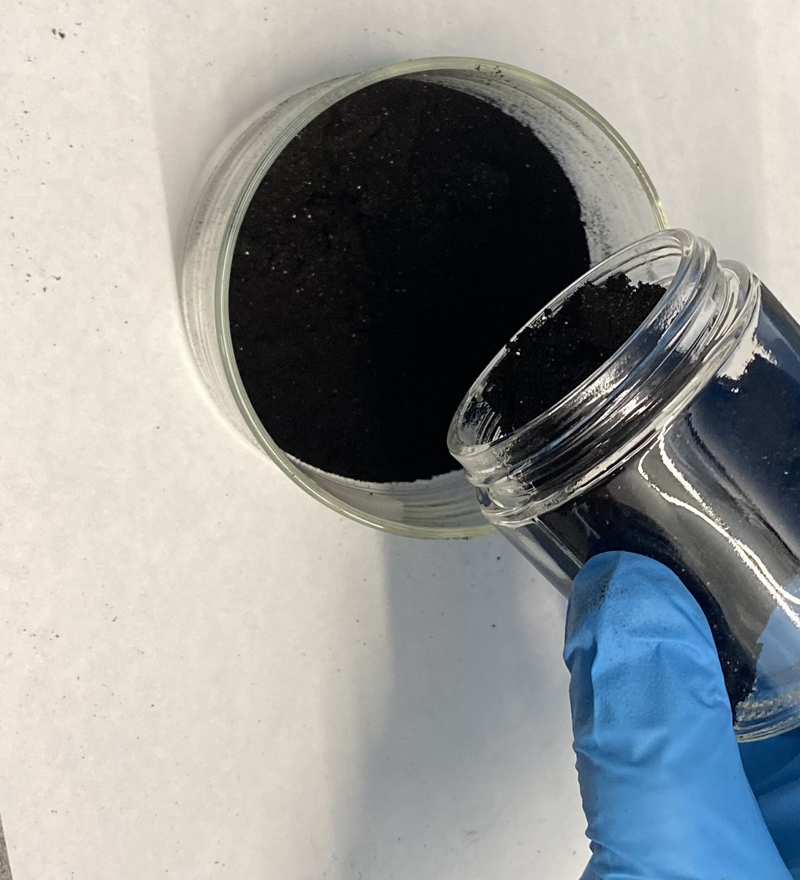
The industry's long-term success requires alternatives that reduce or eliminate these dependencies. LiNova's proprietary polymer cathode was designed with this challenge in mind. Rather than relying on mined and refined metals, the cathode is produced using mass-manufactured chemical precursors that can be sourced domestically and manufactured on existing battery production infrastructure.
Click image to enlarge
The chemistry contains no nickel, cobalt, or other critical minerals. This approach delivers several advantages simultaneously. It simplifies supply chains, reduces exposure, enables domestic sourcing, and decreases reliance on imported materials. Importantly, it also avoids many of the environmental and social challenges associated with mining and refining critical minerals.
For policymakers seeking energy independence and manufacturers seeking supply chain certainty, this represents a fundamentally different model for battery production.
Challenging Conventional Assumptions About Cost
A common assumption within the industry is that domestic manufacturing inevitably results in higher costs. Historically, that perception has often been true. Localized production frequently competes against highly optimized international supply chains that have benefited from decades of investment and scale.
However, cathode chemistry can fundamentally alter the economics. By eliminating expensive metal inputs, polymer cathodes significantly reduce material costs. LiNova's technology lowers cathode costs by as much as 90% while reducing overall cell costs by approximately 35%.
These economics remain competitive even during early manufacturing stages, providing a pathway toward cost parity, or potentially cost advantages, relative to conventional domestic LFP production. This distinction matters because current domestic battery manufacturing faces substantial structural challenges.
Click image to enlarge
The United States currently meets only a small share of total battery material demand domestically and often incurs significant cost premiums relative to imported alternatives. Europe faces similar constraints, particularly in commercial-scale cathode manufacturing.
As governments invest billions of dollars to localize battery supply chains, technologies that simultaneously improve economics and domestic manufacturability will become increasingly valuable.
Unlocking New Performance Possibilities
The advantages of alternative cathode chemistries extend beyond safety and cost. Many emerging applications require batteries that can deliver extremely high-power output without sacrificing reliability, footprint, or operational lifespan.
Traditional chemistries often force difficult tradeoffs. High-power applications may require oversized battery systems to achieve required discharge rates. Larger systems increase costs, consume valuable space, and add operational complexity.
Polymer cathodes offer a different pathway. Their high-rate discharge capability allows systems to deliver more power from a smaller installed footprint. This can reduce overall capacity requirements while maintaining performance standards. The chemistry also exhibits strong cycling stability and calendar life characteristics, supporting long-term deployment in demanding operating environments.
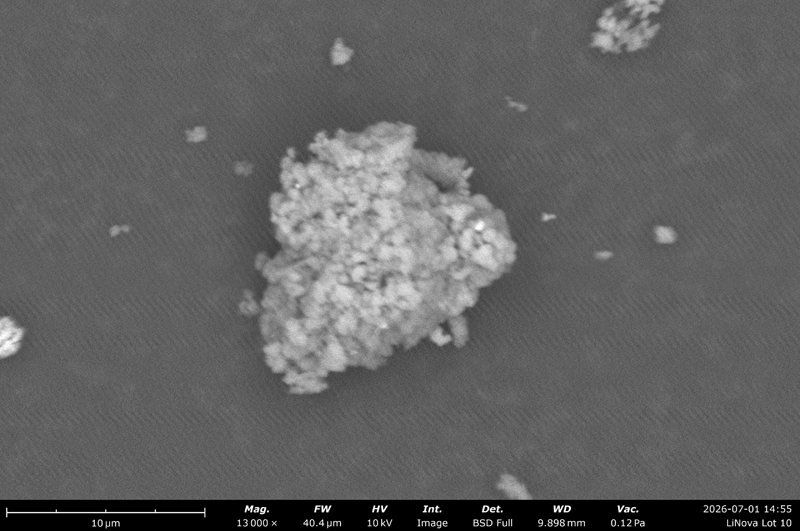
Click image to enlarge
Equally important, production of polymer cathodes requires significantly fewer carbon emissions than conventional metal-based cathode manufacturing. Early assessments indicate reductions of up to 90% in CO₂ emissions associated with cathode production processes.
Taken together, these attributes create a battery platform capable of addressing several industry priorities simultaneously.
The Electric Vehicles Opportunity
Few sectors illustrate the need for next-generation batteries more clearly than electric vehicles.
Global EV adoption continues to accelerate as automakers invest hundreds of billions of dollars in electrification and governments implement policies aimed at reducing transportation emissions. As the market matures, however, battery requirements are evolving beyond simply maximizing range.
Consumers increasingly expect vehicles that charge faster, cost less, last longer, and deliver uncompromising safety. At the same time, automakers face growing pressure to improve manufacturing economics amid an increasingly competitive market.
Battery packs remain the single most expensive component of an EV, while concerns around thermal events, material availability, and geopolitical supply chain risks continue to influence product development decisions. Every reduction in battery cost can improve vehicle affordability, while every improvement in safety can reduce engineering complexity and increase consumer confidence.
Current battery chemistries address some of these challenges, but few solve them all simultaneously. This creates an opportunity for cathode innovations capable of delivering enhanced safety, lower costs, domestic sourcing, high power performance, and competitive energy density within a single battery platform. As EV adoption scales globally, technologies that eliminate traditional battery tradeoffs could play a critical role in enabling the next generation of electric transportation.
The AI Demand
As the world's demand for more compute to power AI continues to grow, so does the need for ever more powerful and safe battery technologies to back them up. If you can safely deliver more power from a smaller footprint, you save space in the data center, allowing more GPUs to be installed.
The days of relying on 100-year-old chemistries to back up our critical data infrastructure are gone. Moving in to replace those legacy chemistries, such as Pb Acid, have been newer, higher energy technologies, such as NMC and NCA. These chemistries, however, introduce an entirely new and potentially more costly problem than the inefficient use of space that PbA had; this is thermal runaway.
The technologies that can deliver the power in a safe and efficient manner will win the AI datacenter business. Currently, there are only a handful of technologies that can eliminate the risk of thermal runaway, and even fewer that can deliver the power to do the job.
Looking Ahead
The battery industry is approaching an inflection point. Today, investors, manufacturers, utilities, automakers, and infrastructure operators are increasingly looking for technologies that address challenges at their root rather than simply managing their consequences.
For decades, the industry has worked within a familiar set of constraints. Improving safety often meant sacrificing performance. Domestic sourcing could come with higher costs. Higher power output frequently required larger, more complex systems.
As battery demand continues to grow, those assumptions are being tested. New materials, new architectures, and new approaches are expanding what battery designers can realistically achieve.
The technologies that shape the next generation of energy storage will be judged on their ability to solve multiple challenges at once. The cathode, long viewed as a mature component of battery design, may ultimately prove to be one of the industry's most important opportunities for innovation.