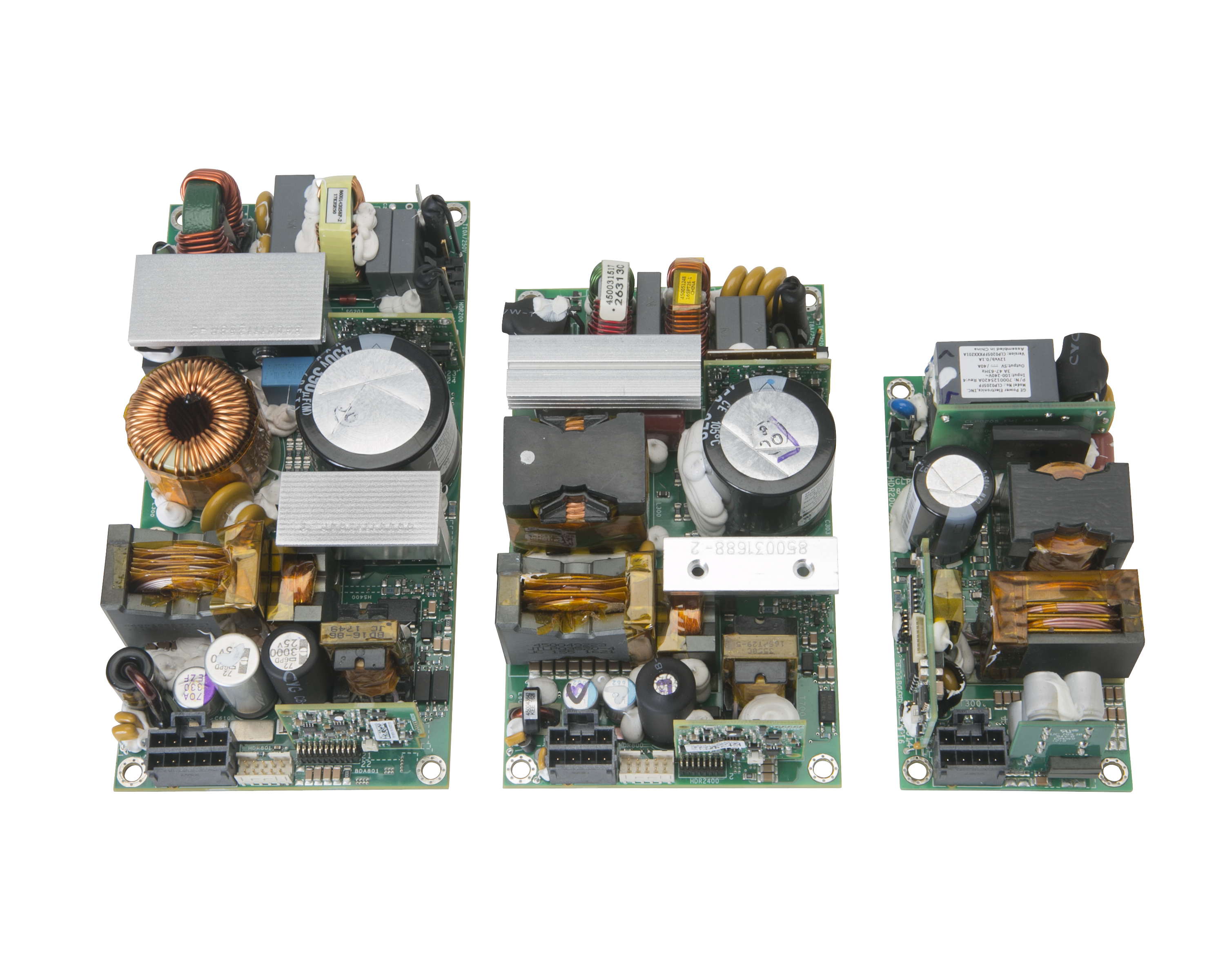
Several New Additions to CLP Line Help Support Power Ranges of 150 to 500 Watts and Output Voltages of 5, 12, 24, 28, 48, and 54 Volts DC
With a focus on providing the power levels and options designers need, ABB is expanding its CLP open-frame power supply product family to support a higher range of output voltages. The new additions to the product line increase its output voltage options to up to 54 volts DC and its output power options to up to 550 watts. The new CLP power supplies achieve this increase in output power while also remaining cognizant of the space limitations many designers face as they try to pack as much functionality as possibly onto their boards.
New Additions to the CLP Product Family Include:
• CLP0212DC (36-75-volt DC input, 12-volt DC output, 200-watt output power);
• CLP0248 PoE+ (90-265-volt AC input, 54-volt DC output, 200-watt output power);
• CLP0412 (90-265-volt AC input, 12-volt DC output, 450-watt output power);
• CLP0424 (90-265-volt AC input, 24- or 28-volt DC outputs, 450-watt output power);
• CLP0448 PoE+ (90-265-volt AC input, 48- or 54-volt DC outputs, 450-watt output power);
• CLP0512 (90-265-volt AC input, 12-volt DC output, 550-watt output power);
• And the multiple-output, open-frame FLP line of power supplies.
Ideal Applications for CLP Power Supplies
The simple, but powerful, design architecture of the CLP power supplies makes optimal use of components, their placement, and electrical routing techniques to provide more power in less space – one of the greatest challenges facing board designers and electrical engineers. This combination of power performance and minimal footprint make the CLP product family ideal for applications including (but not limited to) industrial equipment, telecommunications equipment, robotics, 3-D printers, and network routers and switches.
“When it comes to designing electrical equipment and devices, our customers are often faced with the challenge of adding functionality while maintaining similar or smaller footprints of their end products. This trend is especially prevalent in today’s power-hungry industries – such as 5G, data centers and robotics,” said Raj Radjassamy, senior product manager, ABB. “That’s why we’re focused on designing for power optimization with products like our CLP power supplies. We’re packing more power conversation capability into smaller spaces, improving power density, helping to ensure our 2/2 customers’ applications receive the precise power they require, and freeing up valuable space for additional features or components to be built into their products.”
Additional Features of the CLP Product Family
The CLP open-frame power supply is engineered with a fanless design, utilizing conduction and convection cooling instead of moving parts to help enable higher reliability than fan-cooled components. The product family provides high power densities of up to 22.14 watts-per-cubic-inch (W/in3), features operating efficiencies of greater than 90 percent, and facilitates AC input voltages of 90-265 volts and DC input voltages of 36-75 volts.
To learn more about the CLP power supply family and to find the solution that is best for your unique application, visit https://electrification.us.abb.com/products/embedded-power/clp.