ABSOPULSE's railway converters offer 3.5Vn surge withstand capacity and IP66 protection
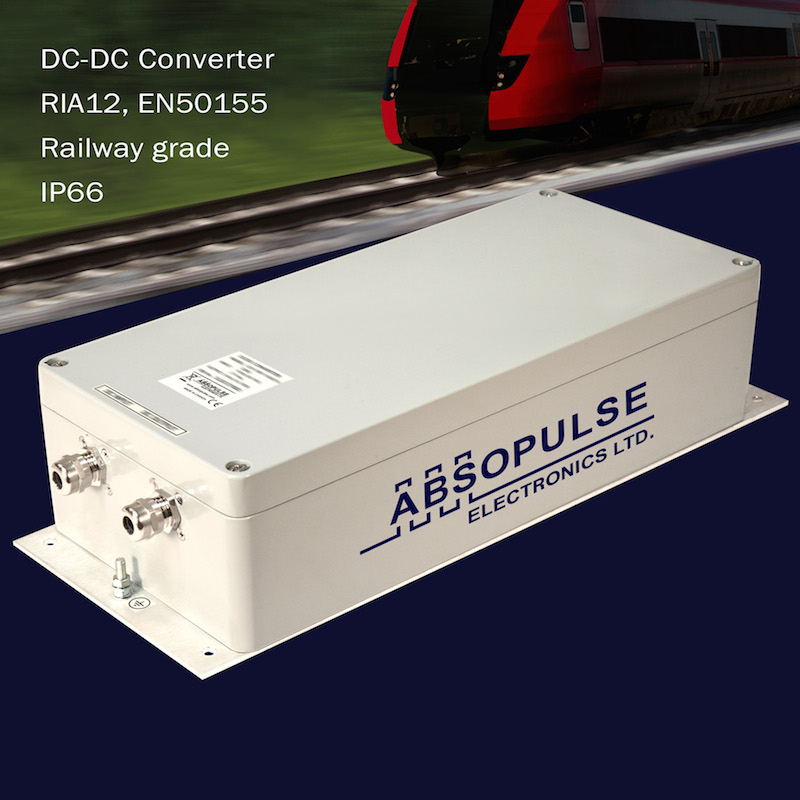
The BAR 65-D3-IP66 series is a recent addition to ABSOPULSE Electronics′ line of rugged, IP66, railway-grade dc-dc converters. The units have an input voltage surge withstand capability of a minimum of 3.5Vn for 20msec, comfortably meeting RIA12 requirements. RIA12 is the general specification for the protection of traction and rolling stock equipment from transients and surges in DC control systems. The design also meets EN50155. Heavy filtering on the input and output ensures that the units comply with EN50121-3-2.
Nominal input voltages and EN50155 input ranges include 24Vdc (14.4-34V range), 36Vdc (22-51V), 48Vdc (29-67V), 72Vdc (43-101V), 96Vdc (58-135V) or 110Vdc (66-154V). Single outputs include 12Vdc, 24Vdc, 48Vdc or 110Vdc. Custom input and output voltages are available on request. Regulation is better than 1% from no load to full load.
The converters are enclosed in IP66-rated, waterproof, dust-proof, oil-proof, fire- and explosion-proof die cast aluminum packages. The input and output are via sealed cable glands, circular connectors or custom connections. The internal boards are ruggedized and conformal coated for immunity to high levels of shock and vibration. The units are cooled by convection and conduction, and operate within a -25°C to +55°C cold plate temperature range for full specification.
Electronic protection includes 3kVdc input to output isolation, inrush current limiting, a limiter circuit for RIA 12 surges and reverse polarity protection by internal crossbar diode at the input. They also have over-voltage, over-current, and thermal protection with auto-resetting.


.jpeg)


