AEC-Q200-qualified thin-film resistor networks offer ratio tolerances to ±0.05%
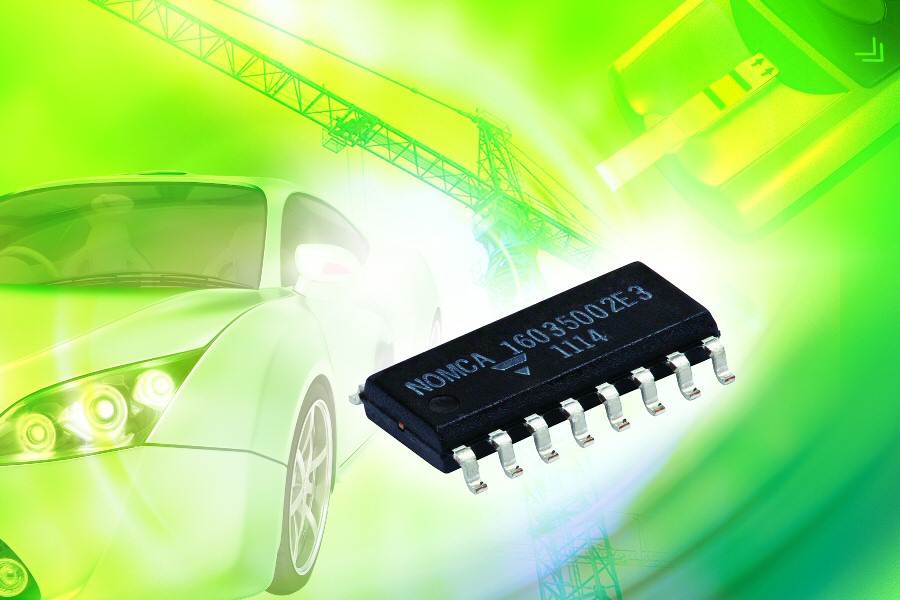
Vishay Intertechnology's NOMCA series AEC-Q200-qualified, dual-in-line, thin-film resistor networks feature a low absolute TCR of ±25 ppm/°C; TCR tracking of 5 ppm/°C. The resistor networks offer tight ratio tolerances to ±0.05% and excellent long-term ratio stability of 0.015% after 1,000 hours at +125 °C. For improved ESD and moisture protection, Vishay constructs the resistor networks with self-passivating tantalum-nitride film on a high-purity alumina-ceramic substrate. NOMCA thin-film resistor networks are available in 14- or 16-pin 50-mil-pitch SOIC packages corresponding respectively to networks providing seven or eight equal-value resistors. Vishay offers NOMCA-series networks in a wide resistance range of 1 k? to 50 k?. Typical power ratings are 100 mW per resistor; 400 mW and 500 mW per package for 14-pin and 16-pin devices, respectively. The integrated resistor networks allow for higher precision over discrete SMT chip resistors, making NOMCA-series devices attractive for precision voltage dividers, op amps, and battery management applications. Typical end products will include automotive, telecommunications, industrial, process control, and medical equipment. Per AEC-Q200, the NOMCA-series networks are ESD rated to 1 kV for R < 10 k?; 2 kV for R > 10 k?. The devices operate over a wide temperature range of ?55 °C to +125 °C. NOMCA resistor networks are compliant with RoHS Directive 2011/65/EU and halogen- free per IEC 61249-2-21. Samples of the NOMCA resistor networks are available now. Production quantities will be available in May, with lead times of 8 to 10 weeks for standard orders. Typical unit pricing is in the range of $1.50 to $2.00. Full specifications are available in the datasheet.