Aluminum electrolytic capacitors offer higher voltages for industrial apps
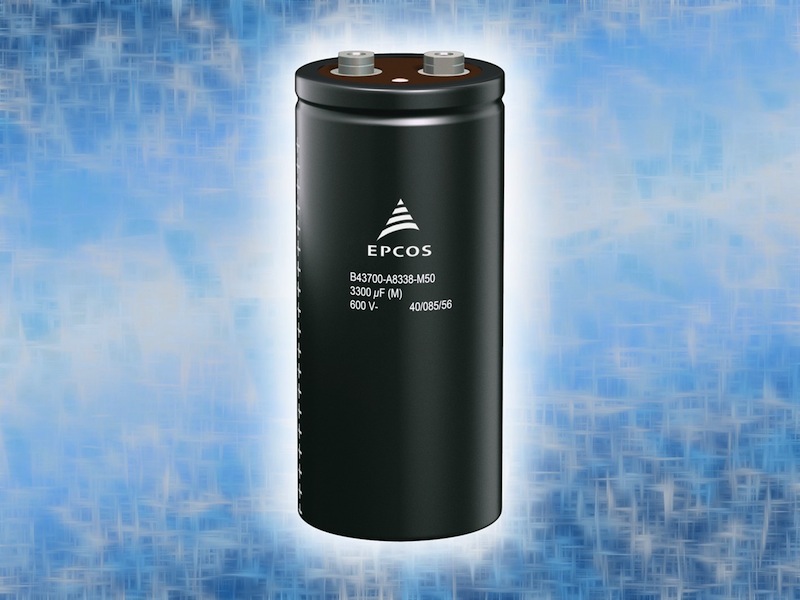
TDK Corporation has extended the range of EPCOS aluminum electrolytic capacitors with higher rated voltages. The screw-terminal B43700* and B43720* series' previous rated voltage of 550 V DC has been raised to 600 V DC. These capacitors cover a capacitance range from 1200 μF to 6800 μF and are designed for temperatures up to 85 °C. They have dimensions of only 64 x 106 mm to 91 x 221 mm (d x l), depending on the type. The new B43541* snap-in series also has a rated voltage of 600 V DC (previously 550 V DC); its capacitance values range between 47 μF and 330 μF. This series is also designed for temperatures up to 85 °C. EPCOS aluminum electrolytic capacitors designed for temperatures up to 105 °C now also offer a higher rated voltage: for screw terminal types of the B43740* and B43760* series, this is now 500 V DC (previously 450 V DC). For the snap-in types of the new B43544* series, the previous voltage of 500 V DC has been raised to 550 V DC. Thanks to these significant voltage increases, developers of industrial power supplies and frequency converters for drives, inverters for photovoltaic systems, and converters for wind power plants now need fewer capacitors in series in the DC link, thus reducing costs. Visit the company at PCIM 2013 in hall 9, stand 373. TDK-EPCOS