Does the key to enabling battery passport compliance, lifecycle traceability, and high-performance system design lie with the cell?
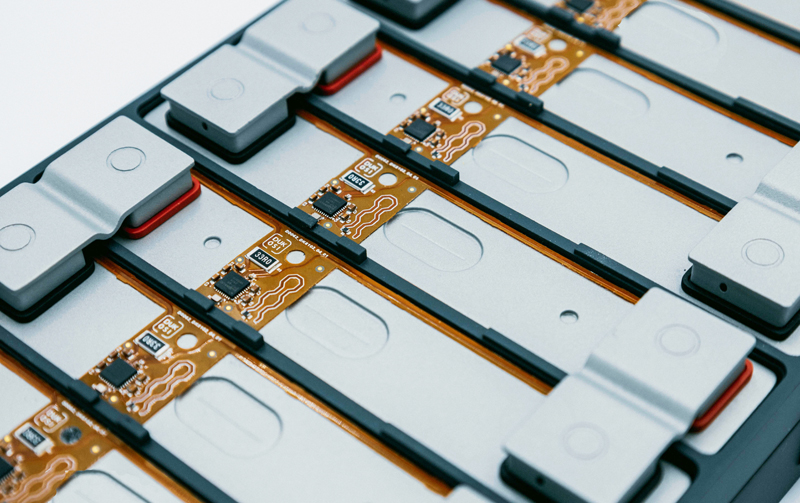
Figure 1: Dukosi’s cell-based technology helps to deliver the traceability Battery Passports demand
From February 2027, the EU Battery Regulation will mandate batteries with a capacity over 2 kWh in the EU market, whether produced in the EU or imported into the EU, include a digital record of origin, composition, performance, and lifecycle data. This is not just a regulatory change, but one that reflects rising expectations for transparency from manufacturers, policy makers, and end users about how batteries are sourced, used, reused, and recycled.
However, realizing the circular economy objectives of battery passport legislation requires more than just adding a QR code linking the battery pack to a database on the cloud. If data cannot persist through battery pack disassembly, repurposing, and recycling, the passport cannot deliver its full value. This is why traceability must start from the cell up.
By capturing secure, persistent cell-level data, battery manufacturers, integrators and OEMs can ensure the digital passport remains intact and trustworthy throughout the cells’ lifecycle, not just the battery. Two years after the EU Battery Regulation was passed, this article explores the forces driving the change and how Dukosi’s chip-on-cell architecture provides a robust foundation for passport-grade traceability, not just for compliance but to enable long-term value in a circular battery economy.
What’s Driving the Move Toward Digital Battery Passports?
The forces behind the battery passport push are diverse but converging. Regulatory mandates may be the trigger, but momentum is sustained by commercial, operational, and societal pressures, all of which underscore the need for better traceability, transparency, and lifecycle accountability.
Regulation is Leading the Charge
The EU Battery Regulation, passed in 2023, sets firm expectations for traceability and sustainability, requiring that from 2027, batteries over 2 kWh, like those in electric vehicles (xEVs) and battery energy storage systems (BESSs) must carry a digital passport. In parallel, Extended Producer Responsibility (EPR) rules are tightening across Asia. More recently, SAE J3327 Surface Vehicle EV Battery Global Traceability standard for documenting and tracking critical minerals has been adopted, and carbon footprint reporting requirements are also expanding globally. Meeting these obligations demands more than battery-level information; it calls for embedded, persistent data captured at the cell level that can survive disassembly and repurposing.
Circular Economy Pressures Are Growing
While battery reuse and repurposing hold clear potential, the market remains underdeveloped due to inadequate data, particularly at the cell level. Without confidence in provenance and State of Health, operators are reluctant to trust second-life batteries in new applications.
Click image to enlarge
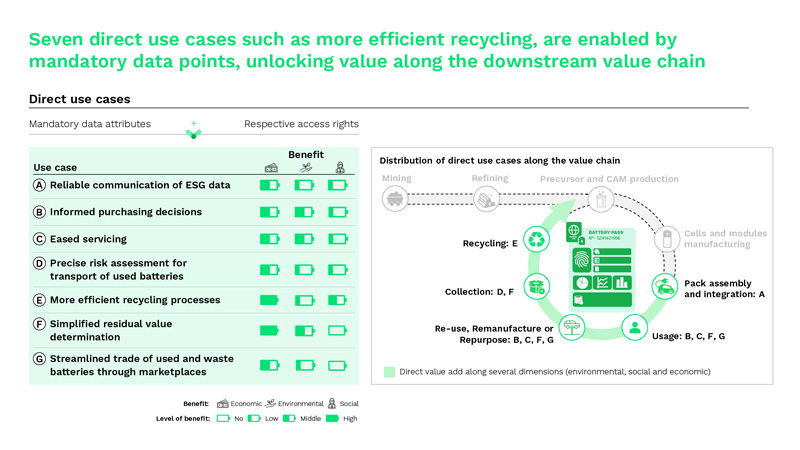
Figure 2: Battery passports can help to create a more circular economy while delivering more environmental, social and economic value
Yet, this is a fast-evolving landscape, and the European second-life EV battery market is projected to grow from USD 165.7 million in 2024 to over USD 543 million by 2030. While this underlines the market’s potential, battery passports, especially when backed by secure, lifetime cell-level data, will be vital in unlocking this opportunity at scale.
Supply Chain Risks are Adding Urgency
The EU depends almost entirely on external sources for critical materials like lithium, cobalt, and rare earth elements. Global supply remains concentrated and volatile due to factors like global demand, geopolitical uncertainty, and supply chain sovereignty. Particularly, lithium is subject to the highest price risk of any focus mineral according to the International Energy Agency (IEA). The IEA reports that global demand for lithium stood at 101 kt in 2021 but is projected to rise to 531 kt by 2030, and 1,326 kt by 2040. Only 3% of the lithium supply is currently recycled, which could potentially slow down battery innovation, drive up costs and slow the momentum of electrification.
Momentum and Challenges are Building
Implementing a battery passport is not without challenges. While the EU timeline is holding firm, some elements, including obligations to report due diligence for raw materials, have experienced delays, and global alignment remains fragmented. What’s more, cell formats, chemistries, and battery pack designs continue to diversify for an ever-growing range of electrified applications, expanding the scope of data collection, and increasing the difficulty of regulating such diverse databases.
DKCMS Enables True Battery Passport Compatibility
Systems that track and monitor at the battery pack or module-level may provide partial visibility, but without cell-level traceability, the usefulness of the digital passport, lifecycle transparency, circularity, and safety, risks being compromised.
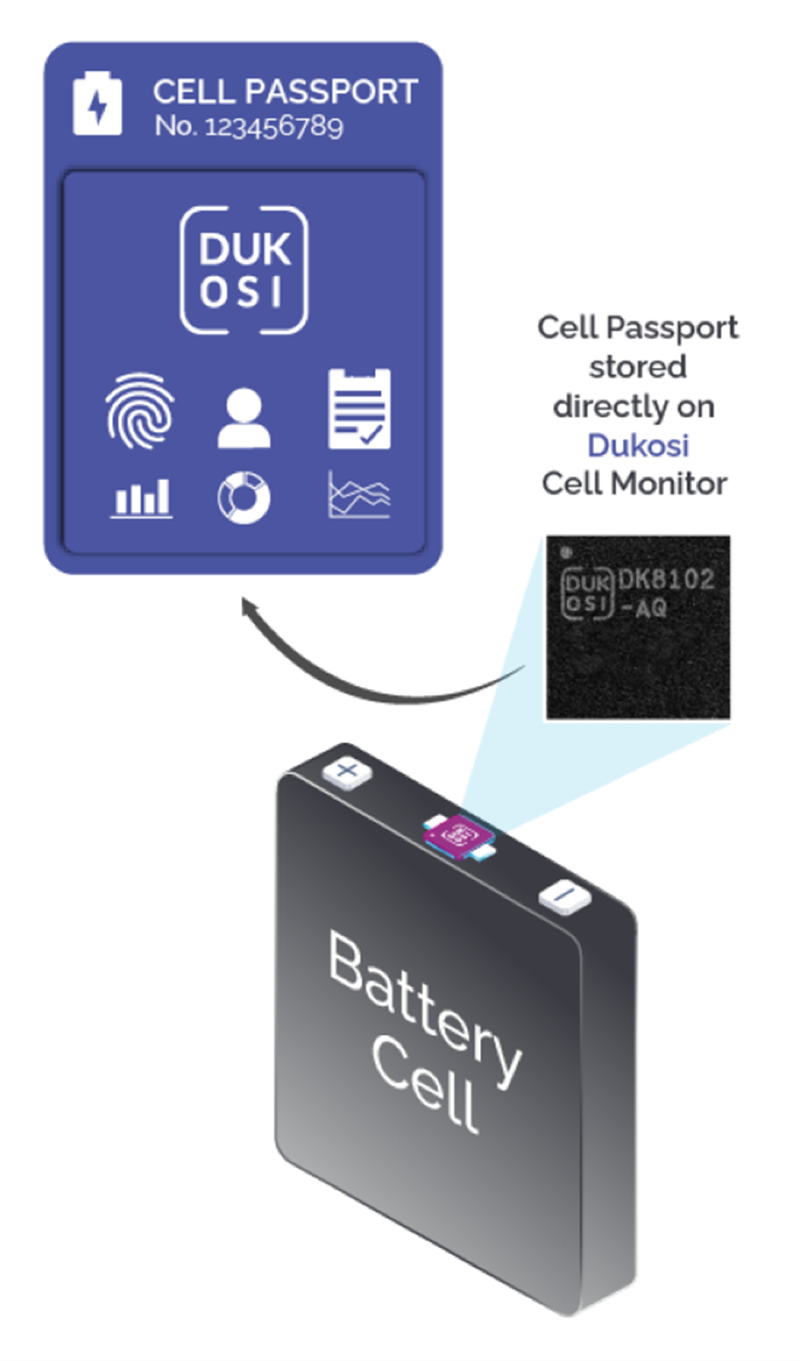
When every cell is fitted with a DK8102 Cell Monitor, a compact, all-in-one chip that combines high-accuracy voltage sensing, temperature monitoring, embedded storage, secure near field communication, and signal processing, intelligence is embedded directly onto each cell.
Click image to enlarge
Figure 3: DKCMS goes beyond battery passports, creating cell passports at the edge
This Cell Monitor chip can store critical cell data such as cell origin, unique chip and cell serial numbers, manufacturing date, chemical properties, and even dynamic data like State of Health, which are accessible throughout the cell lifecycle, including after disassembly, repurposing, or recycling; all without relying on a central battery management system (BMS). Unlike methods that depend on pack serial numbers or QR codes linked to external databases, the Cell Monitor keeps essential information always physically present at the cell, ensuring the durability, independence and transparency that digital passports demand. This granularity is critical as the DIN DKE SPEC 99100 (EU Battery Passport) mandates persistent logging of over 100 lifecycle and operational parameters per cell.
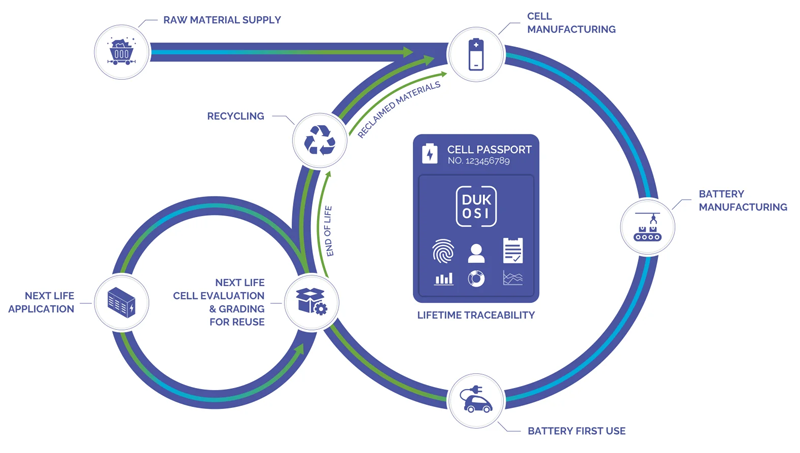
When a cell eventually reaches end of life, recyclers and material recovery facilities can directly access vital information to better identify and sort cells for recovery or disposal. This supports a more efficient, safer, high-yield recycling process, and underpins a circular battery economy.
Click image to enlarge
Figure 4: Cell passports help to deliver a more circular economy, supporting a more sustainable battery ecosystem
Wider Engineering and Operational Benefits
Beyond traceability, DKCMS fundamentally redefines battery construction. By eliminating the complex wiring harness and module sub-controllers in a typical wired BMS, it simplifies pack architecture, reduces component count by up to tenfold, improves mechanical robustness and can double system reliability. Instead of relying on traditional wiring or less predictable far field wireless methods, DKCMS uses a single, low-profile near field bus antenna to connect up to 216 DK8102 Cell Monitors (and their cells) to a DK8202 System Hub, which is typically located alongside the BMS host.
At the core of this new battery architecture is the proprietary C-SynQ communication protocol, which has been designed by Dukosi expressly for high performance batteries and demanding environments. It enables deterministic, synchronized data capture for real-time, accurate voltage and temperature monitoring at every cell, providing up to three independent temperature measurements per monitor.
With this high-fidelity cell-level insight, DKCMS enables more accurate cell monitoring, allowing OEMs to confidently extract more usable energy per cell while ensuring overall battery performance and lifespan.
DKCMS supports traditional battery designs with modules, while also facilitating more efficient pack assembly in cell-to-pack and cell-to-chassis designs, which are increasingly important for next-generation passenger and industrial EVs. These increase energy density, without module layout dependencies, and the burdens typical of conventional battery designs.
Consumer and Resale Markets Are Also Driving Adoption
For OEMs tasked with digital passport compliance, DKCMS delivers a smarter architecture that addresses requirements beyond just regulation. Within the automotive market, as the number of secondhand xEVs grows, there is an equally increasing pressure for independent, verifiable health data that builds buyer confidence and helps preserve residual value. For OEMs, that demand is becoming a commercial driver for digital battery passports in its own right.
In 2023, a YouGov survey found that over half of UK adults (54%) would be unlikely to consider buying a used EV. Of that group, 69% cited battery health and range anxiety as their top concerns. Trusted, verifiable battery health is beginning to inform resale decisions but often lack the transparency or depth of insight needed.
Lifetime cell-level data changes that. Providing accurate insight into every cell’s health, degradation profile, and operational history supports the development of trusted, independent battery passports. These can build confidence in used EVs, support more accurate pricing, and reduce risk across resale and second-life markets.
The immediate traceability is one of the many reasons why Kia, a leading automotive OEM, has implemented Dukosi’s technology in a test vehicle for a Europe-wide battery cell passport trial. Its goal is to evaluate how cell-level traceability can support battery passport readiness, alongside exploring a smarter battery architecture that can simplify integration, increase system performance, and support long-term platform competitiveness.