Connectors Deliver 56G PAM-4 with Roadmap to 112G PAM-4
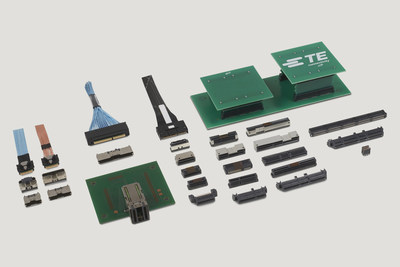
HARRISBURG, Pa. -- TE Connectivity (TE) announced its new Sliver card edge connectors have been adopted as the standard connector design into the SNIA (Storage Networking Industry Association) Small Form Factor Technology Work Group's SFF-TA-1002 specification and are the highest-performing card edge connectors in the standard. TE's industry-leading SFF-TA-1002 compliant connectors are protocol-agnostic, multi-lane connectors that are useful for designers who want to support the high speeds and density of next-generation silicon. The power connectors within the new Sliver card edge portfolio enable high power to riser cards and hardware accelerators. They minimize the need for cables to power riser cards, increasing airflow through the enclosure and enabling ease of design.
The SFF-TA-1002 pinout supports EDSFF, PCIe, OCP NIC and other standards. TE's SFF-TA-1002 compliant connector features consolidate fragmented technology pinouts and speeds, enabling ease of design-in as well as multi-sourcing. Sliver connectors for SFF-TA-1002 support high speeds through PCIe Gen 5, with a roadmap to 112G. The connectors' dense, 0.6mm pitch also supports next-generation silicon PCIe lane counts, whereas current products in the market begin hit their limits at these lane counts.
"TE's Sliver card edge connectors for SFF-TA-1002 deliver the highest performance in the industry by enabling 28G NRZ / 56G PAM-4 with a roadmap to 56G NRZ / 112G PAM-4," said Lucas Benson, product manager at TE Connectivity. "We are proud that our new card edge connectors have been selected as the basis for the standard for SFF-TA-1002."
Learn more at www.te.com.