Enhancements in pressure sensing can not only result in significant energy savings and reduced operational costs but also support environmental initiatives
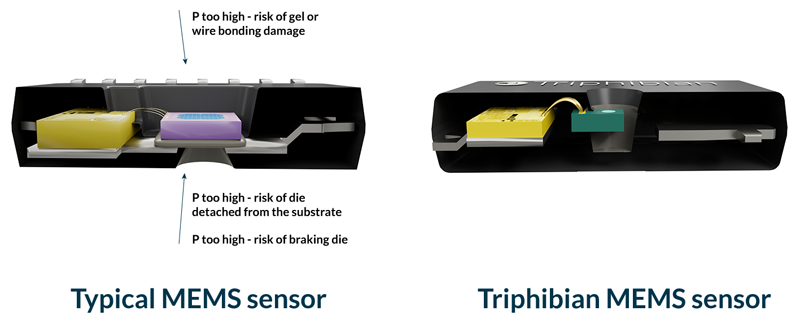
Figure 1: Common MEMS sensor failures mechanisms
The water metering and HVAC markets are in the midst of a significant evolution, fueled by a worldwide focus on environmental sustainability and operational efficiency. This transformation is characterized by the arrival of advanced technologies and the enforcement of stricter regulatory standards, which results in new engineering challenges and opportunities.
Water Meters
In the water metering sector, technological advancements have been spurred by the need to manage scarce water resources more effectively. Rising urbanization and climate change have further accentuated the importance of precise water measurement and leak detection, prompting governments and utilities to invest in modern, digital metering solutions. According to Frost & Sullivan, the European smart water metering solutions market is poised for robust growth, with a projected CAGR of 7.4% between 2023 and 2030, reaching $2.26 billion in revenue by the end of the decade. The growth underlines the broader shift toward smart water metering technologies that offer real-time data and enhanced resource management.
HVAC Developments
Parallel to developments in water metering, the HVAC systems market is witnessing significant growth, particularly in the realm of heat pump technology, which are seen as a replacement for gas and oil boilers. The International Energy Agency (IEA) estimates that building heating contributes significantly to global CO2 emissions—4 gigatons annually, or 10% of the total—underscoring the critical role of heat pumps and other HVAC technologies.
Increased Market Intelligence
Both markets are characterized by a move towards digitization and smart technology integration, where the convergence of Internet of Things (IoT) capabilities with traditional systems is driving innovation. Global regulatory frameworks that tighten around energy and water usage are further compelling industries to adopt solutions that deliver both precision and reliability. The European Drinking Water Directive, in force since 2021, is just one of many global initiatives designed to increase monitoring and transparency in the sector with the aim of cutting water leakage. In HVAC designs, new regulation focuses on refrigeration systems aiming to promote sustainability both through the control of fluorinated greenhouse gases (F-gases) and by setting new targets for system energy efficiency.
Sensor innovations like Melexis’s Triphibian, are well suited to meet the needs of a modern, interconnected world, supporting the development of intelligent and efficient water meters and HVAC systems.
Triphibian Technology
Born out of the need to overcome the inherent limitations of traditional MEMS pressure sensors, Triphibian represents a significant leap forward. The benefits of the technology extend well beyond automotive applications. One of the key requirements in the automotive sector is longevity; vehicles are built for long lifecycles and rely on components that maintain consistent performance with minimal maintenance for decades. This emphasis on durability and long-term stability is equally critical in HVAC and water metering systems, where equipment is expected to operate efficiently for decades.
Sensor Breakdown: Innovations and Technology
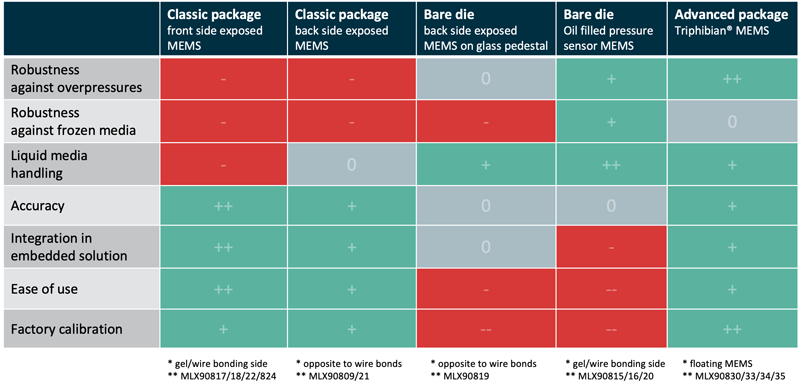
Due to their construction, conventional MEMS pressure sensors are vulnerable to pressures exceeding 20 bar, which causes a failure of the internal gel or a breakage in the internal wire, resulting in a complete sensor failure. Moreover, in MEMS devices, where the reverse side of a relative pressure sensor is used, it can risk die separation from the package.
Furthermore, MEMS sensors have traditionally been restricted to gas pressure sensing, with prolonged liquid contact with the gel surface able to induce media penetration, causing the sensor output to drift. While non-MEMS pressure sensors demonstrate resilience to most liquid media (excluding frozen states), the miniaturization of alternative pressure sensing technologies remains a considerable obstacle.
Click image to enlarge
Figure 2: A comparison of pressure sensing technologies from Melexis, highlighting the performance of Triphibian
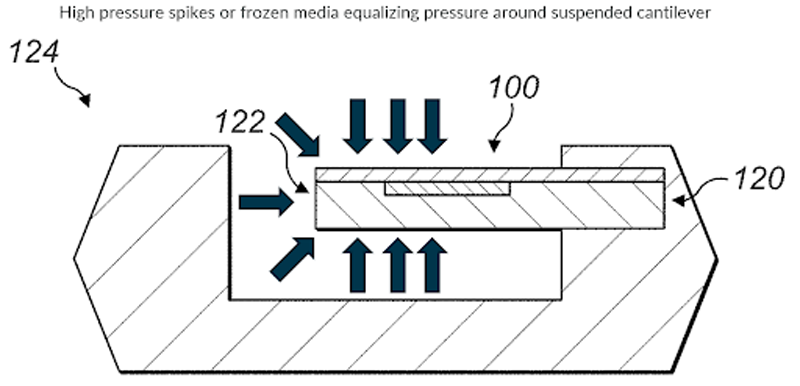
Triphibian technology introduces a refined approach to MEMS pressure sensing by incorporating a suspended cantilever design with an integrated membrane at its tip. This architecture allows the sensors to reliably measure pressures ranging from 2 to 70 bar in both gas and liquid media while resisting frozen media.
Click image to enlarge
Figure 3: Melexis Triphibian’s unique suspended cantilever design
Triphibian’s suspended cantilever design ensures uniform pressure distribution around the sensing element, mitigating pressure spikes and burst levels. Consequently, it exhibits inherent robustness compared to backside-exposed alternatives, which are susceptible to pressure differentials between the glass pedestal and wire bonding sides.
This design minimizes local stress and improves durability, allowing the sensor to withstand transient pressure spikes of up to 2000 bar/msec and static bursts of up to 210 bar without additional damping. Additionally, it provides the sensor with a rapid response time of 0.4 milliseconds, facilitating real-time monitoring in environments where conditions change quickly.
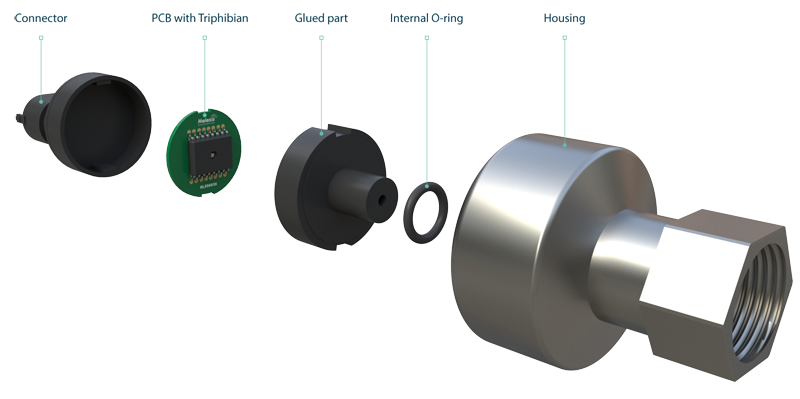
The factory calibration helps to ensure a consistent accuracy of ±0.5% over the sensor’s lifetime. This cutting-edge performance represents a significant advancement in pressure sensor technology, offering unprecedented accuracy over the sensor's lifetime, helping to elevate performance in a variety of control systems that require stringent tolerances throughout their entire operational lifespan. Furthermore, the factory calibration helps to streamline system assembly by eliminating the need for external calibration.
System assembly is further enhanced by the physical design of the Triphibian sensors. Housed in a compact SOIC16 package, the sensor integrates an analog front-end, a 16-bit digital signal processor (DSP), voltage regulators, and output drivers into one system-in-a-package solution. This feature set reduces the overall sensor footprint, simplifies the PCB layout, and removes the need for extensive post-assembly calibration, making it easier for designers to incorporate the sensor into both new and existing systems.
Click image to enlarge
Figure 4: Triphibian sensors are factory-calibrated by Melexis, eliminating the need for further calibration
Electrical and environmental robustness is achieved through built-in protection features that safeguard against overvoltage (inputs above +40 V) and reverse voltage (inputs below –40 V) and the sensor’s wide temperature range—from –40°C to 150°C—ensuring reliable performance in harsh environmental conditions.
Compared to traditional MEMS pressure sensors, Triphibian technology is more versatile, with its design supporting accurate operation with both gas and liquid media, and the pressure equalization provided by the cantilever structure extends its usability into frozen environments, providing key benefits to HVAC and water metering applications.
Applications
Triphibian sensor technology offers a blend of precision, durability, and innovative design that addresses the rigorous demands of the water metering and HVAC sectors.
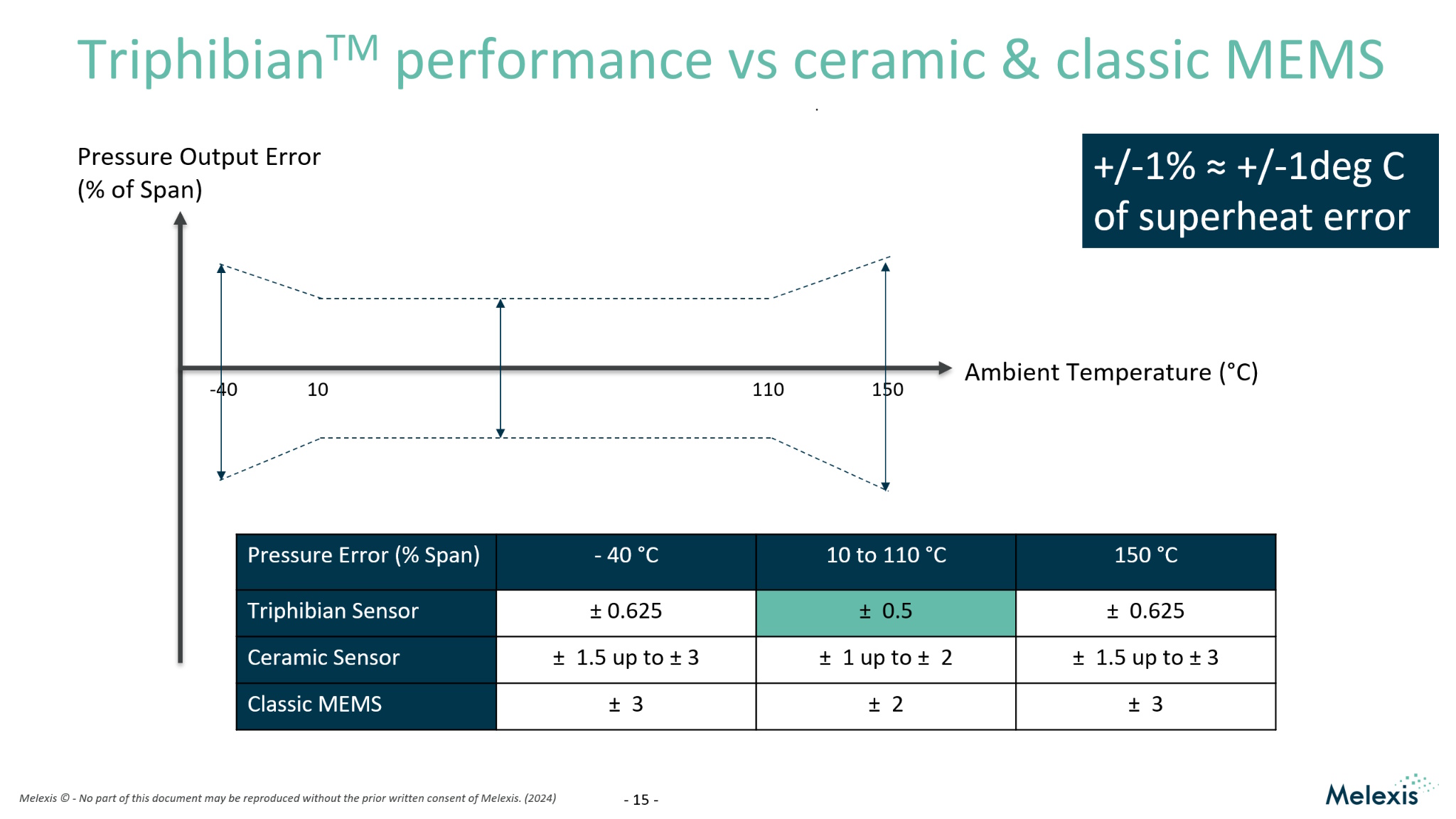
In heat pump systems, Triphibian sensors can be integrated to monitor critical parameters, such as refrigerant flow and system pressures. Compared to traditional MEMS solutions, Triphibian’s ±0.5% accuracy and 0.4ms response time, allows for precise and fast adjustments that optimize performance, ensuring that heat pumps operate with maximum efficiency even under fluctuating environmental conditions.
Click image to enlarge
Figure 5: A comparison between Triphibian and traditional MEMS devices
In practical terms, the implementation of Triphibian sensors in heat pumps can translate into tangible benefits for both end users and service providers. The enhanced efficiency possible through more precise HVAC control can result in lower energy bills and a reduced carbon footprint, while the improved reliability of the sensors means that maintenance costs are significantly decreased. Furthermore, by detecting smaller deviations in system pressure, potential issues can be addressed before they escalate into costly failures, ultimately reducing system downtime and improving the lifespan of the equipment.
When applied to water metering, Triphibian sensors can demonstrate equally impressive performance by delivering high-resolution flow measurements that ensure water measurement accuracy, driving effective resource management. Their high precision allows for the detection of even minor discrepancies in water flow, which can indicate leaks or other system inefficiencies that might otherwise go unnoticed, with the sensors’ responsiveness enabling immediate identification of irregularities, thereby facilitating prompt maintenance interventions and minimizing water loss.
The integration of real-time data from the sensor’s temperature-compensated analog, SENT, or LIN output (model dependent) within smart water meters allows central monitoring systems to provide intelligent oversight and facilitate prompt corrective actions for smart water grids. The compact, integrated design of the sensor also helps to facilitate its incorporation into both compact retrofitted and new water metering installations, broadening its applicability from domestic water supplies to large-scale municipal systems.
A further advantage of Triphibian technology lies in its exceptional durability and reliability qualities, provided by the unique cantilever design, that are essential in environments where equipment is exposed to extreme temperatures, such as freezing conditions. This reliability is especially important for water meters, which are expected to operate continuously for decades without service interventions.