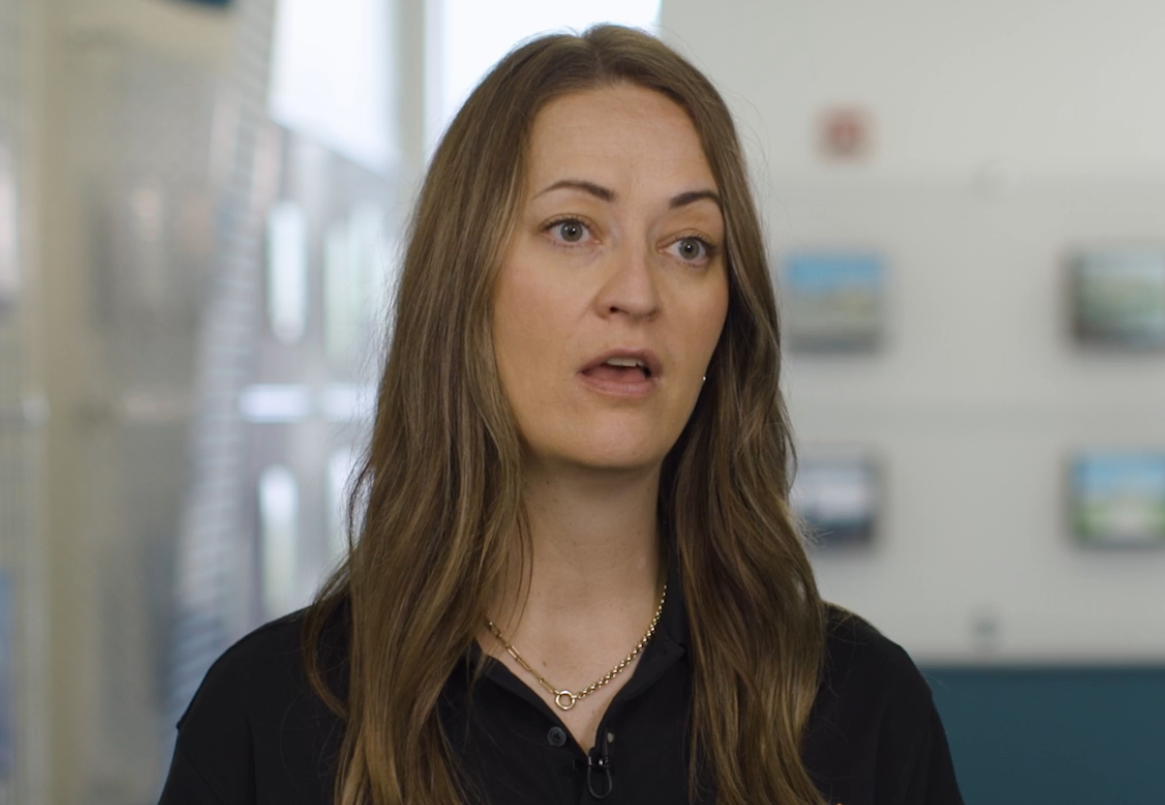
Mark Wood from TT Electronics talks to PSD about how the company is helping aerospace and defense companies electrify their designs.
Like most other forms of transport, the aerospace and defense industry is eager to take advantage of the electrification trend. There are many advantages to choosing electrical power over burning fossil fuels. These benefits include lower operating costs, higher efficiency, less maintenance and a cleaner environment. A lot of the engineering challenges developing products for aerospace applications are similar to those faced by other areas of industry, for example the need to use higher voltages to cut down on the weight and expense of thick copper conductors. However in the aircraft industry, altitude adds its own challenges, especially at higher voltages where arcing can become a problematic issue if care is not taken during design.
As well as arcing issues, traditional power converters normally weigh too much for aerospace use, and do not offer the performance or efficiency required. Bespoke solutions can take two years or more for the completion of the design and the required certification process, which slows down innovation. Off-the-shelf solutions are not really an option either, as they can be uneconomical in such a low volume industry, where each manufacturer has its own particular set of requirements. TT Electronics is attempting to bridge the gap between bespoke and off-the-shelf designs by offering manufacturers the best of both worlds; modular designs that are intended to be easy to customize.
Mark Wood, VP for Engineering at TT Electronics explains, “From an engineering perspective, it's all about the customer. To help enable future applications and architectures in aircraft and defense applications, we provide building blocks. These blocks likely won't meet all of the customer’s requirements, but we can help them meet their own specifications in a relatively short time. Generally, the changes only concern communication protocols, the required inputs and outputs, or power levels. Previously, customers have given us their requirements and the finished design can take between 18 and 24 months. Using building blocks, we can give them an early prototype, usually between 3 and 6 months. They can put that into their system, see how it performs, and then we can adjust to suit.”
One of the most recently released of those building blocks is the Altitude DC, a DC/DC converter that can take an 800V DC input from the system battery and output 28V at power levels of up to 1KW and at an efficiency of 96%. Aircraft ancillary systems are generally around the 28V level, so the DC/DC converter is capable of directly driving those systems. The Altitude DC has been specifically designed to deliver reliable power at altitudes between 15,000 and 50,000 feet.
The second of the building blocks that Wood highlights is the AX-Force, a software configurable, bidirectional power converter that can provide AC/DC and DC/AC power flow with efficiencies of over 96%. The design outputs 50kW and conforms to aerospace and military standards, including RTCA--160, MIL-STD-704, and MIL-STD-461. AX-FORCE can be configured in real time for 7 different applications (AC/DC/AC) bus/bridge converter, AC/DC converter, motor control, servo control, current source inverter, voltage source inverter and battery charger. Several devices can also be paralleled to provide power of up to 500KW.
Wood finishes by saying, “both AX-Force and Altitude DC use the latest technology, such as silicon carbide modules, to get the highest efficiency and power density. Altitude DC is predominantly focused on high voltage aerospace applications, while AX-Force is a bit more general and is designed to be used on land, sea and air. It is a more open design, as a lot of demands come from the defense industry. Both products are intended to be key enablers for new systems and architectures and assist customers with the electrification of their products helped by a team with design capabilities that include everything from concept to verification with experiance of qualification in both mechanical and electrical systems.”