Emerson Launches Modular Testing Architecture for Automotive Display and Camera Interfaces

NI-based modular system delivers a single, flexible platform for automotive display and camera SerDes testing, streamlining validation and improving test repeatability
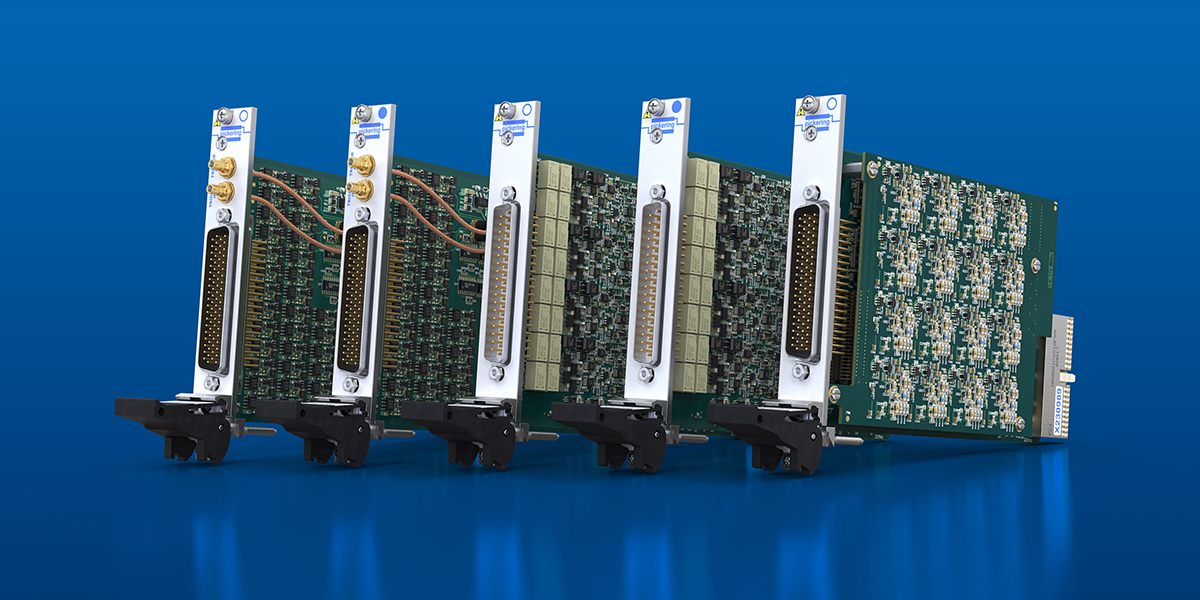
Emerson today introduced a new modular test architecture designed to address increasing complexity in software-defined vehicles. Built on NI-based technology, the automotive vision device combines a high-performance FPGA core with interchangeable serializer/deserializer (SerDes) interface devices, enabling engineers to configure test systems for evolving automotive display and camera requirements.
With this launch, Emerson continues to advance the NI PXI platform as an open, modular foundation for evolving test requirements—extending its capabilities for high-performance automotive test applications. It includes the NI PXIe-1480 FlexRIO multiprotocol vision carrier module, which hosts interchangeable interface devices for automotive display and camera testing. The first available interface devices support FPD-Link IV, a high-speed automotive video interface commonly used in advanced driver assistance systems (ADAS) and in-vehicle display applications.
As vehicle architectures shift toward centralized electronic control units (ECUs), engineers must validate multiple high-speed interfaces on increasingly complex systems. Conventional display test methods, often relying on cameras or visual inspection, limit scalability and introduce variability. By providing a direct interface to ECU and display SerDes Input/Output (I/O), the modular PXI-based approach improves test coverage through automated, deterministic testing. The result is a single, flexible platform that streamlines validation and improves test repeatability.
“The increasing complexity of automotive electronics requires a more flexible and scalable approach to validation,” said Sam Burhans, chief product manager with Emerson’s test and measurement business. “This modular architecture allows engineers to adapt their test systems to evolving interface standards without redesigning their entire setup.”
The NI PXIe-1480 carrier module serves as the foundation for this architecture, supporting interchangeable interface devices tailored to specific testing requirements. At launch, the available interface devices are focused on display testing. Emerson plans to extend the platform later this year with additional interface devices supporting a broader range of camera and display protocols.
The solution is designed for engineers in automotive validation and production test environments, including Tier 1 suppliers and original equipment manufacturers (OEMs), supporting applications across in-vehicle infotainment, ADAS and autonomous driving systems.
For more information about Emerson’s NI solutions for ADAS and autonomous driving validation, click on the embedded link.