Having the ability to operate in energy-constrained environments has the potential to be transformative for the IoT
Energy harvesting is not a new concept in electrical engineering. The most successful foray into energy harvesting is solar power, which over the decades has been scaled up to economically generate electricity for utility companies and scaled down to power drones, battery chargers, and garden lights. Today, many alternative forms of energy harvesting are becoming viable, thanks to the simultaneous advances in sensor technology, ultra-low power processors, lightweight Artificial Intelligence (AI) models, and small electronics devices like medical wearables, all of which help leverage these emerging trends.
While solar and wind power are common and widespread, many other physical phenomena can be converted into electrical energy, including RF waves, physical vibrations (kinetic energy), magnetic fields, and thermal gradients.
But the question is, why have these sources not been utilized/leveraged before?
This primary reason is because these sources tend to provide quite modest amounts of energy - just a few microjoules (µJ). However, with ongoing evolution and enhancements in ultra-low power electronics, even these small trickles can be useful to supplement battery power and extend overall battery life.
In fact, the internet of things (IoT) comprises the largest number of potential applications for energy harvesting. There are hundreds, if not thousands, of IoT devices that are currently powered by batteries, and these battery-powered devices will benefit the most from supplemental energy harvesting.
Furthermore, over time, some of these devices could even be redesigned to operate solely on harvested energy. As energy harvesting techniques become more efficient at converting environmental energy into electricity, it is becoming increasingly possible for ultra-low power electronics to run entirely on scavenged energy. This development is what we refer to the ambient IoT - a class of ultra-low power connected devices that operate without relying on wired power or batteries.
An ambient IoT has several attractive benefits, including:
● Increasing the flexibility of installation (no need for power outlet)
● Eliminating the cost of batteries
● Reducing the cost of maintenance (no battery replacement)
● Increasing reliability
● Extending device lifespan
● Reducing environmental impact (no draw on the grid; minimizes need to mine materials; eliminates battery waste)
● Fewer shipping restrictions compared to devices with batteries
Some of the many existing applications that could be redesigned to take advantage of energy harvesting include smart home devices like wireless switches and locks, smart buildings, asset tracking, smart metering, and factory automation. It is likely that as the IoT continues to evolve, advancements in energy harvesting and ambient IoT will lead to entirely new IoT applications.
Ambient IoT devices
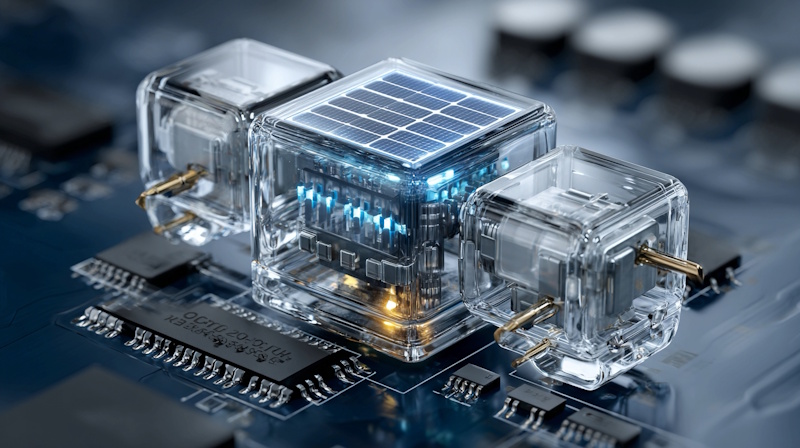
As of today, photovoltaic (PV) technology is the most widely used method for energy harvesting method. This is primarily because PV technology is well-established, reliable, and has proven to perform consistently in both indoor and outdoor environments.
A typical light-based energy harvesting system starts with a PV cell that converts light into electrical energy. The efficiency of this conversion depends on light intensity, angle, and cell material.
Click image to enlarge
Any system operating on PV power will also require a power management IC (PMIC) to manage voltage, boost power, and perform maximum power point tacking (MPPT) to optimize energy capture.
Designers of ambient IoT products cannot assume that whatever physical property or properties they are tapping will be continuously available. That certainly will not be the case when relying on sunlight. Any ambient source could be, and probably will be, intermittent. Some form of storage will almost certainly be necessary. Storage options include:
● Supercapacitors
● Thin film capacitors
● Solid state capacitors
● Hybrid lithium capacitors
● Rechargeable batteries
● Printed batteries
The choice will mostly depend on the specific application’s energy profile and duty cycle.
Finally, every ambient IoT system will have a load, which refers to the embedded system that consumes energy, such as a sensor node or a wireless transmitter.
Ambient IoT design
There are many sensor applications where data is generated only intermittently, or where the collected data needs to be reported only at infrequent intervals. These applications are ideal candidates for ambient IoT devices, as they do not require an always-on communications link. In fact, the communications modules in such devices need to be active or “on” only occasionally.
So the two most obviously applicable RF protocols that can be used in such ultra-low power devices are Bluetooth Low Energy (LE) and Zigbee Green Power, as these are both crafted to draw minimal power.
Taking a closer look, there are 2 features or specifications that such Ambient IoT application benefit from the most – ultra-fast, low energy cold start and deep sleep wake-up.
Ultra-fast, low-energy cold start allows these applications to start from a zero-energy state to transmit packets and then immediately return to sleep. For example, Silicon Labs’ xG22E device wakes up in only eight milliseconds and uses only 150 µJ, or roughly 0.003% of the energy needed to power a 60-watt equivalent LED lightbulb for one second.
Another key feature for conserving energy in ambient IoT applications is a deep sleep wake-up option, such as RFSense, GPIO, and RTC that can wake these sources up even from the deepest EM4 sleep mode.
Moreover, to support and accelerate the development of energy-harvesting powered devices, design environments for the ambient IoT are becoming increasingly available, allowing designers to effectively compare the use of different RF protocol options.
Additionally, power-efficient energy modes enable smooth transitions between energy modes while minimizing current spikes or inrush currents that can otherwise harm energy storage capacity.
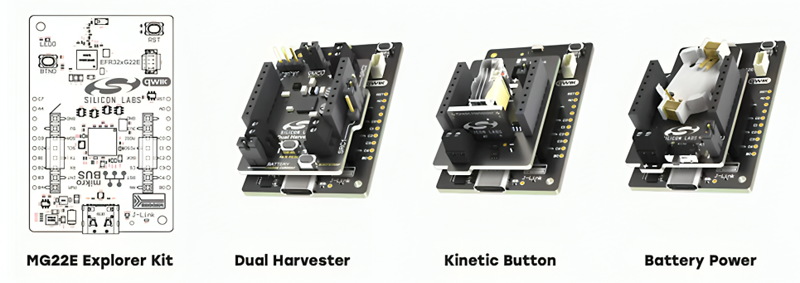
Click image to enlarge
Figure 3: Silicon Labs’ Zigbee-enabled MG22E family enhances battery longevity and supports designs that eliminate the need for batteries altogether
The more flexibility a development environment offers, the better. While PV is the most common energy source, there is no reason for any design to be restricted to just one. Design environments should allow engineers to evaluate more than one source to harvest simultaneously, including any combination of indoor or outdoor light, thermal gradients, and electromagnetic waves, without compromising energy conversion efficiency.
In general, the wider the range of sources a design environment supports and allows engineers to explore - such as heat, motion, and random pulsed energy - the better.
Last but not the least, engineers working with ambient IoT will benefit from a design environment that enables them to experiment with different energy storage options, including alternative battery chemistries and supercapacitors. This will allow optimized performance across a diverse range of applications.
Conclusion
Energy harvesting sounds like a niche concept, but that is simply not the case. While wind and solar (PV) power are the most common examples, other forms of energy harvesting are built on well-known principles and supported by a variety of sensors that are all production ready.
The future of energy harvesting will include applications that draw power from sources far beyond solar and wind, at both the macro and micro levels. At the macro level, regenerative braking systems in some hybrid and electric vehicles (EV) are one example. These systems capture a portion of the kinetic energy that would otherwise be released as heat during braking and convert it into usable energy to recharge vehicle batteries.
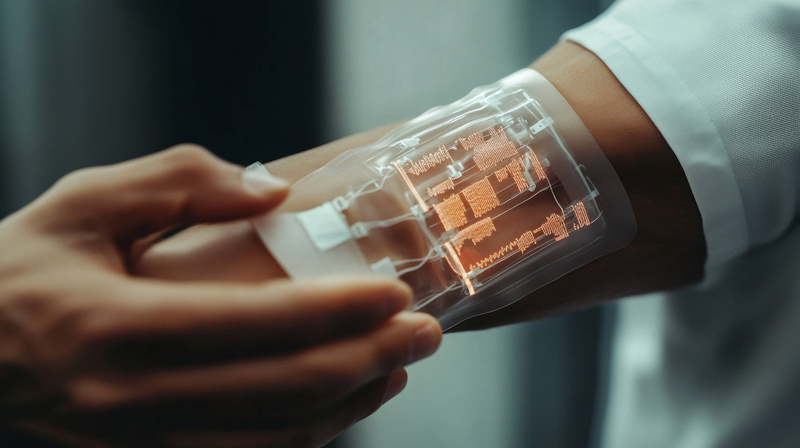
At the micro level, a variety of energy harvesting techniques are used in a range of products, some to supplement battery power and with others as the only source of energy. These include fitness trackers, industrial automation systems, tyre pressure sensors, and RFID tags.
Looking ahead, scaled-down AI models are enabling significant advancements in performance and functionality on embedded processors that operate with extremely modest compute resources compared to a common CPU or GPU, or even previous generations of embedded processors. In fact, AI is now being used to help devices determine whether or not to wake up, assuring that these IoT devices will only consume energy when absolutely necessary.
The availability of increasingly lightweight AI is, of course, creating an incentive to design even more advanced, lightweight, exceptionally low-power devices, which in turn is making it worth considering energy harvesting methods that previously were impractical due to minimal return.
The ability to operate in energy-constrained environments is shaping up to be transformative. Initial investigations demonstrate that with proper profiling and design trade-offs, such systems can achieve self-sufficiency, as evidenced by the net-negative current during full transmission-sleep cycles. This not only validates the energy harvesting architecture’s viability but also emphasises the importance of selecting low-power components and continuously optimising firmware behaviour based on real-time energy availability.
The use of supercapacitors and hybrid storage solutions further enhances system resilience, especially during low-light periods. As the ambient IoT continues to gain traction, the future of battery-less IoT is not just promising, it’s already within reach.