EPC Announces Mass Production of EPC2370 18 V GaN FET for Next-Generation AI Power Architectures

The ultra-low 0.28 mΩ eGaN® FET has a transient voltage rating of 22 V enabling higher efficiency, 1 MHz or higher switching, and increased power density for advanced high-current DC-DC converters.
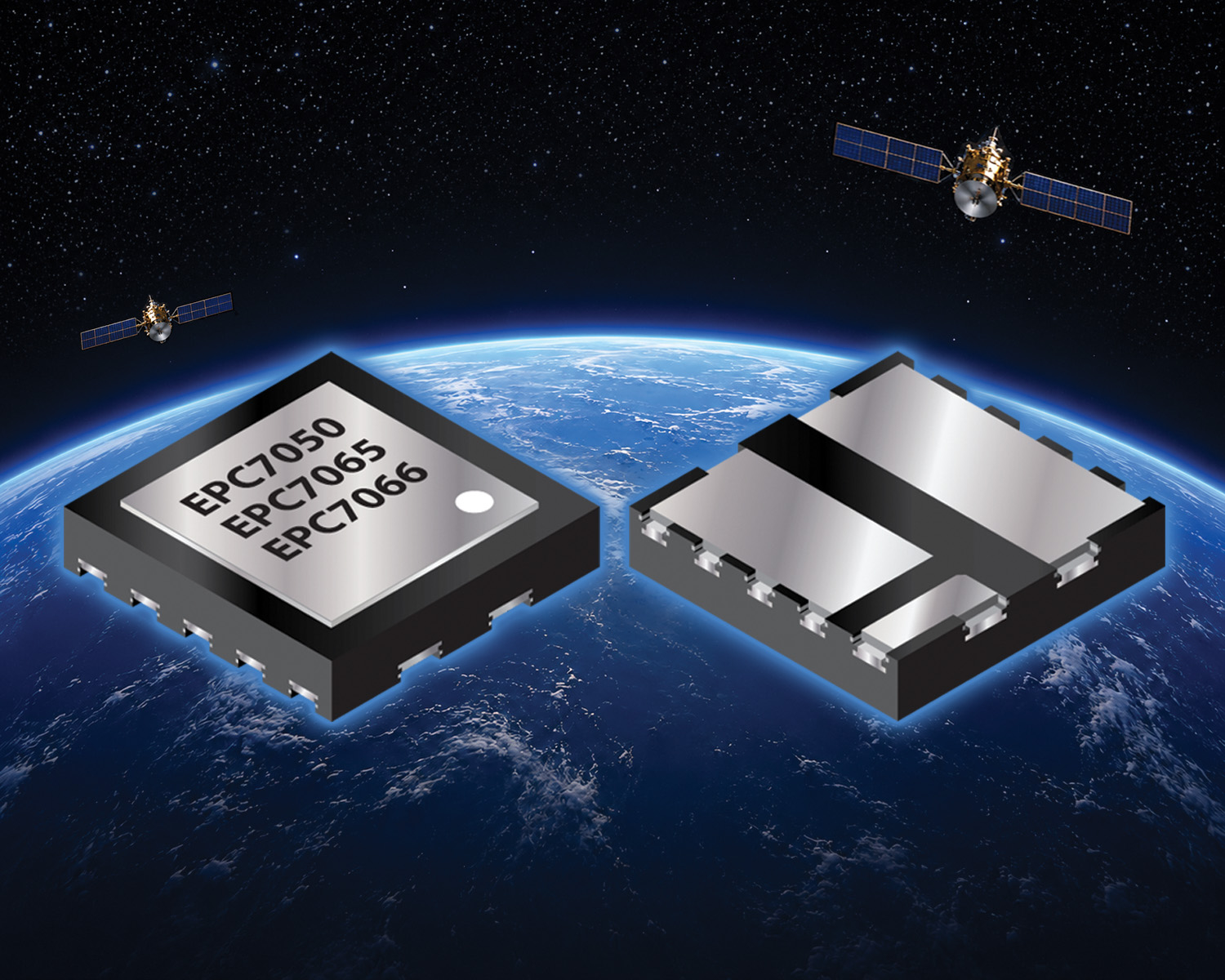
Efficient Power Conversion (EPC), a leader in enhancement mode gallium nitride (eGaN®) power devices, today announced the mass production of the EPC2370, an ultra-low on-resistance 18 V eGaN® FET engineered to enhance the efficiency and power density of next-generation AI server power supplies. The EPC2370 has a 22 V transient voltage rating that allows it to replace MOSFETs with ratings as high as 25 V.
AI power architectures are transitioning to 800 VDC power distribution, adopting 6 V high-density, multi-kilowatt intermediate bus converters operating at 1 MHz. Developed on EPC's seventh-generation GaN platform, the EPC2370 delivers a benchmark 101 A continuous current rating, 0.28 mΩ typical Rdson, 26 nC gate charge, and ultra-low switching losses in a compact 3.3 mm × 3.3 mm thermally enhanced, dual-side-cooled PQFN package. These features enable designers to maximize efficiency, reduce converter and magnetic component sizes, and meet demanding thermal management requirements.
"The rapid evolution of AI infrastructure demands power switches that optimize both conduction and switching performance," said Jason Zhang, Vice President of DC-DC Marketing and System Engineering at EPC. "Together with our recently released primary-side GaN switches (EPC2305, EPC2367, EPC2361), the EPC2370 was specifically developed for 6 V output, high-current synchronous rectification, enabling next-generation high-density, high-current power supplies where a low R × Q figure of merit is critical."
The EPC2370 is optimized for center-tapped synchronous rectification in 48 V-to-6 V and 800 V-to-6 V power converters. Its 18 V continuous and 22 V transient ratings provide ample voltage margin for reliable operation while enabling peak efficiencies of 98% and full-load efficiencies of 97% in high-density power modules. Beyond AI servers, the EPC2370 is also well suited for high-current DC-DC converters used in high-performance computing, telecommunications infrastructure, and advanced industrial power systems.
To accelerate evaluation and product development, EPC also offers the EPC90168 evaluation board. Measuring 2" × 2", the EPC90168 features two EPC2370 GaN FETs configured as a half bridge. The board includes all critical components and an optimized layout to maximize switching performance. It also provides multiple probe points for convenient waveform measurements and efficiency evaluation.
Price and Availability
The EPC2370 is now available through EPC’s global distribution network, including Digi-Key and Mouser, with production ramping to meet growing demand from AI computing, server power supplies, telecommunications infrastructure, industrial systems, and other high-performance low-voltage power applications.
EPC2370 is available in 1,000 piece quantities for US$ 2.52 each. The EPC90168 evaluation board is available for $260.
For more information, go here.