EPCOS axial-lead aluminum electrolytic capacitors serve in automotive electronics
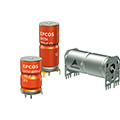
TDK unveiled a series of rugged EPCOS axial-lead aluminum electrolytic capacitors for automotive electronics. These components are distinguished by their very high ripple current capability and vibration resistance. Thanks to the very low ESR values and a further reduction in internal thermal resistance, the self-heating of the new B41689* series is significantly lower. This allows the ripple current capability to be increased by 50 percent compared to standard axial-lead series. As a result, fewer parallel connected capacitors are required for extreme requirements, which not only helps to reduce costs but also to increase reliability. This series of axial-lead capacitors achieves the same ripple current capability of single-ended capacitors with 60 percent less volume. These new capacitors are designed for a temperature range from -55 °C to +150 °C and offer an useful life of 10 000 hours at 125 °C. They have rated voltages of 25 V DC, 40 V DC and 63 V DC. Their capacitance range extends from 270 μF to 4500 μF. Their optimized mechanical design allows a high vibration stability of up to 40 g to be attained. All types of the new series are available in various mechanical designs, such as soldering star or axial-lead capacitors with double-sided plates. Applications of these rugged and reliable capacitors include engine management and fuel-injection systems, gearbox controllers, power steering systems as well as control units for fans, windshield wipers, or oil and water pumps. All types are available in RoHS-compatible versions. TDK-EPCOS