Exploring the Dynamic Landscape of the Automated Test Equipment Market Reveals Key Insights into Its Evolving Needs

The semiconductor industry is at the forefront of technological innovation each year, driving advancements across various sectors, from consumer electronics to telecom, network systems and industrial
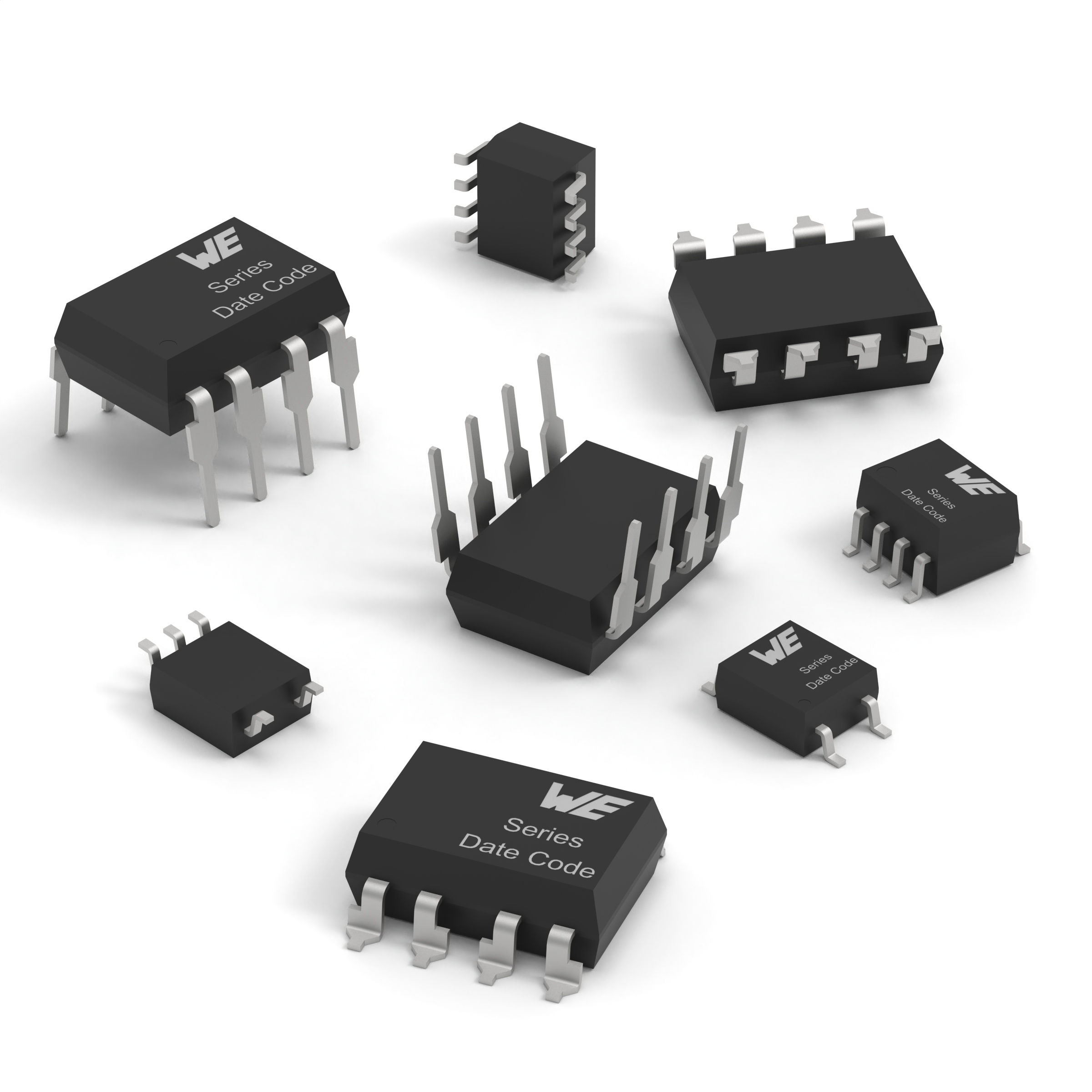
Figure 1: The internal components of a MOSFET Relay
By analyzing industry trends and technological developments, we can better understand what users truly seek. Key factors in the market include efficient solutions that enhance speed, increase space savings on circuit boards, and improve reliability in testing processes. Companies like OMRON help to provide solutions to meet these evolving demands to foster innovation.
The automated test equipment market (ATE) is crucial for verifying the performance, quality, and reliability of semiconductor devices used in smartphones, robots, automobiles, home appliances, and more. These technologies demand smarter, faster, and more adaptable systems to deliver a better product to the end consumer, pushing semiconductor organizations to seek more versatile parts. To understand the automated testing conducted on semiconductor and chipset devices, it's important to note that multiple devices can be tested simultaneously. The traditional manual testing process is time consuming and can limit overall production efficiency, potentially leading to errors when testing large volumes of products. To address these challenges, companies utilize a series of test devices, such as test handlers, to verify the Device Under Test (DUT). Adoption of AI-powered diagnostics, demand for automated solutions, and the need for higher throughput and faster testing times are driving market growth, with some challenges including high costs and decreasing board space.
Various components can help meet market demands for high-speed testing, RF capabilities, long life, and efficient board designs.
One such component is the MOSFET relay, which is a light-controlled electronic switch that uses an LED to connect circuits without any moving parts (see Figure 1). Compared to Electromechanical Relays (EMRs), MOSFET relays offer several advantages, both technical and practical. Since they have no moving parts, they are more durable, reducing the risk of failure that can occur when mechanical components stop functioning. MOSFET relays come in a small package size, which helps optimize board space and enables the creation of smaller designs for end products. Other benefits include low power consumption, as they require very little power to activate, and silent operation, since there is no noise generated by the LED trigger. Overall, MOSFET relays are an excellent choice for meeting modern electronic design requirements.
Speed and high-frequency switching are crucial aspects of the automated test equipment market. Companies conduct tests on thousands of integrated circuits (ICs), semiconductors, and other devices under test (DUTs) every hour, making time a vital factor in this environment. RF relays and switches are designed to manage signals that behave like waves during testing. Impedance matching is a key consideration to ensure that the signal being tested does not reflect towards the source of the device, which could lead to issues. Important terms in RF switching include (insertion loss), how much a signal is lost when the switch is closed, (isolation), how the switch prevents leakage, and (cross-talk), ensuring the signal does not bleed into other testing paths, are all important. RF switching is essential for several reasons, including the scalability of testing, which allows for the simultaneous testing of multiple devices in a shorter time frame. High RF capabilities can occur in microseconds, enabling devices to achieve faster results rather than relying on standard relay products without RF capabilities that switch in milliseconds, depending on the testing equipment. Signal relays with capabilities to achieve high RF capabilities are very suitable for semiconductor applications and will become a standard product to utilize the fast-switching benefits.
As time and demand increase in this market segment, the efficiency of testing has become a critical consideration for testing devices. In automated test equipment, using a relay socket can significantly reduce the time required during the testing phase. Traditional methods, such as soldering a relay product onto a large test board or clipping jumper wires to the pins, can lead to the failure of the entire board if a relay or integrated circuit (IC) malfunctions. To avoid the hassle of removing and re-soldering parts, a relay socket proves to be a game changer by allowing for quick plug-and-play replacements. This is especially important since electromechanical relays are prone to failure due to their moving parts. If an issue arises during testing, such as a relay melting or welding shut, it could damage a board that may cost thousands of dollars. A relay socket adds an extra layer of safety during tests while maintaining the same relay specifications.
Reliability has always been a key trend in the market, and it continues to be a leading priority, which allows for fewer failures. Testing devices, particularly consumer products such as phones, watches, cameras, glasses, and other wearable technologies, require high pass rates to align with production timelines and product release schedules.
Click image to enlarge
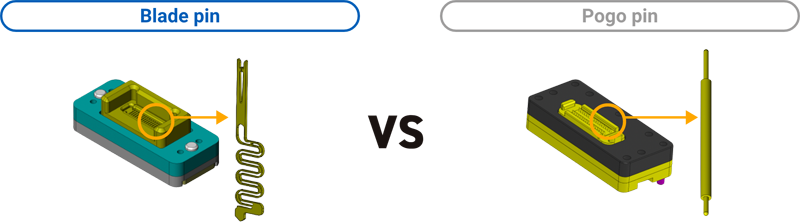
Figure 2: The structural differences between a Blade Pin vs a Pogo Pin
Companies often use pogo pins to test their devices, but they experience high failure rates since these pins typically fail after around 100,000 cycles. A pogo pin consists of multiple components, including the plunger, barrel, and internal spring, which create resistance as electricity flows through its various points. Recently, blade pins have emerged as a popular alternative due to their durability, achieving up to 500,000 cycles. Blade pins are designed as a single uniform piece, which eliminates moving parts and increases the tester's lifespan. (see Figure 2) Another important metric in this market is the test pitch. A fine test pitch is crucial because, as circuit boards become smaller, the components on them are located closer together, leaving limited space for landing pads. Blade pins are able to achieve a tight pitch of up to .175mm allowing for huge space savings This necessitates the use of testing pins with a smaller pitch to effectively engage the pads in tight spaces. In high-volume automated testing lines, it is essential to have access to a product that can meet these strict expectations and high-demand requirements.
Conclusion
As the semiconductor and automated test equipment industries continue to evolve, integrating advanced technologies and innovative solutions will be essential for maintaining momentum and addressing upcoming challenges. Staying informed about trends in this sector is crucial for anticipating developments from the leading companies in the market. With OMRON at the forefront of these advancements, the future of the semiconductor industry appears promising, poised for ongoing growth and transformation.