Charité secures Einstein professorship and ERC starting grant
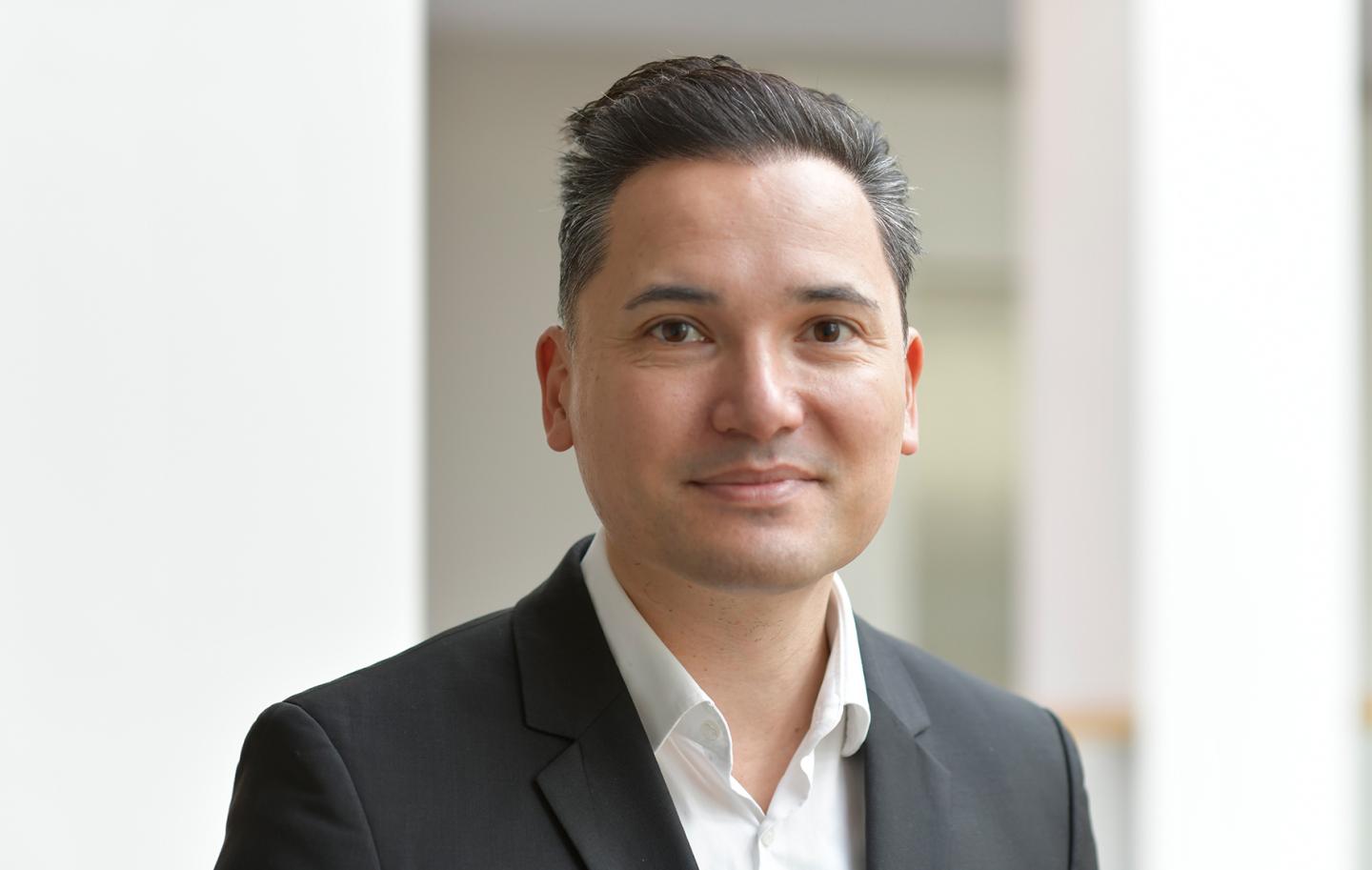
Prof. Dr. Surjo Soekadar's research explores how neurotechnologies can be used in the treatment of neurological and psychiatric disorders. Having been appointed Germany's first Professor of Clinical Neurotechnology, he now took up his new position at Charité - Universitätsmedizin Berlin. The professorship is supported by the Einstein Foundation Berlin. At the same time, Prof. Soekadar is also embarking on his ERC Starting Grant-funded project into the development of innovative brain-computer interfaces. Funded by the European Research Council (ERC), his project will receive approximately €1.5 million over five years.
Neurotechnologies are technological and computer-assisted tools that analyze brain signals and are capable of modifying them in a targeted manner. Neurotechnologies include brain-computer interfaces, the application and development of which is at the center of Prof. Soekadar's work. In his previous research, Prof. Soekadar enabled quadriplegic patients with complete finger paralysis to eat and drink independently using a brain/neural-controlled hand exoskeleton.
The newly-established professorship is based in the Department of Psychiatry and Psychotherapy on Campus Charité Mitte and is associated to the NeuroCure Cluster of Excellence. "At Charité, I am hoping to ensure the prompt clinical implementation of innovative neurotechnologies that improve patient quality of life and social participation. It is very important to me that my research findings should benefit patients directly," emphasizes Prof. Soekadar.
The neuroscientist is also hoping to develop the next generation of brain-computer interfaces and is receiving an ERC Starting Grant for this work. "Until now, brain-computer interfaces have been primarily used to restore patient communication and mobility. This ERC-funded project aims to enhance brain functions such as attention, memory and emotional control," explains Prof. Soekadar. Impairments of these brain functions are often found across various psychiatric disorders, such as depression, addiction and anxiety disorders. Prof. Soekadar plans to develop brain-computer interfaces suitable for day-to-day use that will be capable of reading and interpreting brain activity in real time. Non-invasive electrical or magnetic brain stimulation will then be used to enhance brain activity patterns associated with improvements in an individual's impaired brain function. It is hoped that combining the use of brain-computer interfaces with novel brain stimulation methods will make an important contribution towards the development of mental health treatments that are both effective and low in side effects.
EurekAlert!, the online, global news service operated by AAAS, the science society: https://www.eurekalert.org/pub_releases/2018-11/c-ub-fpi112018.php
.jpg)