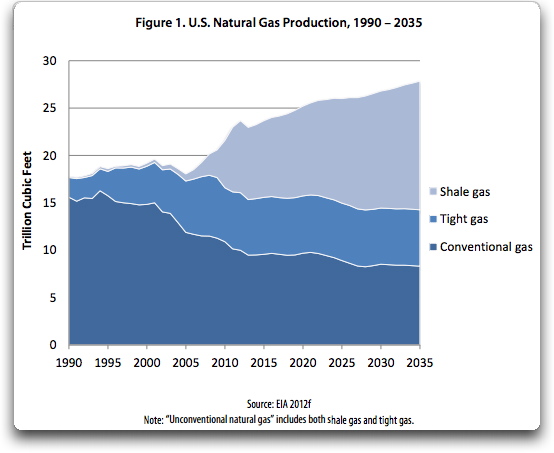
The recent boom in shale-gas production and the subsequent decrease in the price of natural gas have put natural gas front and centre in the national energy discussion. This abundant source of domestic fuel presents a great opportunity for the United States to increase its energy independence and reduce carbon emissions say the authors of the ACEEE (American Council for Energy-Efficient Economy) White Paper Saving money and reducing risk: how energy efficiency enhances the benefits of the natural gas boom. Current low prices are likely to result in greater overall consumption of natural gas by the power, industry, transportation, and export sectors, which could expose the US economy to renewed price volatility and potentially lead to premature depletion of its natural gas reserves. Changes in the natural gas market represent challenges and opportunities for energy-efficiency measures. Electric and natural-gas efficiency help reduce consumption of natural gas. Some natural gas efficiency measures on the margin are not cost-effective with natural gas prices at $2 per MMBtu (million British thermal units) but the price of natural gas is already increasing and is projected to level out between $4 and $7 per MMBtu. Electric-efficiency measures are only marginally affected by the price of natural gas and the majority of measures are still economical. In addition, reducing natural gas consumption helps keep prices stable while still meeting energy demands. According to the ACEEE, efficiency also reduces pollution, creates jobs, bolsters economic activity, lowers customer utility bills, and extends the available supply of natural gas. ACEEE Whitepaper Download