How MEMS-Based Circuit Breaker Are Redefining AI Data Center Power Distribution
Recent McKinsey analysis projects that global data center capacity demand could nearly triple by 2030, driven by the rapid scaling of AI workloads and the resulting structural shift in compute architecture across hyperscale and enterprise infrastructure. For power infrastructure providers, this expansion represents not merely incremental growth, but a fundamental re-architecture of how power is delivered, controlled, and protected at scale.
What is increasingly clear from multiple industry analyses is that this is not simply a capacity expansion challenge, but a transition into a fundamentally higher power-density era of computing infrastructure, one defined by high-power, high-current compute environments where rack densities, power distribution systems, and downstream protection architectures are being pushed into regimes that existing switching technologies were not originally designed to support. This transition is redefining the performance envelope required of circuit protection technologies and creating space for new architectural approaches.
The roll-out of new data centers has been astronomical over the last few years. Initially driven by cloud services and the adoption of IoT, deployment has accelerated sharply with the introduction of AI. Alongside the increase in number and scale of facilities, AI workloads have also significantly increased the power consumption per data center. According to the IEA:
“Data centers currently consume approximately 1% to 1.5% of global electricity, with an estimate of around 415 TWh in 2024. With rapid expansion of artificial intelligence (AI), this demand is expected to more than double by 2030, potentially exceeding 945 TWh, representing just under 3% of global electricity consumption. Global data center electricity demand is projected to rise by 15% annually between 2024 and 2030, growing more than four times faster than total global electricity consumption.”
Taken together, these projections point to a rapid escalation not just in total energy consumption, but in the underlying electrical architecture of data center systems, particularly in the form of higher current densities, power distribution complexity, and increasingly more protection and switching requirements across high voltage domains throughout the power stack.
The technical implication of this shift is an exponential increase in both peak and continuous current levels throughout the entire power distribution chain, from grid interface systems through to rack-level distribution, where switching must operate at significantly higher current densities and speeds than legacy systems were designed to support. This places fundamental stress on traditional protection architectures rather than merely exposing design inefficiencies.
At the same time, the internal electrical architecture of data centers is evolving rapidly. Higher power levels are increasingly distributed closer to compute loads, with electrical systems becoming more modular, segmented, and dynamically managed. In many AI-oriented architectures, this shift is also being accompanied by a move toward higher-voltage DC distribution, including emerging 800V-class DC bus systems, which are seen as a way to support higher power density and reduce distribution complexity at rack scale. While this represents a system-level change in how power is delivered, it simultaneously shifts the burden onto downstream protection and switching elements, particularly within rack-level distribution units and battery backup systems.
Circuit Protection is Becoming a System-Level Constraint in AI Data Centers
Circuit protection in modern AI data centers is undergoing a massive transformation. The move to 800V DC is bringing high power density to the rack and the need for near instantaneous peak power delivery is causing architectural shifts in energy storage. These transformations are driving numerous changes distributed across a layered electrical architecture. New protection technologies are being developed, assessed and inserted from the rack-level power distribution units that handle high-density load routing through the system to the uninterruptible power supply systems and battery backup units (BBUs) that manage energy storage and transient load balancing. Also, emerging high-current DC bus architectures are becoming increasingly central in AI power design and finally point-of-load protection at the GPU and CPU level where eFuses manage fast load transients and fault conditions are becoming essential.
Across all these layers, switching and protection components are increasingly required to operate under higher continuous current, faster transient response requirements, and tighter constraints on footprint and thermal management than in previous generations of infrastructure.
Why Existing Switching Technologies Are Reaching Their Performance Limits
Until recently, electromechanical relays have formed the dominant approach across many protection layers. These systems use metal-to-metal contacts that provide very low resistance in the closed state and isolation in the open state, making them well suited to high-power distribution environments.
However, electromechanical systems introduce inherent mechanical constraints. First, their millisecond response time can let through significant and damaging energy in a fault situation. While ultimately protecting by opening the circuit, excessive fault energy can damage and take offline sensitive data center compute trays and racks. Speed is also an enabler for the addition of smart sensing, monitoring and decision-making functions that can lead to increased system uptime and overall managed efficiency. In addition, contact wear over repeated operation leads to degradation in performance over time, increasing maintenance requirements and reducing long-term reliability. At scale, these limitations translate directly into higher operational cost and reduced infrastructure availability.
At high current levels, arcing during switching events can cause contact erosion and pitting, which further impacts conduction performance and device lifetime. In terms of energy efficiency, electromechanical relay actuation can require a continuous or semi-continuous drive current, which becomes a material contributor to energy inefficiencies across large deployments of protection devices.
In an effort to improve protection performance, solid-state switching approaches are being explored for circuit breaker applications. These systems use semiconductor devices to interrupt current and offer fast switching with no mechanical wear mechanisms such as bounce or arcing. However, at higher continuous current levels, inherent conduction losses in semiconductor materials introduce significant thermal management challenges that scale with load, requiring large heatsinking or liquid cooling and significantly increasing system footprint.
Silicon carbide (SiC) and gallium nitride (GaN) devices are being evaluated for future solid-state circuit breaker designs, offering improved switching speed over mechanical breakers and efficiency compared with silicon solutions. However, they do not eliminate the fundamental scaling constraints associated with both semiconductor conduction and device parasitics under high continuous current operation. At data-center scale, industrial automated factories and enterprise buildings, these limitations are increasingly critical in protection and distribution layers operating continuously at elevated load and where rapid protection and power control are valued.
Importantly, no widely deployed protection or distribution architecture today relies on SiC JFET-based solid-state solutions at the high current and power levels required in large-scale data center distribution systems.
Furthermore, data center, automated factory and enterprise building operators increasingly require compact, high-density electrical infrastructure to maximize usable rack space for compute workloads, or smart features such as predictive maintenance. Both electromechanical and solid-state circuit breakers tend to be physically bulky and often require heatsinking, further increasing footprint. The need for redundancy in protection layers compounds these spatial constraints, particularly in high-availability AI infrastructure, robotic, and automated factories.
MEMS Switching Architecture: Redefining the Circuit Breaker Category
As electrical systems move deeper into high-power AI workloads, alternative switching architectures become more relevant at specific points in the power stack. One such approach is based on MEMS switching architectures, which combine metallic conduction paths with electrostatic actuation mechanisms. This class of unique technology is offered by Menlo Micro through its MEMS-based circuit breaker modules.
A key distinction between MEMS-based switching and semiconductor approaches is not only in conduction mechanism, but in how each technology scales when current demand is increased through parallelization. In SiC JFET-based solid-state switching architectures, higher current handling is typically achieved by placing multiple devices in parallel. While this approach can extend current capability, it introduces significant design challenges associated with current sharing, dynamic balancing, and parasitic inductance effects. At higher device counts, these factors can contribute to substantially increased susceptibility to uneven current distribution and transient behavior that is extremely difficult to manage.
In contrast, MEMS-based architectures inherently scale current handling through large arrays of physically identical micro-contact elements, where current is distributed across a high number of parallel conduction paths at the device level rather than through discrete semiconductor die matching. This structural difference becomes increasingly relevant in high-current systems, where stability of parallel conduction paths is a key design constraint.
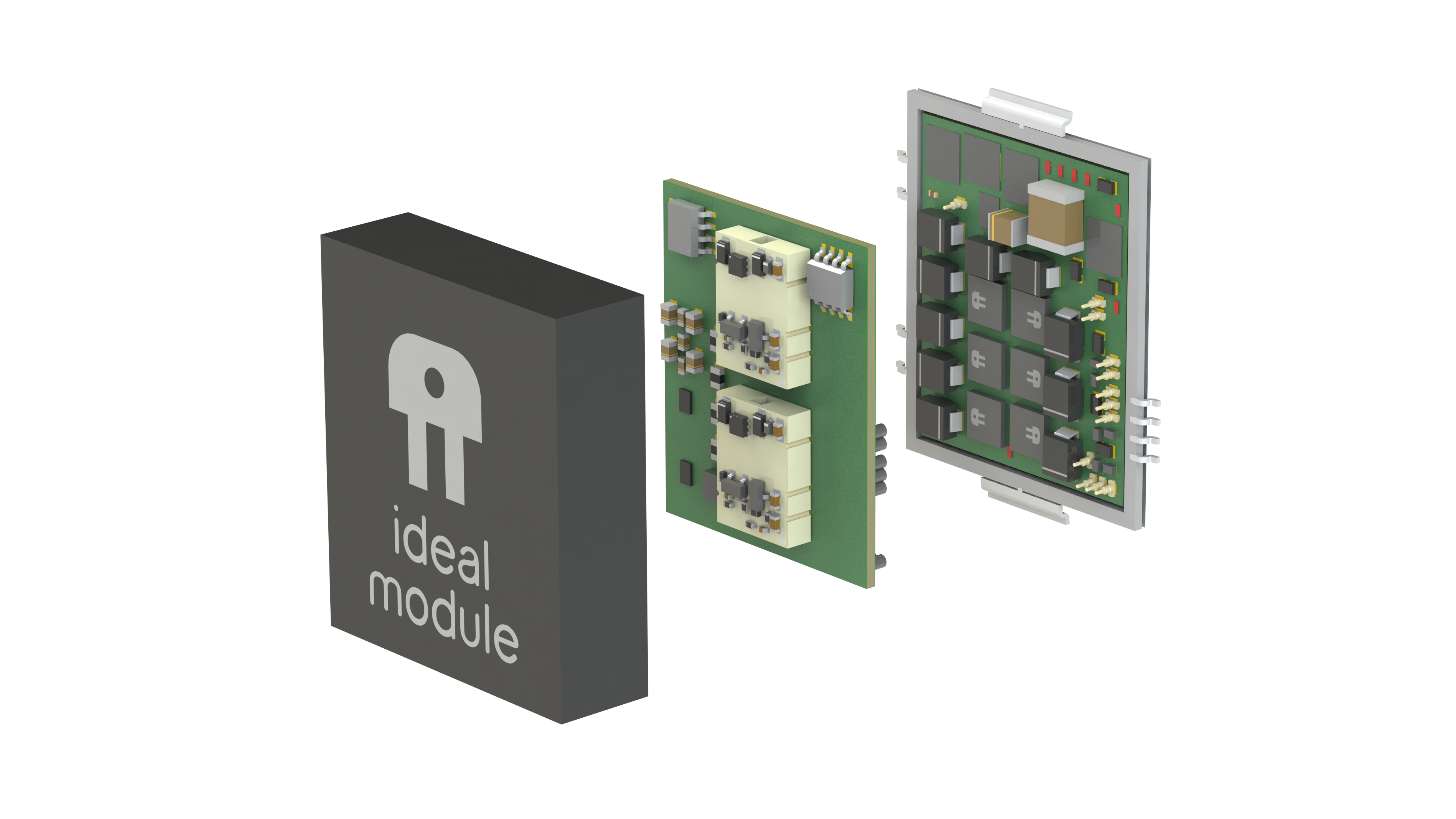
Rather than behaving as a single monolithic contact like a traditional relay, Menlo Micro’s compact MEMS-based circuit breaker module operates at 300 V and 10 A, but it is inherently designed to be scaled by straightforward series and parallel combinations at the chip level within the module. Multiple power chips can be stacked in series to increase voltage standoff or paralleled to increase current capacity without introducing the thermal bottlenecks of semiconductor-based switches. Because conduction is shared across many micro-scale metallic contacts within each chip, current density and heat rise remain very well controlled, enabling linear scaling of high-power handling. This modular, with in-built chip-level scalability has already been demonstrated in high-reliability applications, including high-power distribution systems for demanding defense environments.
The metal contact architecture also introduces an additional advantage under high load conditions. In contrast to semiconductor-based switching devices, where conduction losses increase with temperature and can lead to compounding thermal effects, MEMS metallic contacts exhibit comparatively stable resistance behavior over their entire operating range, helping to decouple thermal rise from progressive increases in on-state resistance under continuous load.
Multiple MEMS switch devices can be packaged in series for higher voltage handling and in parallel for higher current applications, enabling flexible scaling across different points in the power distribution architecture, from rack-level systems through to DC bus and energy storage interfaces.
MEMS-based switching therefore combines ultra-low on-resistance, high isolation, and bidirectional current handling within a scalable architecture with minimal parasitics all while its resistance remains stable as current, power and temperature levels increase, precisely the regime in which semiconductor switching approaches encounter scaling constraints associated with conduction losses, thermal management, and parallel device balancing complexity.
Bi-directional current flow and low, temperature-stable on-resistance enable higher efficiency operation while reducing the need for complex thermal compensation strategies or large parallel device arrays. This becomes particularly important in high steady-state current environments such as battery backup systems, rack-level power distribution units, and emerging DC bus architectures, where conduction losses accumulate across many distributed switching nodes.
MEMS-based switching architectures therefore provide a distinct advantage to silicon-based MOSFET and JFET approaches across multiple power control applications, including high-current eFuses for point-of-load protection of GPUs and CPUs in AI data center racks, DC breakers for energy storage systems such as battery backup units (BBUs), AC and DC protection at rack and facility level, and series disconnect implementations in industrial and infrastructure systems. Their compact form factor, fast response, high efficiency, and mechanical robustness also make them highly applicable across robotics, industrial automation systems, and distributed electrical infrastructure in enterprise and residential environments.
MEMS Switching in Practice - Proven at Megawatt Scale
The relevance of emerging switching architectures becomes more evident in system-level environments where multiple constraints interact simultaneously. Menlo Micro’s MEMS-based switching technology has run demonstrations up to 0.5MW (1000V/500A) hot switching as part of tests in the U.S. Navy’s 10 MW Advanced Circuit Breaker Development Program. This level of prototyping validates a practical use case that is directly leverageable into comparable 800V rack power requirements.
Such evaluations are important because they move beyond component-level performance into full system operating conditions, where electrical, thermal, and mechanical constraints interact across the entire protection chain.
Conclusion: The Shift to MEMS-Based Circuit Breaker in AI Infrastructure
The evolution of AI data center infrastructure is driving a structural shift toward high-power electrical systems distributed across multiple layers of the power delivery from grid interface systems through battery backup units, rack-level distribution systems, DC bus architectures, and down to point-of-load protection at the GPU and CPU level.
This distributed architecture places fundamentally different demands on circuit protection technologies, with performance increasingly defined at the level of individual switching elements operating under sustained high-current conditions.
Electromechanical and semiconductor-based solid-state approaches each address parts of this challenge, but both encounter scaling limitations as current density, thermal constraints, and system footprint reduction requirements increase with high-power demands.
Emerging MEMS-based switching architectures represent a unique class of circuit breaker solution, extending the viable operating envelope for high-current protection systems across multiple layers of modern AI power infrastructure where other traditional approaches face inherent physical and thermal constraints.
The problems faced by data centers are not unique. Many other industrial facilities are currently facing similar challenges, including industrial automated factories and enterprise buildings. The same is true for domestic energy distribution, where electric vehicles and renewable energy have doubled the amount of power used in some instances.
As its name suggests, the Ideal Switch provides the ideal way of controlling those types of high-power applications without needing to make the compromises found with other types of protection equipment.
As power levels continue to rise across future 800V data centers and industrial factory infrastructure, protection and distribution technologies must scale without sacrificing efficiency, reliability, size or system complexity. As its name suggests, Menlo Micro’s Ideal Switch circuit breaker module provides a unique path to controlling high-power applications without the compromises inherent in electromechanical and solid-state based circuit breakers.