iWatt digital PWM controllers offer ultra-low 12W - 24W standby power supplies
Enable high power density in ultra-compact adapters
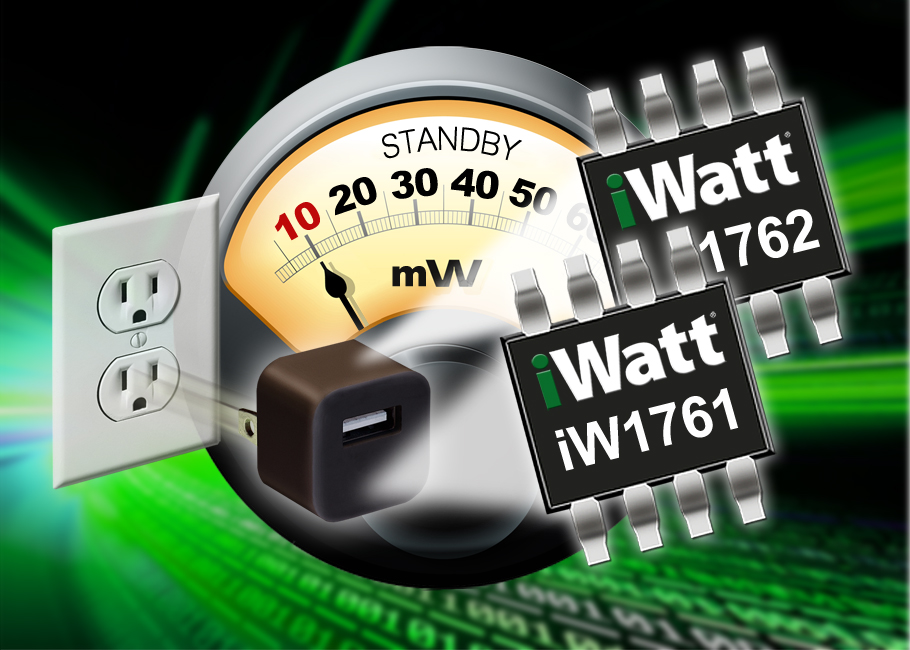
iWatt has launched a pair of digital PWM controllers which offer ultra-low standby power consumption in 12W to 24W power supplies for chargers and adapters for media tablets, set top boxes and home networking equipment. The new devices expand the company's PrimAccurate AC/DC controller platform, lowering power draw in standby mode to 10mW at up to 12W output power (iW1761) and 20mW at up to 24W output power (iW1762). The new iW1761 and iW1762 controllers consume less standby power than their iW1699 and iW1760 siblings announced in July, which consume 30mW (at 12W) and 50mW (at 40W), respectively. All four family members enable high power density in ultra-compact adapters, and exceed current energy standards, including the proposed 2012 U.S. DoE regulation which requires that AC/DC adapters achieve < 100mW standby power consumption. When designing power adapters and chargers, there is a trade-off between DLR (dynamic load response) and standby power. All four iWatt controllers reduce standby power consumption while maintaining good DLR. The new iW1761 and iW1762 offer the ultimate in low standby power with good DLR, while the iW1699 and iW1760 offer higher DLR performance. iWatt
.jpg)