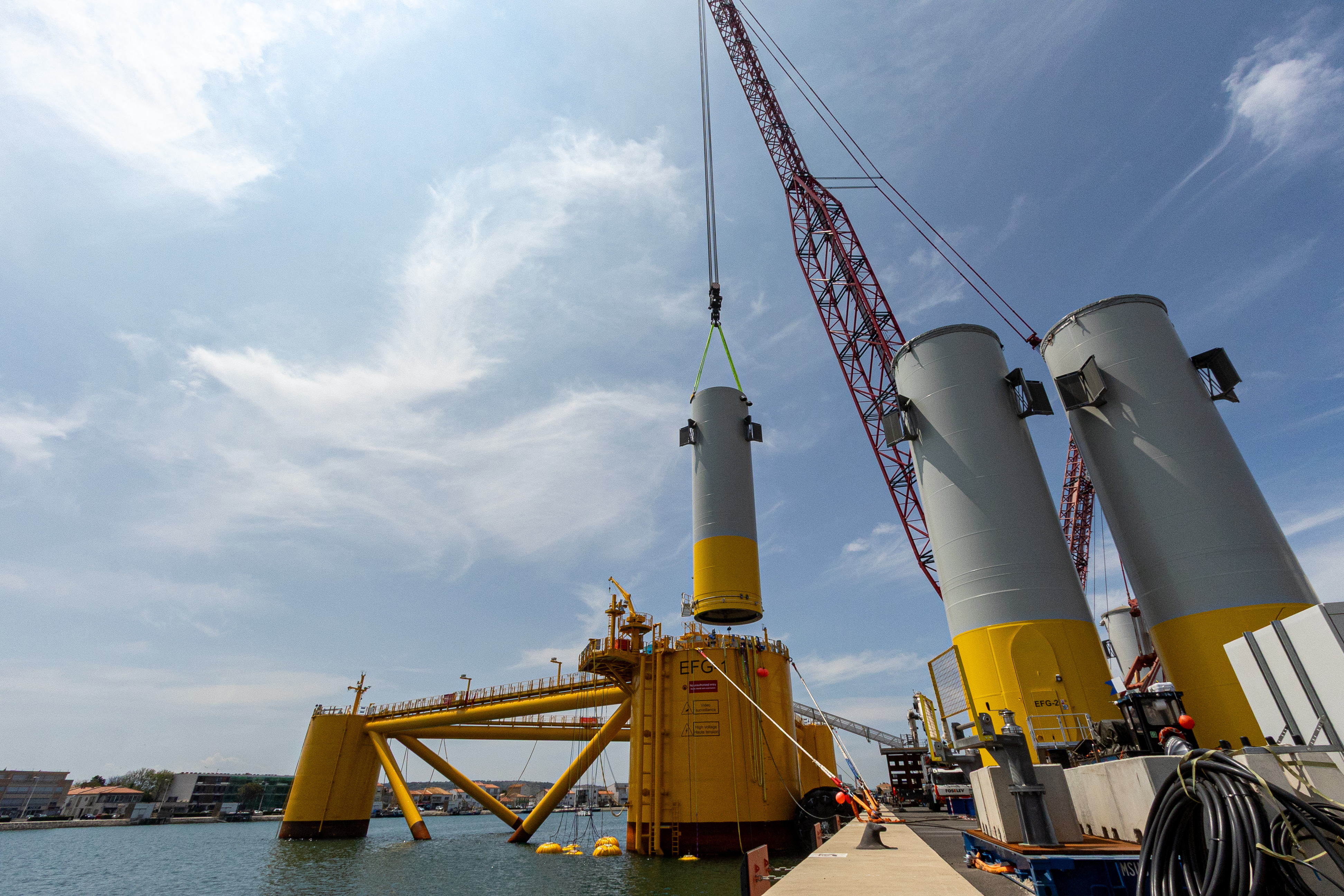
Japan is scaling up offshore wind power at a rapid pace as part of its long-term decarbonization strategy. From a modest 59MW of capacity in 2020, the country’s offshore wind is projected to grow to 16.7GW by 2035, according to GlobalData, a leading data and analytics company.
GlobalData’s report, “Japan Power Market Trends and Analysis by Capacity, Generation, Transmission, Distribution, Regulations, Key Players and Forecast to 2035,” reveals that offshore wind will emerge as one of the fastest-growing technologies in Japan’s generation portfolio. This rapid scale-up is expected to play a central role in diversifying its power mix and achieving the government’s renewable energy targets. Government-backed auctions, regulatory reforms, and investment in port infrastructure are accelerating the deployment of offshore wind projects.
Mohammed Ziauddin, Power Analyst at GlobalData, comments: “Japan has limited domestic fossil fuel resources and remains heavily dependent on energy imports, particularly liquefied natural gas (LNG). In this context, offshore wind offers a significant opportunity to strengthen energy security while supporting the country’s decarbonization goals. The Japanese government has already identified offshore wind as a strategic growth area, with dedicated tenders and regulatory reforms to accelerate project development.”
Japan’s Sixth Basic Energy Plan targets increasing the share of renewables to 36–38% of the power mix by 2030, with offshore wind contributing a sizeable share. The government has also set a target to reduce greenhouse gas emissions by 46% from 2013 levels by 2030 and to achieve net-zero emissions by 2050. Alongside offshore wind, solar PV remains the leading renewable technology, while hydrogen and ammonia co-firing are being explored to reduce reliance on fossil fuels.
Zia concludes: “The expansion of offshore wind, alongside growth in solar PV and hydrogen, highlights Japan’s commitment to reshaping its power sector. However, challenges remain in terms of grid upgrades, financing, and regulatory streamlining. If these are addressed, Japan is well positioned to balance energy security, affordability, and decarbonization as it transitions towards its net-zero target.”