Kistler Three-Component Piezoelectric Force Sensors and Accelerometers Support Satellite and Spacecraft Force Limited Vibration Testing
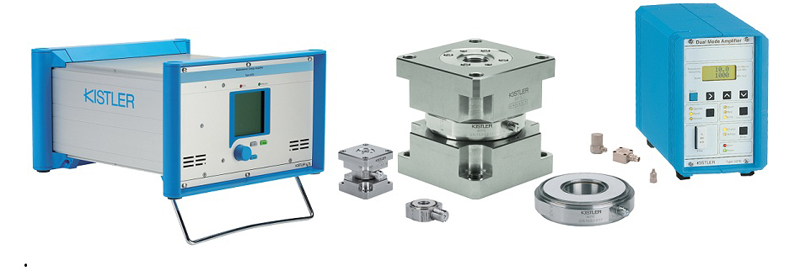
Kistler, a worldwide supplier of precision sensors, systems and instrumentation for the dynamic measurement of pressure, force, torque and acceleration, has announced the availability of its three-component force sensors and piezoelectric accelerometers to meet the rigorous demands of satellite and spacecraft force limited vibration testing (FLV). Satellite and spacecraft manufacturers, and their associated test facilities, use highly specialized equipment to excite, monitor and control vibration inputs during payload development and qualification testing. These manufacturers rely upon FLV as a means of effectively simulating the payload interface forces and input vibration levels encountered during typical in-flight conditions, minimizing forces at the resonances that can cause undue structural stress, with the goal of avoiding costly over-testing conditions which can damage or destroy these payloads. To simulate these in-flight conditions, FLV uses a slip table for structural excitation; a dynamometer, to measure slip-table-to-payload interface forces (and moments); and piezoelectric accelerometers, to measure the input vibration levels used for shaker control. Force limiting controllers automatically notch the excitation at the test item's resonances. The force dynamometer is typically constructed using several three-component force sensors, the chosen sizes of which are based upon expected loads and usually mounted between top and bottom rings, with the payload mounted to the top of the ring and the shaker mounted to the bottom. In this way, the dynamometer is configured to dynamically measure reaction forces. Three-component force sensors may also be used directly in the dynamometer, by preloading them to measure compressive and shear forces during testing. Alternately, three-component force links may also be used. These are preloaded at the factory for ease of installation, eliminating the often time-consuming preload step during dynamometer assembly. The force sensors, or links, are connected to quasi-static charge amplifiers, or other signal conditioning electronics, to develop the necessary composite forces (and moments) for FLV test-related monitoring and control. Among the more popular three-component FLV force sensors are Kistler Types 9027C and 9077C, which offer durable construction and quartz technology for high reliability, as well as high sensitivity and low cross-talk, for accurate multi-component measurements. These sensors offer compact size, corrosion-resistant housings and a sealed sensor case, with plug connection via a robust multi-plug connector. Quasi-static charge amplifiers, such as the single-channel Kistler Type 5010B1, or the multi-channel Types 5070A or 5080A, provide ease of ranging the FLV measurement chain, as well as preloading features and dynamic signaling. Furthermore, these three-component force sensors are also available as factory preloaded force links, along with Kistler Types 9327 and 9377, respectively. Three-component force links provide similar FLV advantages as the force sensors, whereby factory preload eliminates the preloading step, for the realization of time savings when configuring the ring dynamometer for FLV. In support of spacecraft and satellite payload structural and environmental testing, as well as FLV-related vibration monitoring, Kistler offers its Type 8793A triaxial K-Shear® IEPE (voltage mode) accelerometers. K-Shear® accelerometers offer low-profile, hermetic quartz shear construction and triaxial measurement capabilities, with proven accuracy and stability in demanding environments. Such accelerometers are also available with optional Transducer Electronic Data Sheet (TEDS) capabilities, per IEEE-P1451.4 standards, for their ease of use within larger channel count applications. The Kistler Type 8793A has also been engineered to satisfy cryogenic (-196°C) temperature requirements, necessary for the testing and qualification of space-based equipment. Kistler single axis accelerometer Types 8702B and 8704B are also popular customer choices and provide similar design advantages for uni-axial FLV-related vibration measurements. www.kistler.com