Luxembourg Researchers Refute 20-Year-Old Assumptions in Solar Cell Production
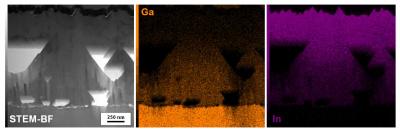
Research led by the University of Luxembourg investigated the manufacturing process of solar cells. The researchers proved that assumptions on chemical processes that were commonplace among researchers and producers for the past 20 years are, in fact, inaccurate. The physicists published their findings in the renowned scientific journal Nature Communications.
Photovoltaic solar panels convert sunlight into electrical power. The panels absorb the incoming light which excites electrons sending them off in a predefined direction in order to generate an electric current that can drive motors or light a bulb. This works through the interaction of several layers of semiconductors and metals in the solar panel. The cells are manufactured in a complex process where several chemical elements are deposited on a glass substrate, typically by evaporation. Thereby, a solar cell "grows", layer by layer.
In the past, scientists discovered by accident that the efficiency of one type of solar cell technology improves vastly if they add sodium to the light absorbing layer. At the same time, they observed that the sodium impacts the growth of this layer and the interaction of the other chemical elements, namely it inhibits the mixing of gallium and indium. This leads to less homogenous layers and thus impairs the results. Therefore, in the past, scientists and manufacturers believed that the ideal way to produce a solar cell was to only add the sodium after the growth process was concluded.
By using a different approach, researchers from the Physics and Materials Science Research Unit at the University of Luxembourg, along with four internationals partners, now were able to show that the truth is more nuanced. While conventionally the light-absorbing layer is made up of thousands of individual grains, the research group chose a more demanding fabrication strategy and grew the layer as a single grain. "Essentially, in this work we show that if the absorber is made of only one grain, adding a small amount of sodium helps to homogenize the distribution of the elements," said Diego Colombara, now Marie Curie Research Fellow at the International Iberian Nanotechnology Laboratory and the principal investigator of the study. "This is very surprising, because more than 20 years of previous research have consistently shown the opposite effect on absorbers made of many grains."
The conclusion of the researchers is that sodium has a dual effect: it homogenises the elements inside each grain but it slows down homogenisation in the interplay between grains. "This gives us the opportunity to rethink how we produce solar cells. In the future, these insights might lead to improvements in the manufacturing process," concluded Dr Phillip Dale, the head of the research group at the Laboratory for Energy Materials (LEM) at the University of Luxembourg and an Attract fellow of the Luxembourg National Research Fund (FNR).
EurekAlert!, the online, global news service operated by AAAS, the science society: https://www.eurekalert.org/pub_releases/2018-03/uol-lrr032318.php