Mouser Offers Amphenol Advanced Sensors’ Air Quality Eval Boards
Arduino-Compatible Boards Evalutate Telaire and Other Environmental Sensors
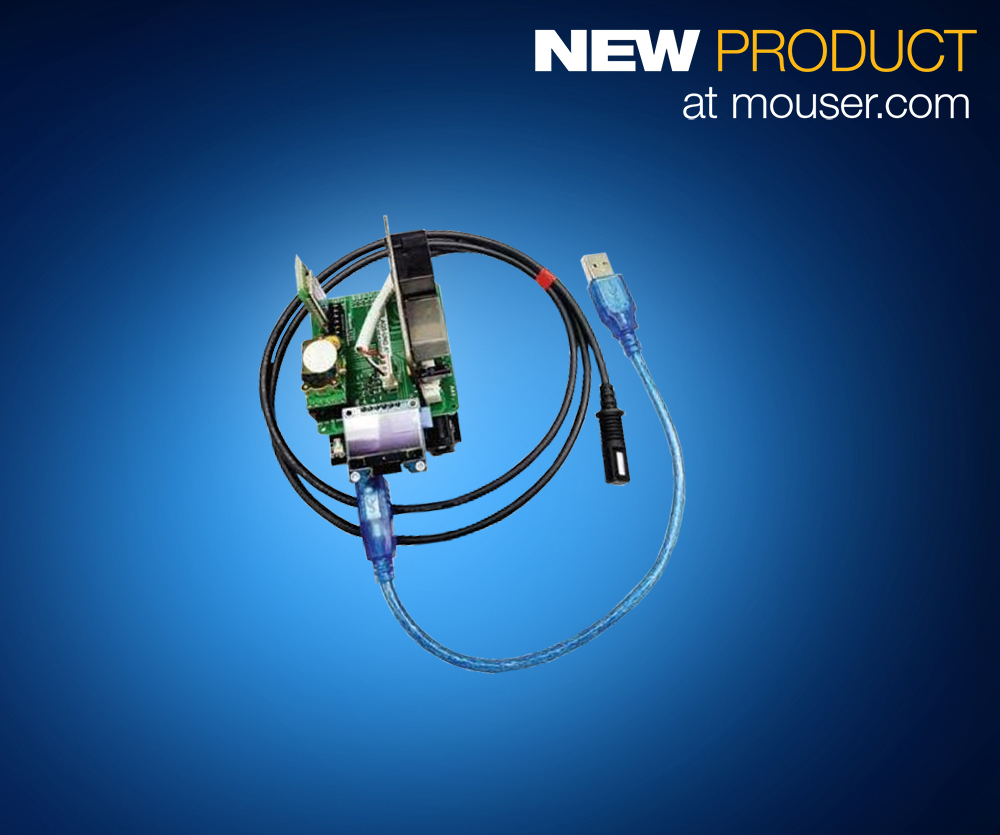
Mouser Electronics, Inc., the authorized global distributor with the newest semiconductors and electronic components, is now stocking Telaire AAS-AQS-UNO air quality evaluation boards from Amphenol Advanced Sensors. The AAS-AQS-UNO evaluation boards help engineers evaluate Telaire air quality sensors and other sensors from the Amphenol range.
Amphenol Advanced Sensors Telaire AAS-AQS-UNO air quality evaluation boards, available from Mouser Electronics, are designed to evaluate Telaire air quality sensors as well as other Amphenol sensors. The boards support Bluetooth® low energy 4.0 and a 128 × 64 OLED screen, and feature reserved interfaces for the Telaire T9602 temperature and humidity sensors, T6713 carbon dioxide sensors, and SM-PWM-01C dust sensors. The boards are compatible with the Arduino UNO R3 microcontroller and use the Arduino integrated development environment (IDE) to help designers speed evaluation and development of the sensors. Both boards in the series include an Arduino-compatible board preloaded with software, the AAS-AQS-UNO sensor evaluation board, USB cable, OLED screen, and SM-PWM-01C dust sensor. The RH-CO2 kit also includes a T9602 temperature and humidity sensor and T6713 carbon dioxide sensor.
Designers can configure the boards’ serial output to send sensor data to a PC over a USB connection for recording and analysis in third-party software. Typical applications include rapid development of air quality sensor systems, intelligent apparel devices, and low-power Internet of Things (IoT)-based Bluetooth modules.