Murata releases 162 W 54 Vout half-brick for PoE applications
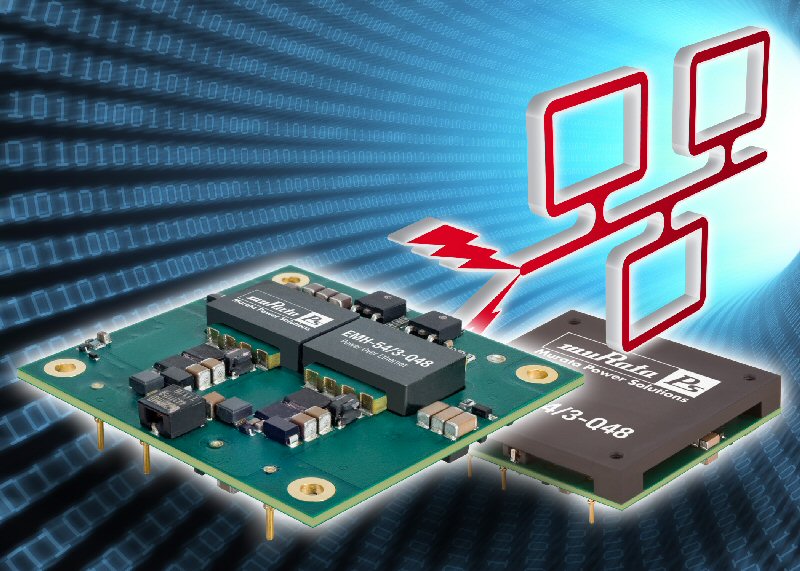
EMH-54/3-Q48N delivers 3 A with efficiencies up to 91.5%
Murata's EMH-54/3-Q48N accommodates a Vin range of 18 to 72 VDC and delivers 30+ W to each of four 802.3at PoE+ Ethernet ports.
Murata has announced the EMH-54/3-Q48N-C power module for PoE (Power-over-Ethernet) applications. The EMH Series DC-DC power module provides a 54 V SELV output, 2.25 kVDC isolation and a Basic insulation system meeting the requirements for multiport IEEE 802.3at (PoE+) applications. The EMH-54/3-Q48N-C can deliver more than 30 W at 54 V to each of four PoE+ Ethernet ports or can deliver up to 162 W to loads requiring 54 V. The EMH is for applications requiring a wide operating voltage range such as battery-powered systems (24 V, 48 V or 60 V) and wireless base-station applications. The modules accommodate a Vin range of 18 to 72 VDC suitable for applications across all regions of the world. The EMH-54/3-Q48N series can be mechanically configured to operate in applications that require forced-air cooling by offering an open-frame module package. Alternatively, the power module can mount with an optional base plate to attach a heat sink or conduction cooling for sealed-box environments.
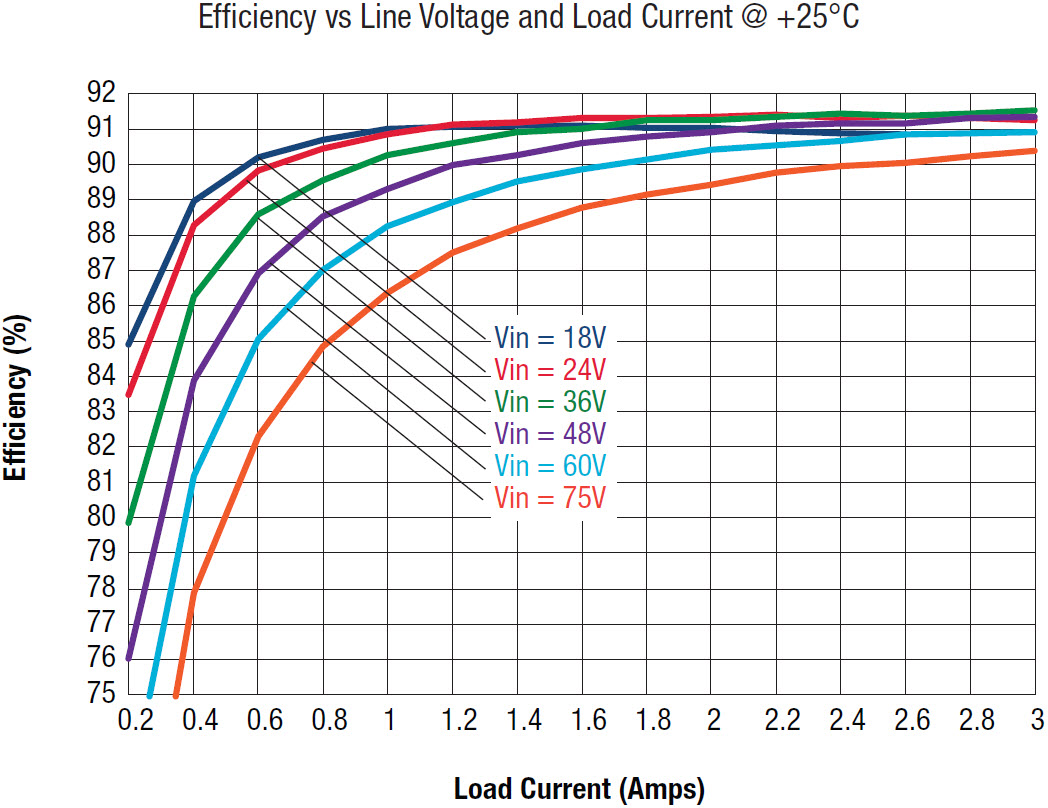
This DC-DC converter delivers 54 V @ 3 A with efficiencies up to 91.5 %. The modules are UL approved and conform to the industry standard DOSA half-brick package measuring 58.4 x 61 x 12.7 mm. Added protection features include input under-voltage lockout, output-current limiting, short-circuit protection, and thermal shutdown. Murata Datasheet