New oxidation-reduction-potential sensor available for eCow Rumen pH bolus analyser
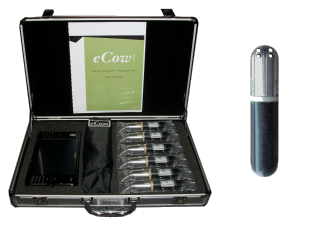
Four months accuracy for e-bolus temperature and Ph reading
eCow, founded by Dr Toby Mottram to make high quality instrumentation for dairy-cow monitoring, has two main product lines: A Rumen pH bolus analyser and an eCollar developed in 2011 to monitor and log cow movements and posture for behavioural analysis. In summer, farm trials of the e-Bolus analyser have yielded accurate temperature and Ph readings from high-yielding dairy livestock for over four months without need for retrieval or calibration. This has provided data that both farmers and veterinarians can use to manage feed and conditions more effectively. e-Bolus now offers multiple sensors. Several customers have asked for a redox (oxygen-reducing potential) sensor to be included in the sensor package to give an indication of the anaerobicity of the rumen. Redox measures the ability of a solution to reduce compounds by oxidation. With some clever design, eCow has built a gold disk electrode into the sampling port of its standard bolus system. The sensor measures redox over a ±400 mV range with an accuracy of 25 mV compared to an Ag/AgCl reference. The eCollar has progressed to the development of a test set of collars becoming available to the eCow Partnership members this autumn which will enable researchers to measure the standing, lying and feeding times of cows. Last year eCow field tested mobility measurement (for lameness) and now looks for licensees for this technology. eCow

 Single.jpeg)


