Nexperia Introduces the Best-in-Class Portfolio of I2C GPIO Expanders
Featuring innovative configurable pull-up resistor and pin-compatible footprints
Nexperia introduced a new portfolio of 16-channel I2C general-purpose input-output (GPIO) expanders designed to increase flexibility and reuse in electronic systems. The portfolio provides an elegant solution when additional I/Os are needed while keeping the interconnections to a minimum. Enabling design engineers to add new features without increasing PCB design complexity and bill of material. It includes the NCA9595, the industry’s first GPIO expander to feature a register configurable internal pull-up resistor to enable customized power optimization.
The number of sensor signals which require monitoring by a microcontroller continues to increase in line with the growth of the servers, automotive, industrial, medical and internet of things (IoT), as does the number of light-emitting diodes (LEDs) used as system status indicators. Microcontrollers are designed with limited numbers of GPIO ports, many are used internally within a system, leaving only a small number of IOs available to connect to sensors or LEDs. With this limitation, I2C GPIO provides an additional 128 I/O channels.
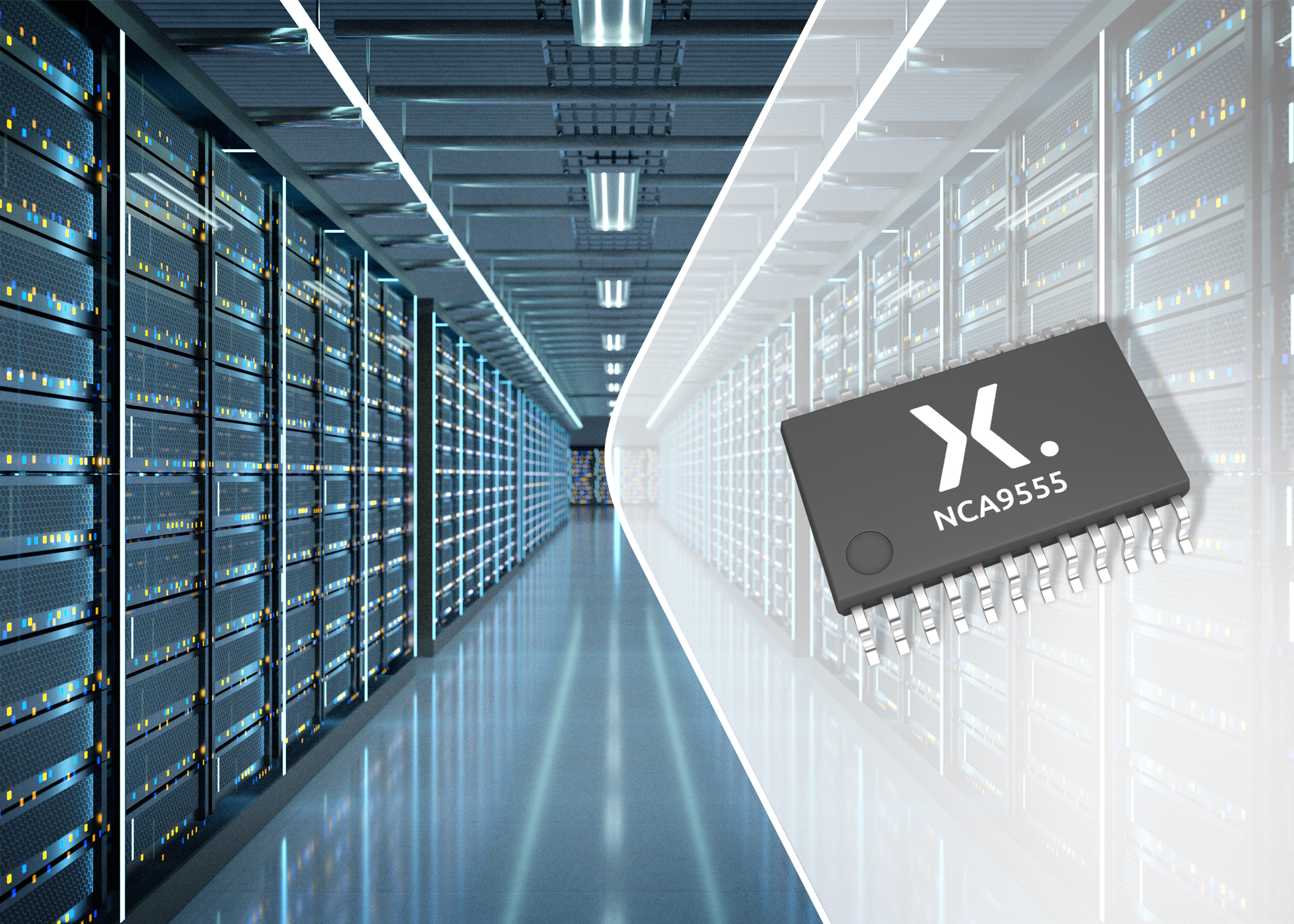
Nexperia’s I2C GPIO portfolio also includes the NCA9535, NCA9539, NCA9555 and NCA9595 devices. These parts have been designed in pin-to-pin compatible packages with industry-standard footprints (TSSOP24 and HWQFN24) to offer a cost-effective and flexible solution for expanding the number of parallel IOs in an electronic system.
The NCA9595 differs from competing GPIO expanders by including a register configurable internal pull-up resistor. This feature removes the requirement for external pull-up resistors (saving board space and cost) and allows power consumption to be optimized based on customer requirements.
Notably, all parts in the portfolio offer additional application features and benefits compared to similar competing devices – they have lower standby current of 2.5 uA (28% lower than competition), output capacitance of 4.5 pF (45% lower than competition), and propagation delay of 280 ns (6% faster than competition), enabling lower power and faster GPIO to I2C (and reverse) response, respectively. All devices operate over a 1.65 V – 5.5 V range and from -40°C to +85°C and -40°C to +125°C.
For more information, go here.