Novel Bifacial Cell technology to enhance energy yield of PV modules
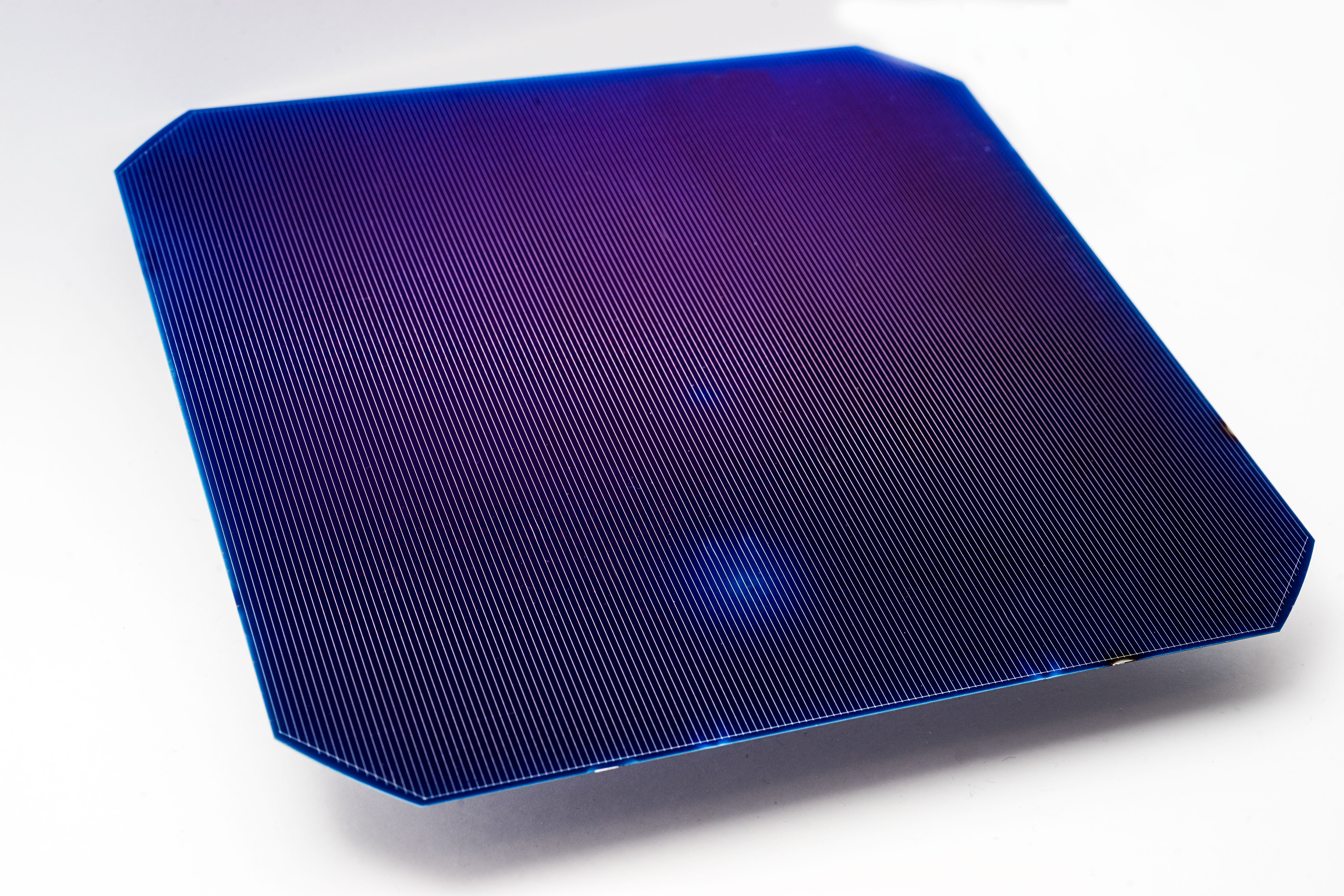
Imec, a leading nano-electronics research center and partner in Energyville, will present at this week’s Intersolar Europe/EU PVSEC a highly efficient bifacial n-PERT (BiPERT) solar cell featuring a bifaciality value close to 100%. With a rear cell efficiency close to the efficiency measured from the front of the cell, imec’s new achievement underscores the ability to strongly enhance the energy yield of photovoltaic (PV) modules made with this type of cell.
Bifacial solar cells not only capture the light falling on the front side of the solar panel, but also the light that reaches the rear side of the panel, such as light that is reflected from the background, from clouds, diffuse light, and even direct light at sunrise or sunset. Bifacial modules can therefore generate more energy as compared to traditional monofacial modules.
Published field tests have indicated that, depending on albedo values and bifaciality, bifacial gains from 10 – 40 percent are achievable. Bifacial cells can also be integrated into traditional glass-back sheet modules. In this configuration, they benefit from the scattering of infrared light at the back sheet to compensate for the lack of a rear metal reflector and from light reflection in the gaps between the cells.
Imec’s bifacial n-PERT cells (BiPERT) feature very thin (< 5 μm) Ni/Ag plated contacts and no busbars on both sides of the cell, resulting in a symmetrical structure of high aesthetic value. The cells have the potential to deliver a very low Cost-of-Ownership (CoO), as they can profit from a bifacial gain, a low-cost metallization sequence, and the high efficiency potential of multi-wire interconnections that reduce optical shading and the required metal contact fraction.
The first experimental batch of BiPERT cells (n-type Cz-Si, size: 239cm2) resulted in very high bifaciality values. The current as measured from the rear (39.8 mA/cm2) was 97% of the one measured from the front (41.2 mA/cm2) (typical bifaciality values are around 80-90%). Moreover, imec’s BiPERT cells with a rear emitter configuration reached excellent efficiencies up to 22.6% measured with a GridTOUCH system under Standard Test Conditions using only front side illumination and a non-reflective chuck.
These efficiency measurements don’t yet include the positive effect of the cells’ bifaciality on the effective energy yield of the cell. Moreover, optimizations to the cell process and introducing a front emitter configuration are expected to further increase the cell efficiency and the energy yield. With these efficiency and bifaciality values, an effective efficiency of about 26% may be expected with a limited bifacial gain of only 15%”.