OMRON’s Wireless 2JCIE-BL01 Sends Environmental Sensor Data Directly to Smartphones
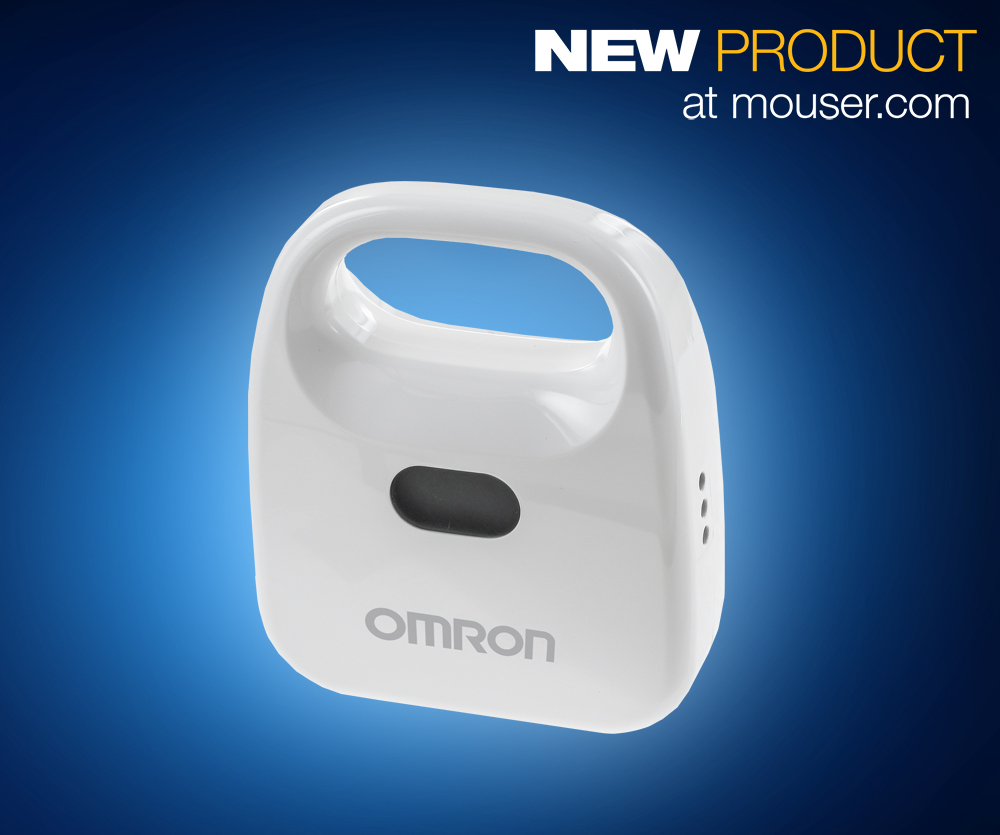
Mouser Electronics, Inc. is now stocking the 2JCIE-BL01 environment sensor from OMRON Electronic Components. Designed to detect the surrounding environment, the 2JCIE-BL01 is a compact, battery-operable environmental sensor with seven different sensing capabilities. Developers can use the 2JCIE-BL01 in applications such as home remote monitoring, building automation, outdoor weather monitoring, and factory environment monitoring.
The OMRON 2JCIE-BL01 environment sensor, available from Mouser Electronics, measures and collects data for a broad variety of environmental factors that include temperature, humidity, light, ultraviolet (UV) index, barometric pressure, sound, and acceleration (3-axis). The device transmits collected sensor data via Bluetooth low energy (BLE) technology over a cloud service using a free downloadable smartphone app.The sensor offers a communication range of approximately 10 meters, with a data output rate that between 1 second and 60 minutes. Developers can set threshold values to have the app notify users of environmental changes, abnormal sensor readings and uncomfortable conditions through push notifications. Developers can also set the device to transmit sensor data in broadcaster mode, enabling an environmental monitoring system in combination with common gateway devices.
OMRON’s 2JCIE-BL01 environment sensor measures 46 mm × 39 mm × 15 mm and weighs just 16 grams, including the battery.
To learn more, visit http://www.mouser.com/new/omronelectronics/omron-2jcie-bl01-sensor/.