Osram Opto's latest low-power optimated optical sensor now at Rutronik
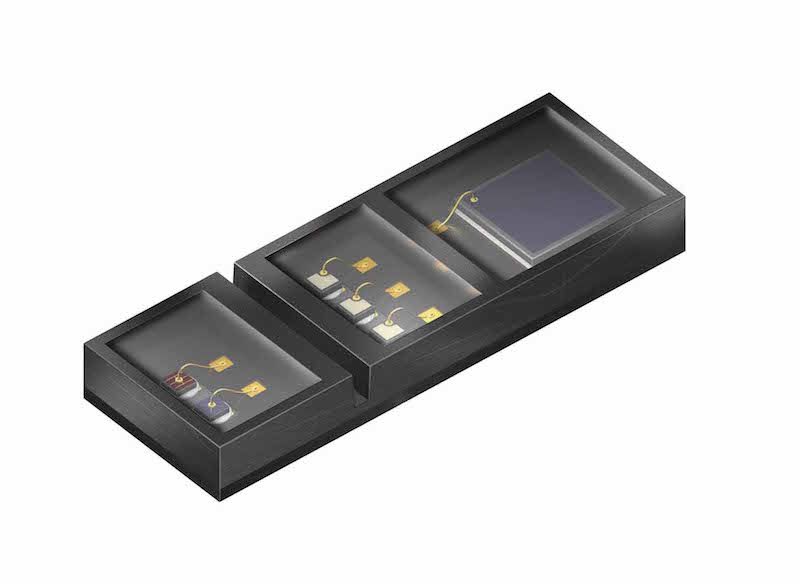
Osram Opto Semiconductors’ new sensor SFH 7060, a further development of optical sensor SFH 7050, is designed to measure pulse rates and the oxygen saturation level of blood. It offers excellent signal quality as well as low energy consumption and is ideal for wearables such as smartwatches and fitness armbands. The new sensor is available at distributor Rutronik as of now.
The 7.2x2.5x0.9-mm SFH 7060 consists of three green LEDs, one red LED, one infrared LED, and one large-format photodiode, which is optically separated from the emitters by an opaque barrier. Green light is best for measuring the pulse at the wrist. The three green LEDs with a wavelength of 530nm are based on the latest high-efficiency UX:3 chip technology from Osram Opto Semiconductors. At a current of 20mA they are particularly efficient and typically deliver an optical output of 3.4mW at a voltage of 3.2V per chip. The higher light output compared with SFH 7050 results in better signal quality and more stable pulse measurement. The low power consumption extends the battery life of the device.
Oxygen saturation in the blood is calculated from the different absorption rates of red (660nm) and infrared (940nm) light. The quality of the measurements depends to a large extent on the achievable signal-to-noise ratio and on the linearity of the photodetector. Both is achieved by the integrated photodiode with its active surface of 1.3x1.3mm. In addition, the distance between the two transmitters and the photodiode in the SFH 7060 is greater than in the SFH 7050, meaning the light penetrates deeper into the skin before it is reflected to the detector, leading to more stable signals and a better signal-to-noise ratio. The wavelength of the red transmitter is specified with a very narrow tolerance of ±3nm to ensure accurate measurements. The spectral bandwidth of the infrared and green LEDs is 30nm each.