PCIe Gen 4 Card Edge Connectors Support Speeds up to 16 Gbps
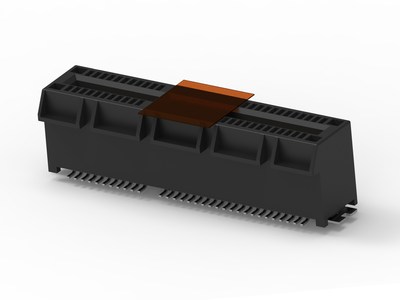
New connectors support next-generation Intel, AMD and IBM platforms with higher bandwidth
HARRISBURG, Pa. -- TE Connectivity (TE) introduced its new PCIe Gen 4 card edge connectors, which meet industry PCI-SIG Card Electromechanical (CEM) specification 4.0 and support Intel and AMD next-generation platforms with up to 16 Gbps of bandwidth. Designed to support next-generation CPUs for better system application scaling and higher bandwidth in servers, storage, workstations and desktop PCs, TE's new PCIe Gen 4 card edge connectors feature a 1.00mm pitch to enable all generations of PCI Express signaling designs and support speeds of 16 Gbps (PCIe Gen 4), 8.0 Gbps (PCIe Gen 3), 5.0 Gbps (PCIe Gen 2) and 2.5 Gbps (PCIe Gen 1). In addition, the connectors' footprint and mating interface are backward-compatible with each PCIe generation.
These PCIe Gen 4 card edge connectors are available in a wide variety of configurations, including x1, x4, x8 and x16 (36/64/98/164 positions) standard links as per PCI-SIG CEM specifications. There are three plating options (30u'',15u'' and gold flash), two polyester film options (full cover surface and 10mm x 10mm) and two solder tail options (solder pad and solder tab).
Learn more at www.te.com.