Presenting "Ionocaloric" Refrigeration: A New Approach to Efficient and Sustainable Cooling
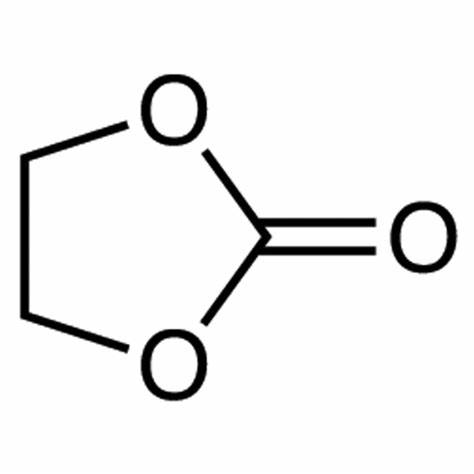
Seeking to make cooling more climate friendly and efficient, researchers used an environmentally-benign solvent and a salt – versus hydrofluorocarbons or other liquid refrigerants – to present a new refrigeration system that improves over existing refrigeration technologies, including solid-state caloric effect-based approaches. Their system takes advantage of the way changing the ionic concentration in a solution drives phase transitions. Here, this enables a reversible cooling cycle that the researchers call “ionocaloric” refrigeration. For more than a century, vapor-compression technologies have dominated refrigeration applications. However, for refrigerants, these systems often use hydrofluorocarbons, which are environmentally harmful and have a significant climate impact. Thus, developing high-efficiency cooling technologies that use environmentally safe, low-climate impact alternatives has become an important goal – even more so as cooling becomes more pressing in our warming world. Caloric effect-based cooling, like magneto- or electrocaloric refrigeration, which use solid materials that heat or cool when subjected to a changing magnetic or electric field, are promising technologies. However, they remain somewhat limited by their energy efficacy and cooling potential. Here, Drew Lilley and Ravi Prasher present a new approach to cooling – ionocaloric refrigeration – which leverages the large temperature change and heat absorption associated with repeatedly melting an ethylene carbonate (EC) solvent with a sodium iodide (NaI) salt. Lilley and Prasher describe the reversible process – the cooling cycle starts by mixing the solid form of EC with NaI, which, like adding road salt to an icy road, decreases the temperature of the mix through the solid-to-liquid phase transition. Then, using electrodialysis, the NaI is removed from the mixture, which purifies the EC, causing an increase in temperature as it recrystallizes back into a solid. According to the authors, in various tests, the ionocaloric approach had a cooling potential like that of current refrigerants and greater than other caloric effect-based cooling approaches. “The findings of Lilley and Prasher point to a new member in the caloric material family. It exhibits large efficiency and could be environmentally benign,” writes Emmanuel Defay in a related Perspective. “This is a serious contender for the future of cooling.”
EurekAlert!, the online, global news service operated by AAAS, the science society.