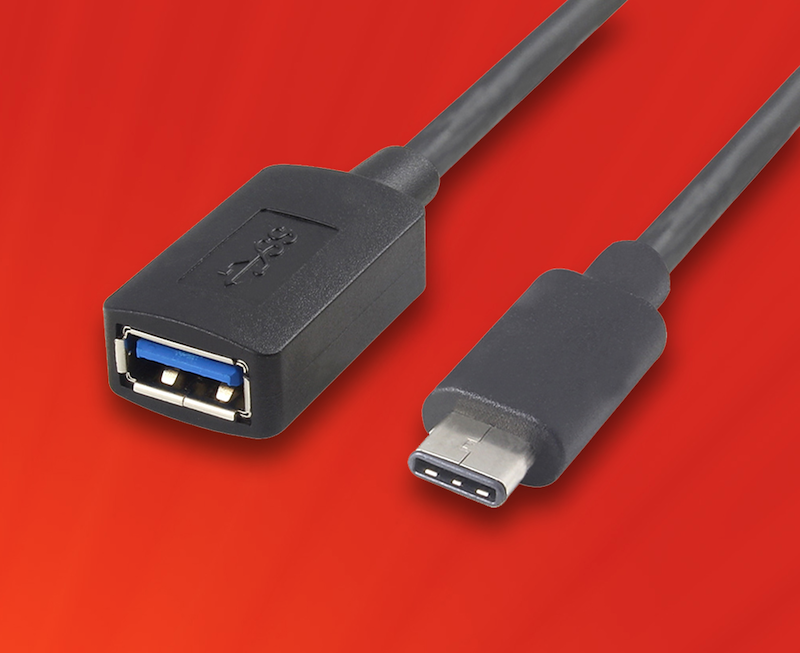
RS Components (RS), the trading brand of Electrocomponents, a distributor for engineers, has extended its own-brand portfolio with a range of competitively priced cable assemblies and connectors supporting the convenient new USB Type-C standard.
USB Type-C (USB-C) defines a universal reversible-plug connector for use on all devices, supporting single-cable multi-function connectivity for data at USB3.1 speeds and beyond, as well as charging, DC power supply, and audio/video up to 4K Ultra High Definition. Small enough for mobiles and rugged enough for PCs and home/office equipment, USB-C allows users to connect all devices using just one cable type. Simple adapters allow connection to existing standards such as USB Type-A as featured on USB2.0/3.0 host equipment, Micro USB, HDMI, DisplayPort, VGA or MFi (Made for iPhone/iPod/iPad) connectors.
The new RS-branded range comprises not only cable assemblies and a comprehensive selection of adapters, but also includes PCB-mount sockets that enable engineers to take advantage of USB-C in new projects. Over 20 different part numbers are available.
“User demand for affordable USB-C connectivity is growing as new products supporting the standard enter the market,” said Kevin McCormack, Global Head of IP&E at RS. “In keeping with the RS-branded philosophy, our new range of cables, adapters and components provides customers with a high-performing, dependable and cost-effective solution.”