Scientists Develop Divide and Conquer Approach for More Stable Power Generation
A nonlinear observer approach of SOC estimation based on hysteresis model for lithium-ion battery
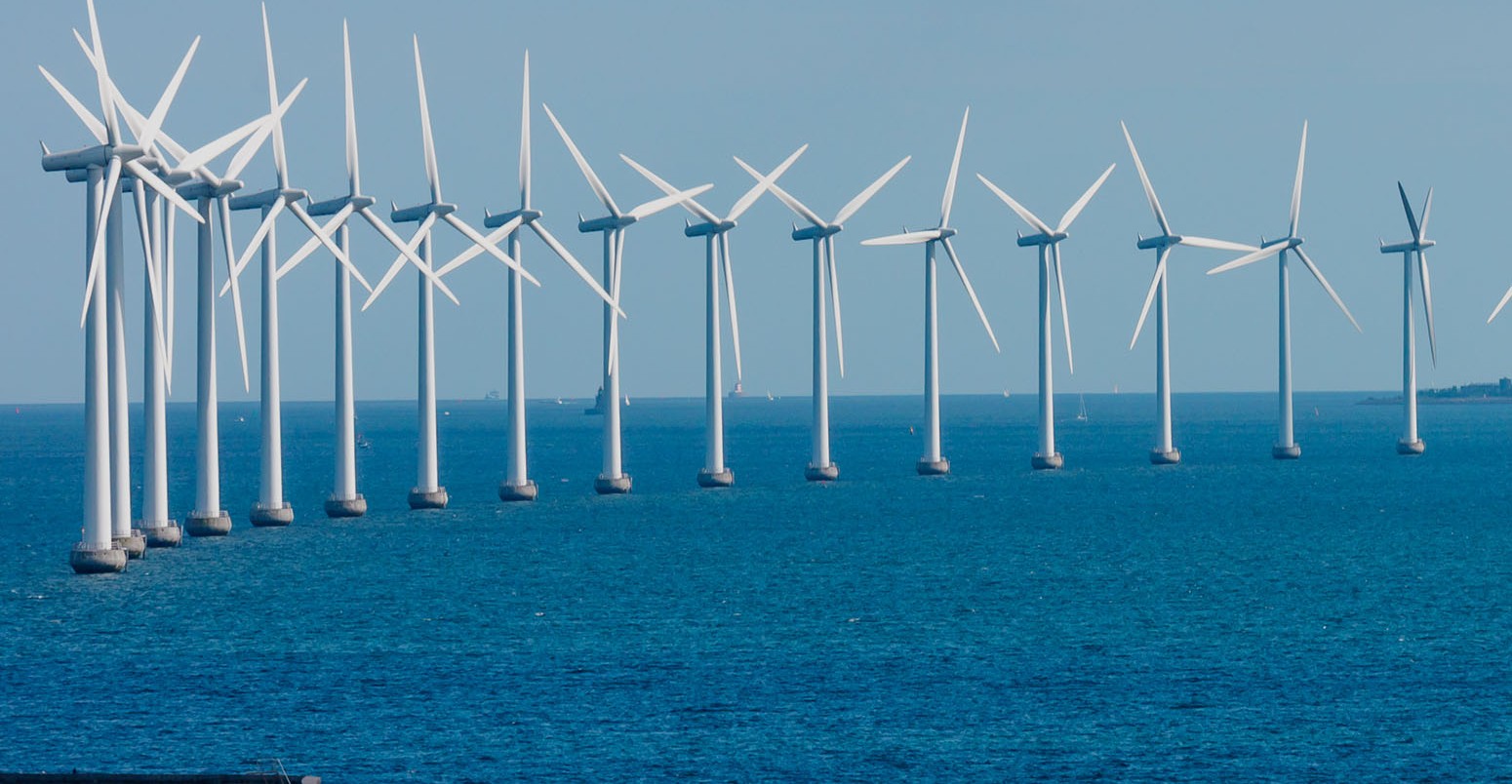
Wind is powerful, but it doesn't always blow where and when it's needed. To make it more reliable and widely available, scientists have developed a two-prong approach to ensure wind-generated power doesn't die down as a renewable resource.
The collaborative team includes scientists from the University of Connecticut and ABB, Inc., one of the largest engineering corporations in the world that works to translate scientific research into a sustainable reality. They published their proposed approach to better integrated wind generation into the power grid in IEEE/CAA Journal of Automatica Sinica (JAS), a joint publication of the IEEE and the Chinese Association of Automation.
"Wind farms are often located in remote locations with high-output wind resources, far from cities, where electricity demand is high," wrote Bing Yan, an assistant research professor in the department of electrical and computer engineering at the University of Connecticut and an author on the study. "In this paper, our idea is to pair each remote wind farm with a sufficiently large and not necessarily co-located conventional unit."
Yan and her team use an algorithm to virtually relocate the traditional power generation units to their wind counterparts. By computationally reducing the distance, there's less need for expensive high-capacity batteries to store reserve power.
"The basic idea is to divide power generation of conventional units into two components," wrote Yan. The first component estimates future wind states based only on the current states, rather than using information from previous wind states. The second component provides limitations, based on global information, for extreme wind states.
The overall approach produces power consistent with expected wind behavior, but it can adjust as needed when expectations fall short or exceed the reality. The pairing of units also accounts for areas with a high power demand, even if they're not geographically close.
The researchers tested their model using a simulation of paired conventional units and wind farms, the results of which demonstrate the approach's effectiveness, accuracy, and efficiency, according to Yan.
"Grid integration of wind power is essential to reduce fossil fuel usage, but challenging in view of the intermittent nature of wind," said Yan. "Our approach provides an efficient way to dampen the effects of wind uncertainties."
Yan and her team are currently working to further build on the work presented in the paper. One project, funded by the National Science Foundation, involves developing an urban distribution network for smart cities, as defined by software. Yan is specifically studying how to integrate renewable resources as core components of the network.
EurekAlert!, the online, global news service operated by AAAS, the science society: https://www.eurekalert.org/pub_releases/2017-06/caoa-sdd060517.php