SEGGER’s debug tech now available for Zilog’s ZNEO32! family
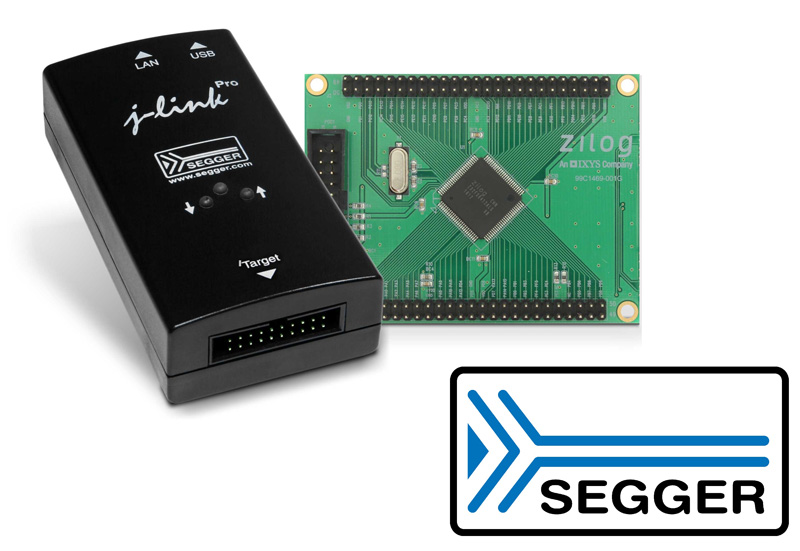
SEGGER has introduced J-Link support for Zilog’s ZNEO32! Cortex-M3 based family of microcontrollers (MCUs). This includes support for debug, as well as Flash-based programming. Production line programming is also available via the SEGGER Flasher family.
Projects using the ZNEO32! MCUs can now take advantage of the proven reliability and industry-leading performance offered by SEGGER’s highly popular J-Link debug technology - resulting in considerably faster and more efficient developments cycles.
J-Link is supported by all major IDEs - including IAR EWARM, Keil MDK, Rowley Crossworks, SEGGER’s own Embedded Studio and other Eclipse/GDB-based offerings. This gives Zilog developers flexibility in their choice of IDE without compromising on the superior download speed to RAM and Flash that J-Link technology provides.
“I am very pleased to announce J-Link support for this Zilog MCU family. Developers using ZNEO32! will now have access to the best debugger to help them create their next generation motor control products," says Alex Grüner, CTO of SEGGER.
“Our ZNEO32! is a perfect solution for motor applications. With SEGGER’s J-Link support of this high performance, low-power Cortex-M3 core, development from almost any IDE is made easy. SEGGER’s Embedded Studio and J-Link are a perfect match to our powerful Z32F384 Evaluation Kit,” said Tom Ormiston, Tools Manager, at Zilog.
J-Link
SEGGER Microcontroller