Smart renewable energy exhibit comes to Intersolar Europe
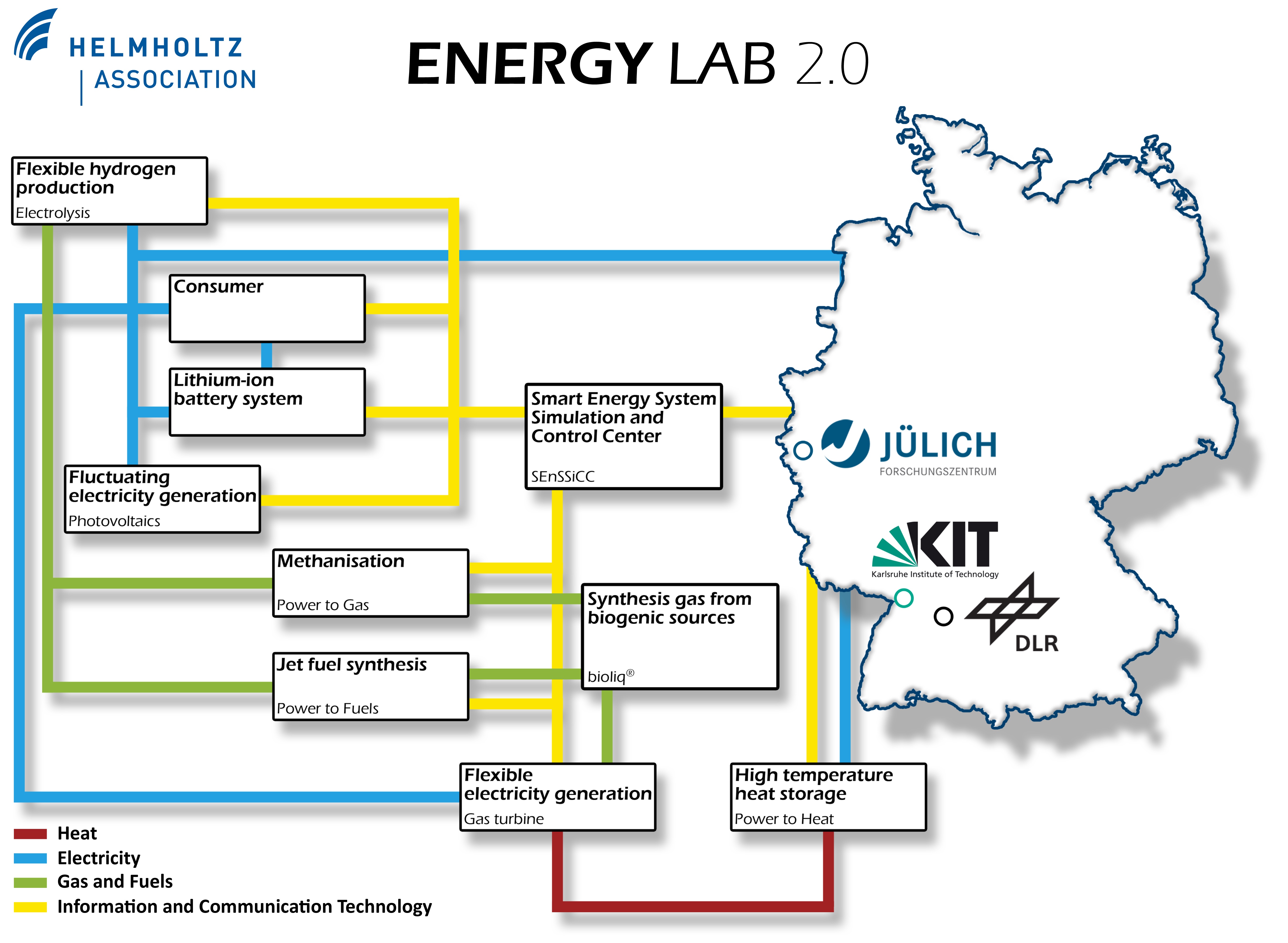
One of the major challenges of the energy transition involves making the use of increasing amounts of energy generated by fluctuating renewable sources, such as the sun and wind, both efficient and affordable, while also guaranteeing the necessary grid stability and supply safety. As a “real-life laboratory” and simulation platform, Energy Lab 2.0 enables the testing of new approaches for integrating the most diverse technologies into the energy system.
For the first time in Europe, Energy Lab 2.0 is connecting larger test facilities for generating renewable electrical energy, for storing and converting to gas, fuels and heat as well as for reconverting chemical energy sources into electricity in a way that makes it possible to develop and comprehensively test designs for a cellular, smart overall system for energy supply. In addition to combining electrical, thermal and chemical energy flows and integrating storage devices, the principal focus is on developing and testing new information and communication technologies which control and regulate such smart grids.
At Intersolar and ees Europe, the Karlsruhe Institute of Technology (KIT) and its partners from the Helmholtz Association – the German National Aeronautics and Space Research Center (DLR) and the Forschungszentrum Jülich (FZJ) – will be presenting this infrastructure platform which investigates the complex interplay of the components of future energy systems at the special exhibit Smart Renewable Energy.
Dates: May 31-June 2, 2017 | Hall: B2, booth B2.140+150