SMD MLCCs Offer Lead (Pb) Bearing Termination Finishes
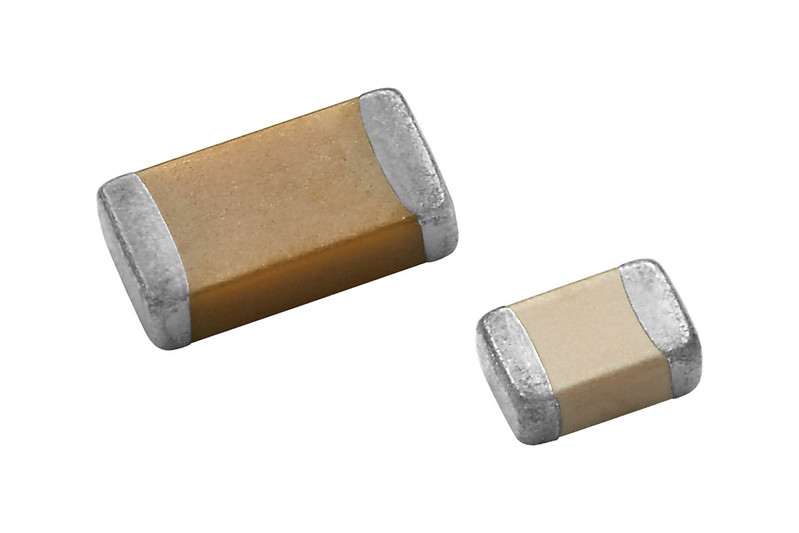
With A Minimum Lead (Pb) Content of 4 %, Devices Mitigate Tin Whisker Formation
Vishay Intertechnology, Inc. introduced a new series of surface-mount multilayer ceramic chip capacitors (MLCCs) with a lead (Pb)-bearing termination finish suitable for low Earth orbit (LEO) satellites and other space, military, and avionics applications requiring tin whisker mitigation. Operating temperatures can be as high as +150 °C.
The Vishay Vitramon VJ....32 Lead-Bearing Finish series offers a termination finish with a minimum lead (Pb) content of 4 %. Previously, the option for lead (Pb)-bearing termination finishes was reserved for more expensive Hi-Rel devices. The MLCCs released today provide designers with a cost-effective alternative for aerospace systems in which tin whiskers must be avoided but space-level reliability isn't required.
Manufactured in noble metal electrode (NME) technology with a wet build process, the VJ....32 Lead-Bearing Finish series is available with C0G (NP0) and X7R dielectrics in five body sizes from 0402 to 1210. Devices with a C0G (NP0) dielectric feature low capacitance down to 1.0 pF, a temperature coefficient of capacitance (TCC) of 0 ppm/°C ± 30 ppm/°C from -55 °C to +125 °C, and an aging rate of 0 % maximum per decade. X7R devices provide higher capacitance to 1.0 µF, TCC of ± 15 % from -55 °C to +125 °C, and an aging rate of 1 % maximum per decade.
The MLCCs are qualified according to AEC Q200 to provide designers with Automotive Grade reliability.
More on Vishay here.