Solving the core problems of power density, complex integration, and reliability in high voltage solutions by using advanced digital intelligence.
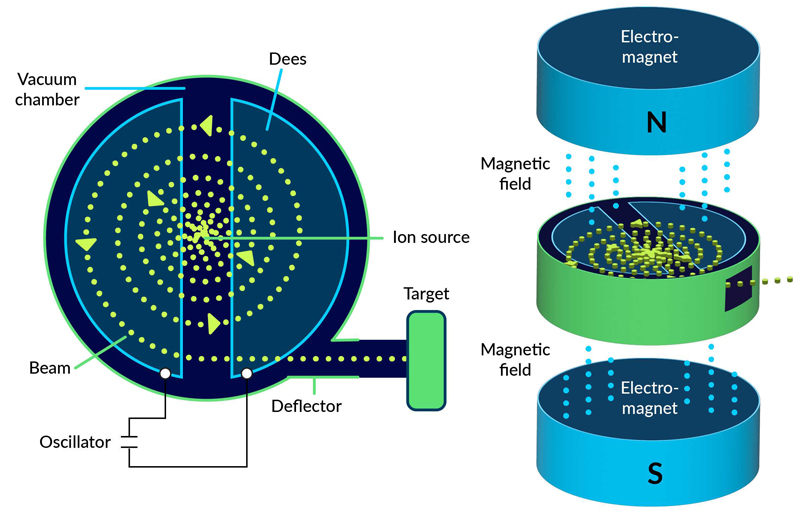
Figure 1: A cyclotron application block diagram
When integrating a high voltage power supply into equipment that requires very high voltage and high power, accuracy and reliability are critical. This applies whether the equipment is a medical cyclotron or an advanced manufacturing tool such as an e-beam welder. High voltage design presents its own set of challenges, and conventional power supplies often cannot keep pace with the rapid innovation in these fields. This usually means engineers are forced to rely on complex workarounds to get the system working reliably. It is important to look for high voltage platforms that directly address the core issues of maximizing power density, simplifying system integration, ensuring stable operation and delivering long-term reliability.
Selecting the right solution will save engineers significant time and effort and help engineers achieve the performance the end application demands.
The Constraints of Conventional High Voltage Design
The most immediate challenge facing system architects is the physical size and weight of conventional high voltage power supplies.
In environments such as advanced manufacturing facilities and research laboratories, space is always at a premium, making efficient rack usage vital. Historically, high voltage power supplies have often occupied large rack footprints, sometimes up to 6U, 7U or more. This bulky design limits production scaling and the introduction of new process tools, because rack space directly correlates with available functionality and power.
Furthermore, traditional high voltage insulation methods often rely on materials such as potting compounds or oils. Potted components significantly increase unit weight, creating handling and installation challenges. More critically, potting severely impairs serviceability: if a component fails, repairing or diagnosing the root cause becomes extremely difficult, often resulting in costly replacement and extended downtime.
Beyond physical constraints, system integration and control present ongoing headaches for engineers. Conventional high voltage power supplies often use analogue components and topologies for critical control loops. Integrating these analogue systems into modern automated fabrication facilities, which rely on digital control, demands significant extra effort and external hardware. To monitor basic parameters like output voltage, current, or fan speed, engineers must retrieve analogue signals (if available), convert them using external analogue-to-digital converters (ADCs), and feed the resulting digital data into their own digital signal processors (DSPs). The process requires engineers to design extensive additional circuitry outside the power supply unit, increasing the system’s physical requirements, complexity, development time and maintenance overhead. This effort adds weeks, if not months, to the design schedule for integrating a single power supply and maintaining the improvised control system requires ongoing cost and effort over the unit’s lifetime.
High Voltage Demands Across Diverse Applications
The need for highly controllable, compact high voltage power is critical across several fields. While the fabrication of advanced semiconductors relies heavily on precise ion implantation, other industries also depend on high power, high precision systems.
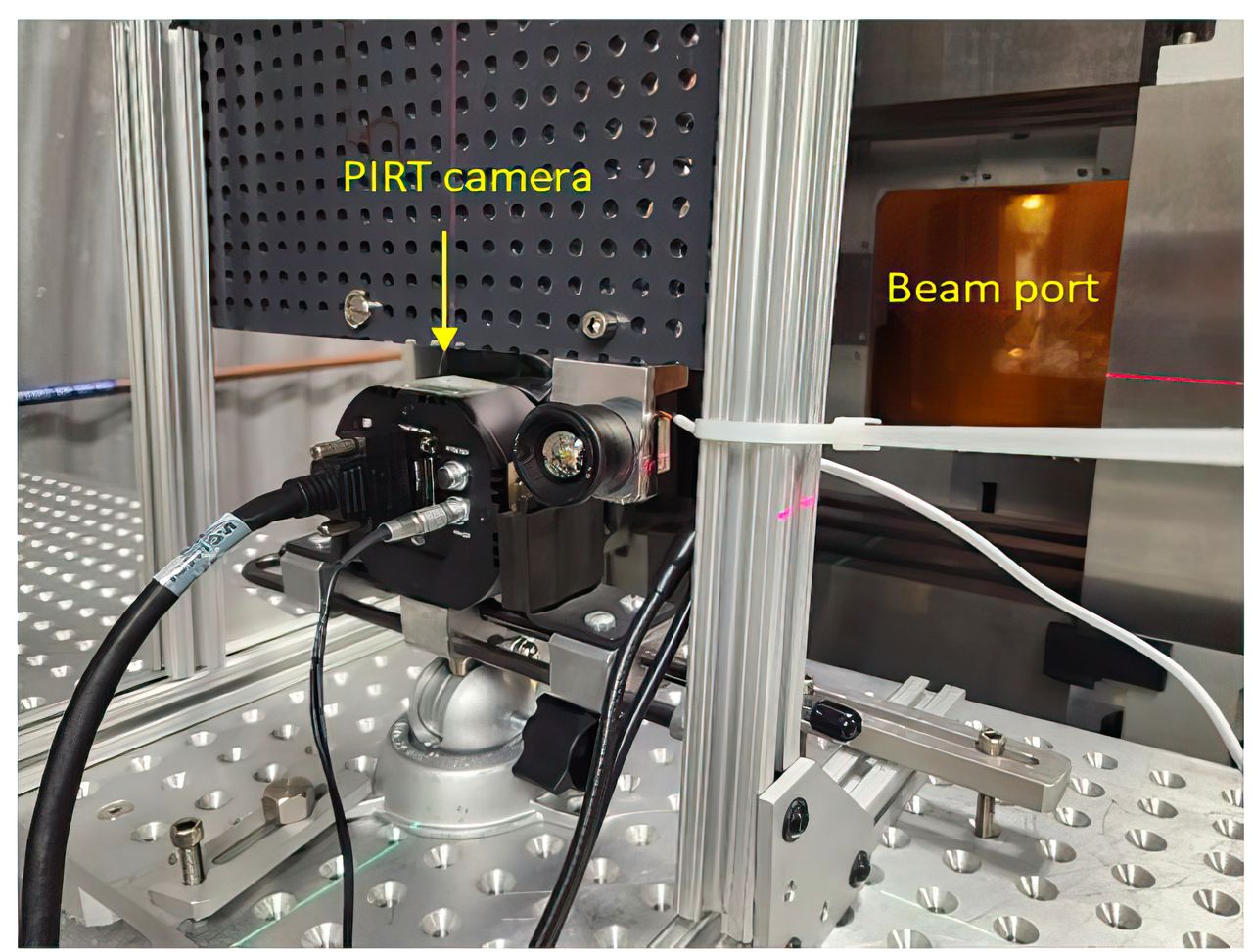
In medical and research accelerators, such as proton therapy facilities and cyclotrons, the core function is the acceleration of particles. These systems require an ultra-stable power supply output to ensure safe and effective treatments. Moreover, successful integration requires compatibility with existing hospital and research control systems, which require robust communication interfaces like CAN and EtherCAT. Beyond immediate control, these critical systems must support event logging and advanced diagnostics to facilitate regulatory compliance and rigorous post-treatment analysis.
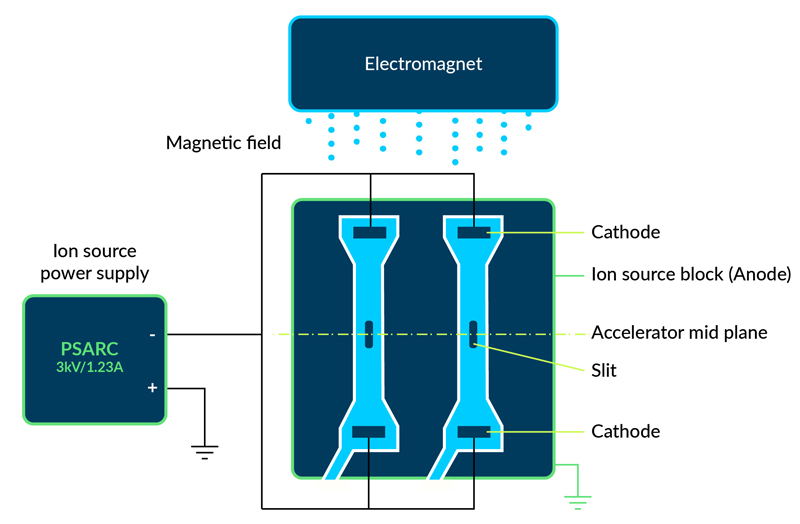
Click image to enlarge
Figure 2: An example of high voltage in cyclotron application
Similarly, advanced industrial processes like e-beam welding and additive manufacturing require reliable, high voltage solutions that can support scalable setups and potentially multi-gun configurations. In these applications, digital feedback is essential to ensure the weld consistency and quality vital for aerospace and medical device production. Furthermore, robust protection features are necessary to safeguard sensitive equipment and high value workpieces during operation.
A Next Generation Platform for High Voltage Systems
The XP Power WBQ series offers an innovative solution to these critical needs, effectively transforming the high voltage power supply from a troublesome component into an integrated system tool.
The fundamental innovation lies in its industry-leading power density along with delivering the premium set of the features and controllability using the digital architecture. The WBQ series delivers output voltages up to 100kV and output power up to 10kW in an ultra-compact 3U, 19-inch rack format. This is the smallest footprint available, often half or less than that of this product class, allowing engineers to maximise valuable rack and cleanroom space. Crucially for high power applications such as medical cyclotrons or large-scale e-beam welding systems, multiple WBQ units can operate in parallel to scale the total output up to 100kW or more in a 19-inch rack space.
This small size is achievable thanks to key technological elements, most notably the use of silicon carbide (SiC) MOSFETs in the power stage, which enable over 90% efficiency. Furthermore, the WBQ series uses air insulation rather than traditional potting or oil. This design choice significantly reduces unit weight and, importantly, improves serviceability. Unlike potted units, air-insulated designs enable easier root-cause analysis, maintenance, and potential repair, resulting in enhanced uptime and lower long-term maintenance costs.
Digital Architecture for Precision Control
The core capability of the WBQ platform is its fully digital architecture. The system is built around a digital signal processor (DSP) that monitors and controls the critical functionality and internal loop, rather than relying on traditional analogue components. This digital control loop is configurable via an intuitive user interface (UI), enabling engineers to precisely control output parameters, voltage, and current in real time.
The unit’s digital intelligence streamlines every phase of deployment and operation. Advanced diagnostics, monitoring, and troubleshooting are natively integrated. Features include event logging, real-time monitoring of system health, and a black box reporting function. The black box captures the state of the power supply immediately preceding a failure, enabling engineers to identify and resolve issues quickly, shifting maintenance from reactive to preventive.
Click image to enlarge
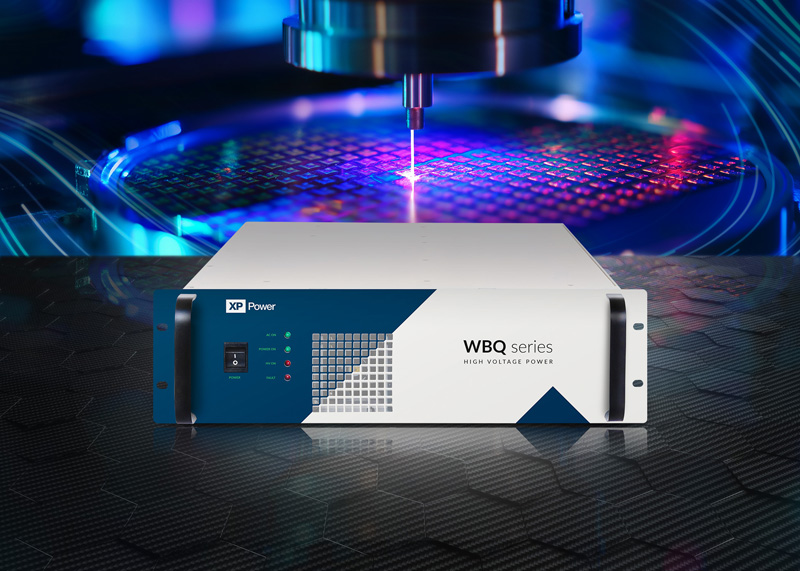
Figure 3: The XP Power WBQ platform has a fully digital architecture
This level of visibility saves weeks of troubleshooting time compared with analogue systems. Furthermore, digital and analogue interfaces (including CAN, USB, and, optionally, EtherCAT) ensure seamless integration with modern automation systems, making the power supply instantly part of the overall application control loop. The flexibility extends to post-installation support through simple field firmware updates, ensuring the system remains adaptable to evolving application requirements.
Conclusion
In fields like medical accelerators and e-beam welding, where stability and throughput are non-negotiable, the WBQ series delivers application-driven value. For medical systems, its digital control ensures the necessary stability for precise particle beams, and features like event logging simplify compliance. For e-beam welding, high power density supports flexible machine design while continuous digital feedback ensures reliable weld quality. By solving the core problems of power density, complex integration, and reliability through advanced digital intelligence, the WBQ platform sets a new industry standard for high voltage solutions.