TDK expands portfolio of automotive-grade NP0 MLCCs
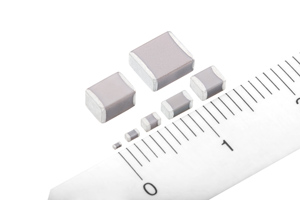
TDK has expanded its CGA series of automotive-grade MLCCs based on NP0 ceramics and claims the industry’s broadest portfolio of NP0 products in terms of voltage range and capacitance range. The updated lineup of NP0 types, which feature a temperature coefficient of 0 and a tolerance of ±30 ppm/K up to +150 °C, includes types rated voltages of 250 V to 630 V. The CGA series of NP0 MLCCs thus are now available with rated voltages from 50 V to 630 V and rated capacitances from 100 pF to 220 nF. The NP0 MLCCs feature a temperature range of -55 °C to +150 °C. The CGA series is qualified to AEC-Q200. Mass production will be launched in November 2014.
The extension of the existing range of NP0 MLCCs in case sizes EIA 0402 to 2220 (IEC 1005 to 5750) is based on TDK’s comprehensive competence and experience in materials and multilayer technologies. Thanks to their nearly zero capacitance drift related to temperature and aging, these capacitors are suitable for demanding automotive applications requiring stable temperature characteristics over a wide range. They thus make it possible to achieve precisely the output as intended by the design. The expanded series underscores TDK's leadership in terms of MLCC product configurations as well as voltage and capacitance ratings.*
.jpeg)
 Single.jpeg)