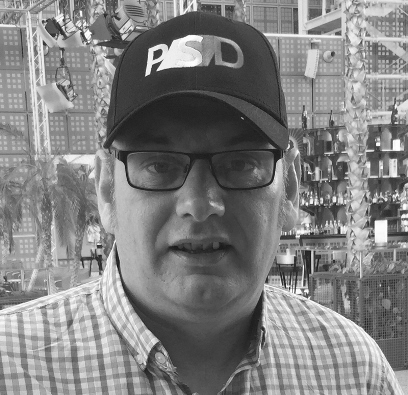
Welcome to the May edition of Power Systems Design Europe. We are now getting very close to the biggest event in the industry in Europe. The PCIM exhibition and conference will be held in its usual location in the Nuremberg Messe from the 11th until the 13th of June this year. The organizers are promising that the event will be busier than ever, and they will open up an extra hall to host the almost 500 exhibitors that have booked up so far. Hopefully I will have the chance to meet some of you there.
The main focus of this year’s show will be Smart Power Systems Integration. One of the reasons for that choice of topic is the increasing deployment of AI. In around the last half a century, we have seen three ‘industrial revolutions’ - computing, the Internet and now AI, and in the long term, AI is likely to be the most impactful of all. The move from providing computers with options for every likely scenario to training them to make their own decisions will undoubtedly change the world. Many professions will be heavily affected. For example, AI is already helping doctors diagnose illnesses. Unlike other industrial revolutions where workers were the worst affected, the AI revolution will also target middle class jobs.
At the moment, AI is mainly implemented in large data centres that use the fastest and most complex processors that are available. The power design is concentrated into as small a space as possible to leave more room for processing, while also being highly efficient to keep heat generation and costs down. That is a tough task that will challenge the best engineers, but there are greater tasks on the horizon. AI is not going to be confined to those dedicated facilities for too much longer, and the true utility of AI will be found when it is deployed in the real world. AI algorithms can now run on the smaller microprocessors that are found in almost every device. Processing closer to where it is needed has many advantages, however, many of the applications will use batteries or be self-powered and be required to fit into the smallest of spaces. Designing power solutions for applications like smart sensors is already challenging enough, and adding AI to that mix will make it even more so. We will take a look at some of the challenges and solutions inside this magazine, as Powering AI is the main focus of this month’s Special Report.
As well as the Special Report, the magazine will also contain general power articles in our Tech Focus section and a round-up of the latest news and views from the industry.
Best Regards,
Ally Winning
European Editor, PSD