The Industry's First Soft-Termination MLCCs With Low ESR
Low ESR comparable to conventional MLCCs
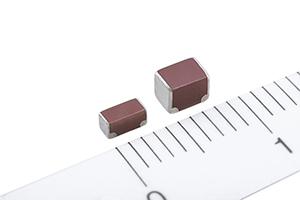
TDK Corporation has developed the industry’s first soft-termination MLCCs with low ESR. The new CN series features terminal electrodes with a conductive resin layer that provides high mechanical robustness to protect against board flexure. At the same time, the new MLCCs offer a low ESR that is comparable to that of conventional MLCCs. The CN series offers capacitance values ranging from 2.2 µF to 22 µF and rated voltages from 16 V to 100 V. Based on X7R dielectric material commercial grade and automotive grade types of the new MLCCs are available. The latter are qualified to AEC-Q200. Mass production and sales of the first types was launched in April 2018.
Soft-termination MLCCs, which are able to withstand the stress from board flexure, are an effective way to prevent short circuits when used in battery lines. Conventional designs that coat the electrodes completely with resin, however, lead to higher ESR and losses. TDK has achieved the low terminal resistance values by applying the conductive resin layer only where the terminal electrode comes into contact with the PCB. Thanks to the low resistance of the terminal electrodes of the new CN series these MLCCs are suitable for battery lines in automotive and industrial robot applications, where they help to improve system reliability. The capacitors can also be used in automotive ECUs, advanced driver assistance systems (ADAS), and automated driving systems. TDK offers a broad portfolio of MLCCs for a wide range of applications. TDK will continue to place a special focus on the development of technologically superior automotive grade MLCCs.