How continuous development can accelerate project timelines and optimize production through effective knowledge sharing
Figure 1: ENNOVi-SealTech – ENNOVI’s shrinking method for sealing 3-phase busbars at a lower cost and faster processing time compared to conventional methods
The automotive industry is undergoing significant change as hybrid and electric vehicles rapidly evolve. Instead of relying on Tier 1 supply partners for the manufacture and supply of systems and modules, OEMs are increasingly bringing development and manufacture in-house. This is particularly true for high-value systems like batteries, power electronics (including inverters, on-board chargers, and DC-DC converters), and electric motors - a strategy that aims to drive innovation and strengthen competitiveness. Consequently, OEMs are working more directly with suppliers that have traditionally operated at the Tier 2 level, reshaping the supply chain.
Accelerating innovation through collaboration
As OEMs assume greater responsibility for system development, demand for rapid project execution and efficient scaling has never been higher. Engineering teams at leading OEMs, such as those in Germany, bring deep technical expertise and a strong tradition of quality to every project. However, the pace of technological change and the increasing complexity of electrification can create resource challenges, especially when speed-to-market is critical.
This is where collaborative partnerships become invaluable. By working closely with external experts, OEMs can leverage additional resources and specialized knowledge in design for manufacturability (DFM), materials science, and high-volume production. This support enables engineering teams to accelerate project delivery, optimize costs, and avoid resource overload, without compromising the high standards of quality and innovation for which they are renowned.
Leveraging global knowledge sharing
ENNOVI’s unique position as a global player allows it to collaborate with OEMs across different regions, including both established leaders and fast-moving innovators. For example, while Chinese OEMs are recognized for their speed and agility, German OEMs are celebrated for their engineering excellence and quality. This broad perspective enables the company to share best practices and insights gained from a diverse range of projects, helping OEMs bridge the gap in speed of execution while staying at the forefront of technology development.
To illustrate how collaborative innovation can accelerate project timelines and optimize production, let’s look at three recent examples:
New Sealing Approach to Busbar Interfaces
Busbars are essential for connecting electrical motor systems, inverters, and oil pumps. When a reliable seal is needed between coolant and dry electrical connections, traditional methods like potting or rubber O-rings can introduce complexity and potential failure points. ENNOVI has developed two advanced sealing approaches that integrate seamlessly with the injection molding process.
The double-walled shrink tubing method uses an inner adhesive layer that bonds to the metal busbar during molding, while the outer polyolefin layer integrates with the molded plastic to form a robust seal (Figure 1). This process is integrated directly into the assembly line, reducing processing time and labor costs.
For more challenging applications, adhesive tape can be applied efficiently with automated equipment, providing excellent adhesion and resilience throughout the molding process.
Both methods eliminate post-processing steps, enabling OEMs to accelerate production and reduce costs while maintaining reliability.
Adhesive-free lamination for battery systems
Battery platforms are complex and varied. OEMs can select either cylindrical, prismatic or pouch cell structures. At the same time, battery architectures are evolving from multiple-battery modules to larger cell-to-pack (C2P) and cell-to-chassis (C2C) designs. A cell contacting system (CCS) collects current from each cell and transports it to the busbars and the external circuit.
Click image to enlarge
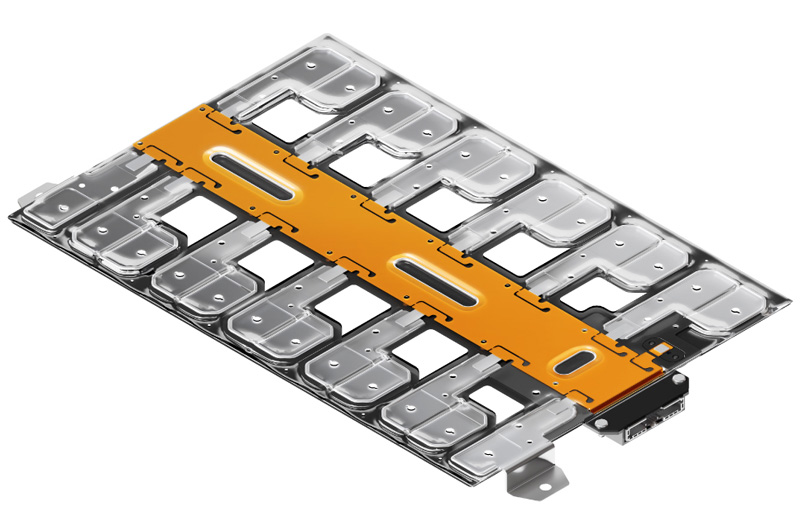
Figure 2: Ideal for diverse cell-contacting system designs, ENNOVI’s adhesive-free lamination process offers OEMs a cost-effective approach to designing and producing current collectors for batteries that last the entire lifetime of an EV
Historically, CCS assembly on battery cells has relied on molded plastic trays and foam. While effective for positioning the cells and current collectors, these methods introduce unnecessary weight and complexity, especially as module sizes increase.
ENNOVI’s hot and cold lamination processes, and more recently, an adhesive-free lamination technique, offer OEMs a streamlined solution (Figure 2). Compared with hot lamination, the adhesive-free lamination process enables OEMs to halve insulation material costs, reduce energy consumption by over 95%, and accelerate processing time by 80%.
Integrating flexible die-cut circuit technology
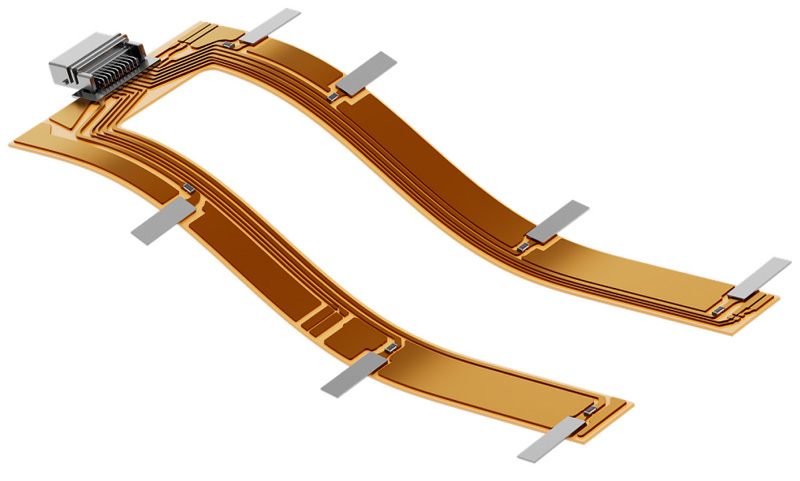
As battery systems become more advanced, the need for efficient, scalable and more sustainable manufacturing solutions grows. ENNOVI’s flexible die-cut circuit (FDC) technology replaces traditional flexible printed circuits (FPCs) with a more sustainable, cost-effective and scalable alternative in the battery CCS (Figure 3).
FDC technology stands out for its innovative reel-to-reel manufacturing process, which eliminates the size limitations of conventional FPCs and significantly reduces material waste and production steps. Unlike FPCs, which require a multi-stage batch photolithography process involving corrosive chemicals and generate considerable waste, FDCs enable the recycling of clean copper waste. This not only makes the process more environmentally friendly but also results in substantial cost savings. The streamlined process also reduces cycle times and improves scalability for high-volume EV battery production.
From a technical perspective, FDCs offer a range of features that enhance battery pack design and performance. FDCs can also integrate built-in fuse traces, surface-mount fuses, thermal sensors and current-collector tabs, all of which contribute to safer, more reliable battery operation. This makes FDC technology an ideal solution for OEMs seeking to accelerate EV battery manufacturing, enhance sustainability and maintain high standards of quality and innovation.
Click image to enlarge
Figure 3: ENNOVI’s flexible die-cut circuit (FDC) technology is a flexible and sustainable alternative to flexible printed circuits (FPCs)
Future trends: all-solid-state batteries
The next wave of battery innovation is being driven by all-solid-state batteries, which promise higher energy density, improved safety and longer lifespan than today’s lithium-ion batteries. All-solid-state batteries replace flammable liquid electrolytes with solid materials such as ceramics, sulfides or polymers. This enables the use of lithium metal anodes, potentially achieving energy densities of 450 to 500 Wh/kg. The solid electrolyte is non-flammable and more stable, addressing key safety concerns and reducing the risk of thermal runaway. These batteries are also expected to have a longer cycle life due to reduced degradation mechanisms.
As OEMs push for faster charging and higher power output, battery systems are being designed to handle double the current density of previous generations. This results in higher current density per unit area, which can significantly increase heat generation during operation. Effective thermal management becomes even more critical in this context. Liquid cooling systems are already widely used in EVs for their superior heat transfer efficiency and ability to maintain uniform cell temperatures. For all-solid-state batteries — which are expected to operate at even higher current densities — integrating liquid cooling is a key area of research and development.
Enabling the future of automotive innovation
As the industry moves toward more advanced battery technologies and higher performance targets, OEMs face increasing complexity in design, manufacturing and integration. ENNOVI is uniquely positioned to help OEM engineering teams navigate these challenges by providing advanced solutions like FDC and adhesive-free lamination to streamline battery assembly and reduce costs. The company collaborates on next-generation battery architectures, including all-solid-state designs and integrated thermal management systems, and shares global best practices and technical expertise to accelerate project timelines and ensure high-quality, reliable outcomes.