NEWS: PRODUCT NEWS
TI introduces fully integrated 1.8-V and 3.3-V, seven-channel relay driver
08/23/2012
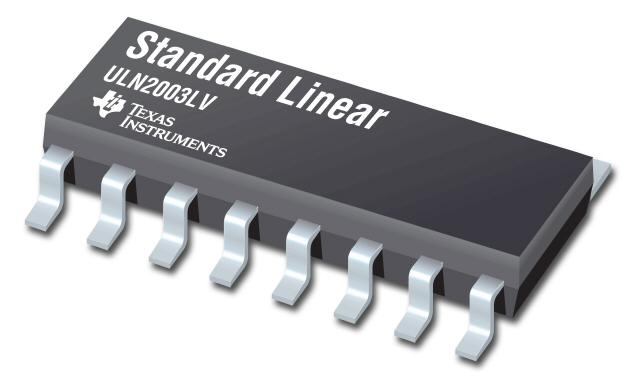
Interface device reduces board space by 80% for telecommunications applications
Click image to enlarge
Applications can reduce board space and driver dissipation by 80%.
Applications can reduce board space and driver dissipation by 80%.
Texas Instruments has introduced a fully-integrated, seven-channel relay driver that can support low-voltage relays from as low as 1.8 V up to 5 V. The ULN2003LV relay driver replaces a handful of discrete components with a single device to drive lower voltages for data relays and rails within telecommunications equipment. Using the ULN2003LV, customers can reduce board space by up to 80% while lowering power consumption and cost. Key features and benefits of the ULN2003LV
- High performance in noisy environments: Input RC snubber greatly improves driver performance in noisy operating conditions.
- Channel grouping for higher current loads: Internal input pull-down resistor allows input logic to be tri-stated for greater efficiency at higher loads.
- Lower power: Seven low-output-impedance drivers minimize on-chip power dissipation, resulting in 1/5 the power consumption of competing ICs.
- Wider device compatibility: The relay's 1.8-V to 5-V CMOS logic input interface is compatible with a wider range of microcontrollers and other logic interfaces than competing ICs.
Related