Multi-cell gas gauge supports Li-Ion and LiFePO4 chemistries
The BQ34Z100 gas gauge extends battery run-time for applications like medical instruments, power tools, e-bikes and UPSs.
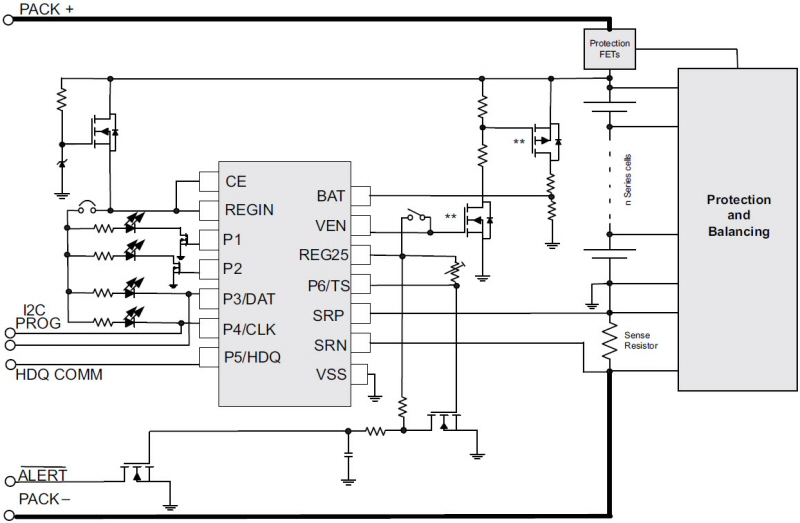
Texas Instruments Inc has introduced their first in a family of multi-chemistry, multi-cell battery-management gas-gauge ICs. The BQ34Z100 gas gauge supports a wide range of lithium-ion and lithium-iron-phosphate chemistries in 2- to16-cell battery packs, extending battery run-time for applications like medical instruments, power tools, e-bikes and UPSs. Today's multi-cell lithium battery designs in portable industrial and medical equipment need a more accurate way to measure remaining battery capacity. The bq34z100 battery gauge uses charge voltage measurements and battery characteristics to determine a battery's state-of-health and maintain up to a 94% accurate capacity measurement for the entire life of the battery. The gauge also works independently of series-cell configuration, and can reduce power consumption through an external voltage translation circuit. The BQ34Z100 multi-chemistry fuel gauge for lithium-based batteries is available now in a 14-pin, 5-mm x 6-mm TSSOP package, priced at $2.10 (1000). Future gas gauges in the family will monitor Lead Acid, NiCd, and NiMH chemistries. www.ti.com/bq34z100-pr-eu