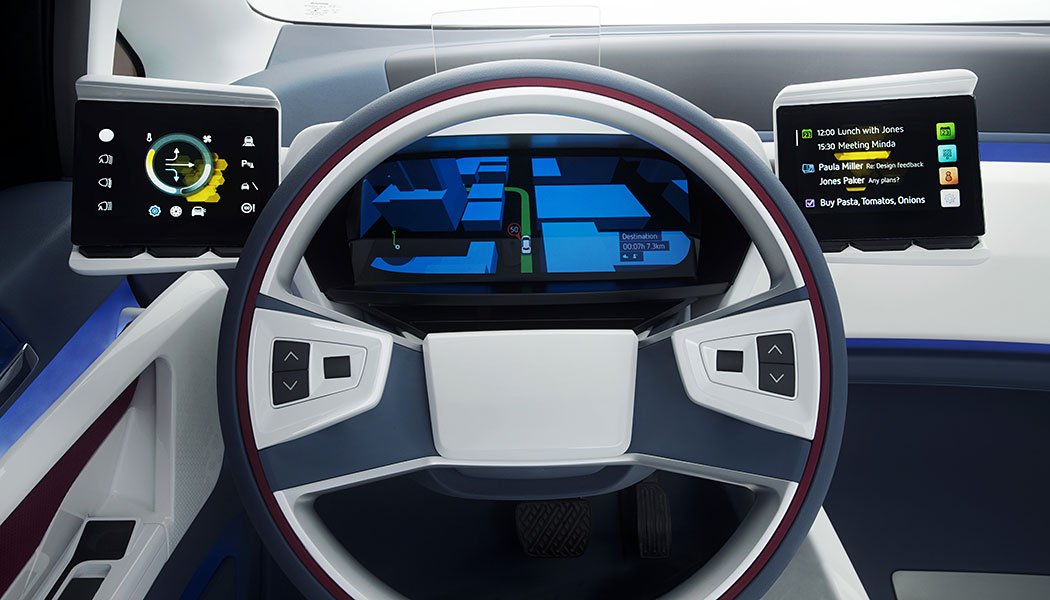
Visteon's e-Bee concept car, dubbed 'flexible, frugal and simple' features custom-built cabin showcasing Visteon's broad array of electronics and materials technologies. The electric e-Bee does not have an engine and one of the concept goals was to maximize interior space by smart packaging vehicle components. Visteon created a new single module climate control, combining heating and air conditioning in one unit that being located under the bonnet, frees up cabin space for the control systems. In the e-Bee, the driver gets three screens. One, replaces the current instrument cluster of speed and navigation vehicle information. This screen reportedly makes it easier for automakers to see the same car in different regions of the world, and much easier to localize software, rather than swap analog gauges in and out. The two capacitive touch screens, either side of the steering wheel, focus on the driver. In the current concept, the left screen controls headlights, climate control, and parking sensors, The right screen offers infotainment features. The e-Bee also uses a screen in place of the tradition rearview mirror, that now gives a 180-degree rear view. Visteon calls its interior electronics pack MRIP (Mid-Range Infotainment Platform). Based on OS software, the system is designed for upgrading during the vehicle's life cycle. Along with current features Bluetooth, navigation and digital audio, MRIP includes Wi-Fi compatibility and NFC (near-field communications) for handshaking with devices brought into the car. Visteon Corporation