Automakers Fund Study That Exposed Monkeys to Diesel Fumes
So this is pretty awful.
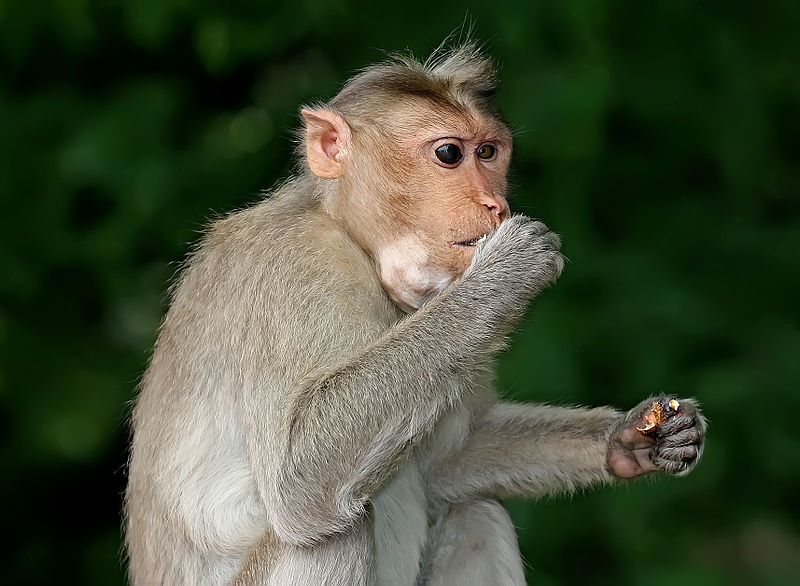
Three German automakers have been caught in a scandal involving monkeys, diesel fumes, and doctored test results. And it’s every bit as weird and terrible as it sounds.
Back in 2014, Volkswagen, Daimler, and BMW sponsored a study to prove that modern diesel technology produced harmless emissions (and definitely not linked to various lung ailments). To verify that, scientists from the Lovelace Respiratory Research Institute in Albuquerque put sets of monkeys in two different rooms – the first group inhaled tailpipe emissions from a diesel Volkswagen Beetle (for four hours!), while the second, less fortunate troop sucked down fumes from an older Ford diesel pickup.
Unbeknownst to the scientists, Volkswagon had doctored the results with a compromised Beetle. The test vehicle came equipped with software that rendered its emissions far less harmful than what you’d see on the road. And the automakers supposedly weren’t aware of the specific testing methods. So everyone (according to everyone) was duped.
Afterwards, scientists took samples of the monkeys’ lung tissue, and whaddayaknow – the Beetle won by a healthy margin.
And then the NY Times exposed the scandal and Netflix ran the documentary “Dirty Money,” and suddenly, the automakers played dumb.
“The scientific methods used to conduct the study were wrong,” Volkswagen said in a statement. “Animal testing is completely inconsistent with our corporate standards.”
“Daimler does neither tolerate nor support unethical treatment of animals. The animal experiments in the study are superfluous and repulsive,” said the automaker.
BMW, for its part, said that it didn’t “participate in the mentioned study and distances itself from this study.”
Meanwhile, Jake McDonald, who oversaw the research at Lovelace, claimed he didn’t know about the rigged Beetle.
And a recent lawsuit brought against Volkswagen in the US exposed details of these illicit – and given the doctored Beetle, entirely pointless – experiments.
Read more here: https://www.nytimes.com/2018/01/28/business/german-carmakers-diesel-monkeys.html?partner=rss&emc=rss