Best Practice Training for UK Engineering Apprentices
Engineering is a tough choice of career. My major was electronics engineering and it was difficult watching my social science flatmate head off to the union bar again while I sat down to write up another lab report, or try to get my head around Laplace transforms. The workload over the course of the degree was overwhelming at times and many of my classmates gave up. A report from the American Society for Engineering Education (ASEE) has found that almost 50% of engineering students drop out or change their majors. It is quite a common theme at all levels throughout the industry. Even those who make it through training are often tempted by better paying employment that uses a similar skillset to engineering. Many have left to work in the City of London’s financial markets because their numeracy is highly valued. Some jobs are challenging and others can be quite boring and repetitive. At least, that’s what one acquaintance told me his previous engineering job was like as he left to join the police force.
As a result, the age of experienced engineers in industry is getting older. I remember attending a presentation by automation manufacturer Rockwell when I worked in a previous role. I can’t recall the exact figures, but the outcome was that the average age of engineers had risen by eight years in the previous decade. There are a lot of reasons for these numbers, but there’s no doubt that there is a problem with the retention of engineers, both at student and entry level, even qualified engineers move onto management. This problem is magnified in the UK, when the Conservative government has made clear that it wants to focus on innovation and at the same time keep immigration to a very low level. We simply need more young engineers coming through.
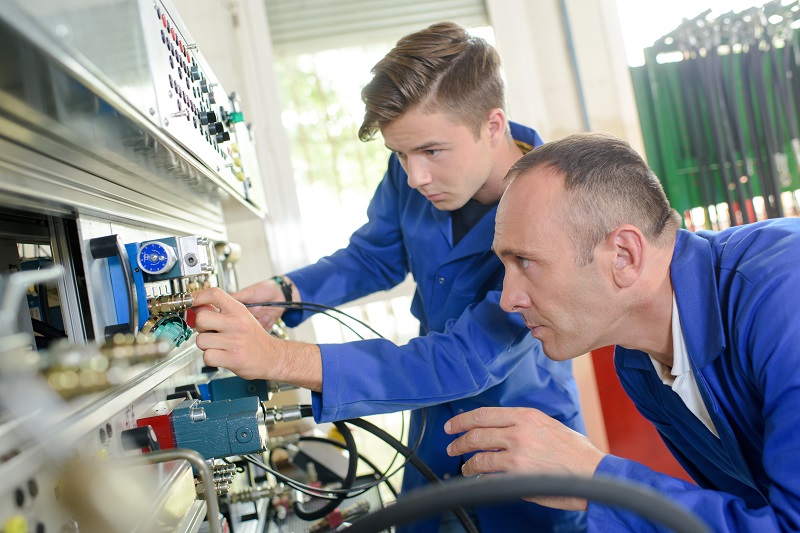
In order to help manufacturers achieve this, the UK’s manufacturing organisation, Make UK has announced that it is backing a new initiative by support platform Next Gen Makers to help manufacturing and engineering employers retain apprentices and maximise their investment in young people. Make UK will act as the official training partner and assist in the promotion to develop the "Engineering Apprenticeships: Best Practice Programme". The programme will help firms to overcome skills challenges and build talent. It will provide best practice resources and discussion forums that will allow engineering and manufacturing firms to implement proven methods adopted by others that have successfully run apprenticeship schemes for some time. Make UK is responsible for training 400 apprentices each year to its Technology Hub in Aston, Birmingham.
Adam Tipper, Managing Director at Next Gen Makers, said: “Make UK is the leading national manufacturing representative body and training facility, their insight and experience of apprenticeships is unparalleled and invaluable.”
https://nextgenmakers.co.uk/best-practice-programme