Current Editor Blogs
    China sets Phase-Out Date for Gas-Only Vehicles in its Southernmost Province
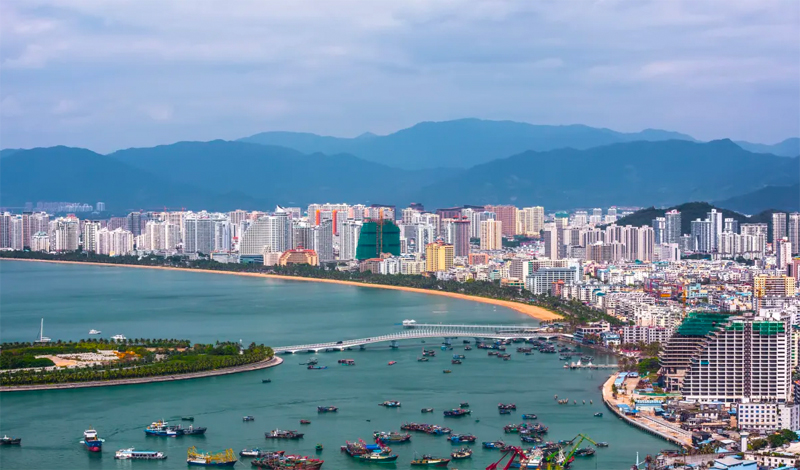
    Hainan, China, the PRC's smallest and southernmost province, has set a phase-out date for pure internal combustion engine vehicles of 2030.

    China sets Phase-Out Date for Gas-Only Vehicles in its Southernmost Province

    08/23/2022
    Jason Lomberg, North American Editor, PSD
    Tag: #Hainan #nevs #evs #hybridvehicles #china #powerelectronics

    ­China might be the world’s bigger polluter – with more than double the CO2 emissions of the next-closest country, the U.S. – but they’re taking steps, however meager, to rectify that. Kinda. In one very specific way.

    The People’s Republic has set an official phase-out date for the pure internal combustion engine in Hainan, China’s smallest and southernmost province. Pure gas-powered vehicles will officially disappear there in 2030.

    At that point, only New Energy Vehicles (BEVs, PHEVs and FCEVs) can be newly registered, though plug-in hybrids and other vehicles that are partially gas-powered will be permitted, as well.

    According to electricdrive.com, Hainan is aiming for its fleet to be 45% electric in eight years’ time, with a presumed monumental increase in infrastructure spending.

    Specifically, with regards to charging infrastructure, and according to Hainan, “The province will strive to make the average service radius of the charging network less than 1 kilometer in key pioneering areas, less than 3 kilometers in priority development areas, and less than 5 kilometers in promotion areas.”

    Similar to America’s own mandate for EVs in the federal fleet, Hainan is promising 100% EVs in its own fleet by 2030.

    Of course, all of this makes some incredible assumptions, mainly that a nation – or even a small part of it – with a plug-in vehicle penetration rate of 2.3% of all passenger cars, will suddenly embrace EVs at an enormously higher percentage (at least 42% or more).

    China might be the world’s leader in lithium-ion battery manufacturing, but few of those portable energy devices find their way onto PRC roads.

    And the impetus for this NEV drive, amongst other reasons, is the recent global heat wave which, in China, has led to industrial power restrictions and could even effect semiconductor supplies and availability.

    More than nine million people live on the island of Hainan.
    Recent
    Battery Life: How Can We Get More from Each Charge?

    Battery Life: How Can We Get More from Each Charge?

    04/12/2017
    Meng He, Executive Business Manager, Core Product Group, Maxim Integrated
     Creating Smaller, More Efficient Isolated Power Supplies with Iso-Buck Converters

    Creating Smaller, More Efficient Isolated Power Supplies with Iso-Buck Converters

    04/17/2017
    Reno Rossetti, Principal Technical Writer, Maxim Integrated
    Accelerating Isolated Power Supply Design

    Accelerating Isolated Power Supply Design

    05/10/2017
    Reno Rossetti, PhD, EE, Maxim Integrated
    The Pope Receives his First Electric Car

    The Pope Receives his First Electric Car

    06/02/2017
    Jason Lomberg, Editor, North America, PSD

    Power Systems Design

    146 Charles Street
    Annapolis, Maryland 21401 USA

    Power Systems Design

    Power Systems Design is a leading global media platform serving the power electronics design engineering community. It delivers in-depth technical content, industry news, and product insights to engineers and decision-makers developing advanced power systems and technologies.

    Published 12× per year across North America and Europe, Power Systems Design is distributed through online and fully digital editions, complemented by eNewsletters, webinars, and multimedia content. The platform covers key areas including power conversion, semiconductors, renewable energy, automotive electrification, AI power systems, and industrial applications—supporting innovation across the global electronics industry.