Current Editor Blogs
    Dogs Were one of the First Sources of Renewable Energy
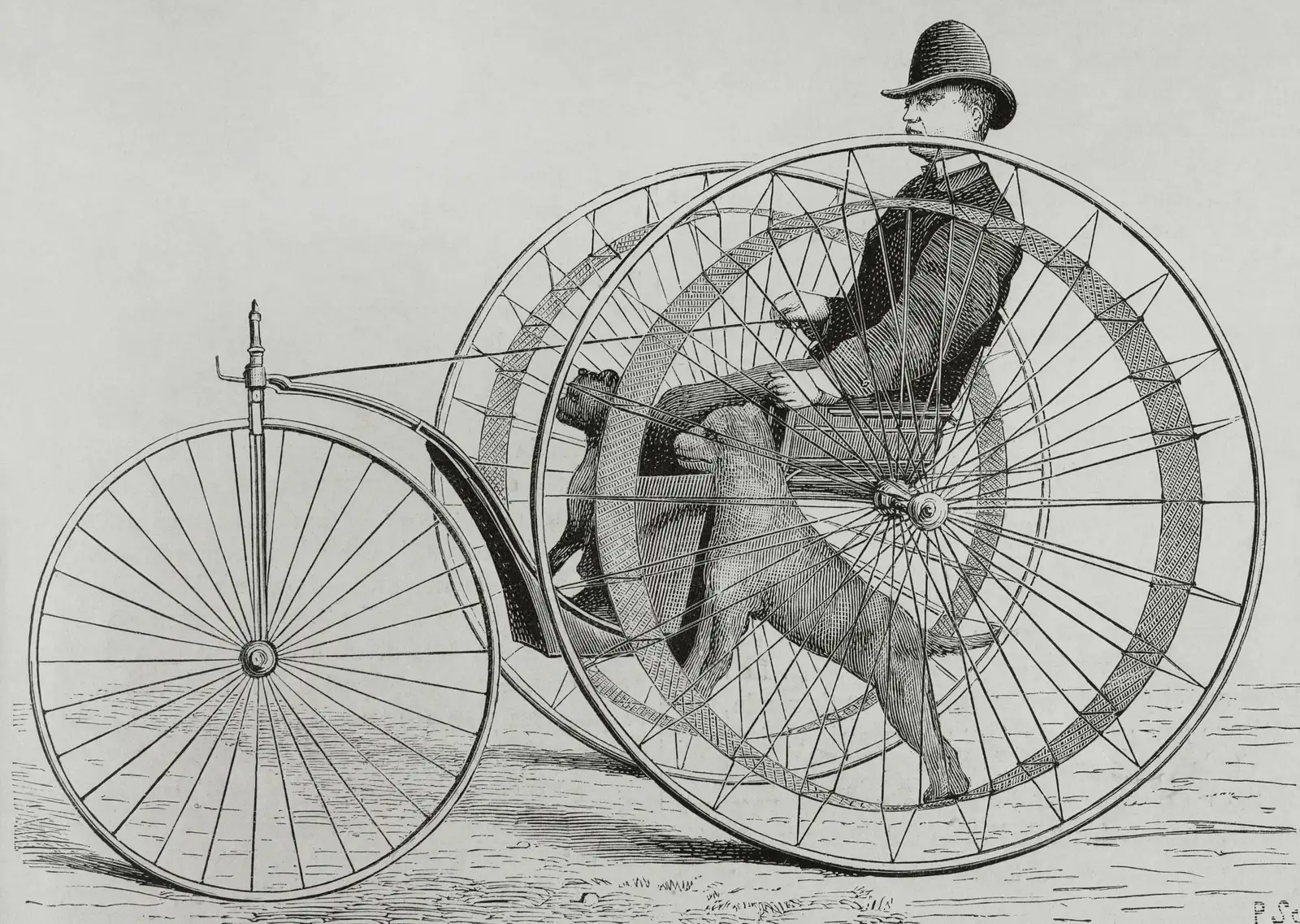
    The Cynophere, a dog-powered velocipede

    Dogs Were one of the First Sources of Renewable Energy

    04/18/2024
    Jason Lomberg, North American Editor, PSD
    Tag: #dogs #canine #renewableenergy #powerelectronics

    ­Alternative energy had a very different meaning in the 19th century. Often of the canine variety.

    Electricity in the 1800s was nothing new, with humans observing the phenomenon in electric fish thousands of years ago. Even electric vehicles go back further than most realize, predating the American Civil War by at least 3 decades.

    But as Gizmodo points out, an altogether different renewable energy sources dominated the 19th century – dogs. It wouldn’t even be accurate to call them “man’s best friend” back then, as the idea of canine companions is relatively new.

    Before that, dogs earned their keep via an assortment of analog functions – like the Cynophere, a dog-powered velocipede (essentially, a giant tricycle) invented by the French mechanic Narcisse Huret and patented on December 14, 1875.

    Many of these canine applications were variations of a treadmill. There was the The Richards Dog Engine, a sewing apparatus that could power four heavy sewing machines.

    The Feldt Dog Engine was another iteration of a canine-powered sewing machine.

    In one instance, a specific breed was created – the turnspit dog – to help turn meat over an open flame, though these dogs eventually fell out of favor (and went extinct) with the invention of roasting jacks that utilized clockwork, steam, or gas turbines.  

    Course, as Gizmodo mentions, evolving standards of animal cruelty eventually caused the canine power source to disappear (especially since the treadmill was originally created as an early 19th-century device).

    Nowadays, you might occasionally see dogs driving a sled, but for the most part, their professional obligations have ended.

    Recent
    Battery Life: How Can We Get More from Each Charge?

    Battery Life: How Can We Get More from Each Charge?

    04/12/2017
    Meng He, Executive Business Manager, Core Product Group, Maxim Integrated
     Creating Smaller, More Efficient Isolated Power Supplies with Iso-Buck Converters

    Creating Smaller, More Efficient Isolated Power Supplies with Iso-Buck Converters

    04/17/2017
    Reno Rossetti, Principal Technical Writer, Maxim Integrated
    Accelerating Isolated Power Supply Design

    Accelerating Isolated Power Supply Design

    05/10/2017

    Reno Rossetti, PhD, EE, Maxim Integrated
    The Pope Receives his First Electric Car

    The Pope Receives his First Electric Car

    06/02/2017
    Jason Lomberg, Editor, North America, PSD

    Power Systems Design

    146 Charles Street
    Annapolis, Maryland 21401 USA

    Power Systems Design

    Power Systems Design is a leading global media platform serving the power electronics design engineering community. It delivers in-depth technical content, industry news, and product insights to engineers and decision-makers developing advanced power systems and technologies.

    Published 12× per year across North America and Europe, Power Systems Design is distributed through online and fully digital editions, complemented by eNewsletters, webinars, and multimedia content. The platform covers key areas including power conversion, semiconductors, renewable energy, automotive electrification, AI power systems, and industrial applications—supporting innovation across the global electronics industry.