Erik Buell Launches Innovative New Electric Motorcyle Design
Most electric designs largely follow on from pre-existing ICE designs. EVs look much like their cousins that use combustion engines, and the same generally goes for designs for motorbikes and scooters. Its no real surprise as those designs have taken decades to perfect for both form and functionality. That’s not to say there are opportunities to use the change to electrification to innovate and improve the way that they work. Legendary motorcyle designer Erik Buell has used the opportunity presented by electrification to come up with his own take on how an electric motorcycle should operate.
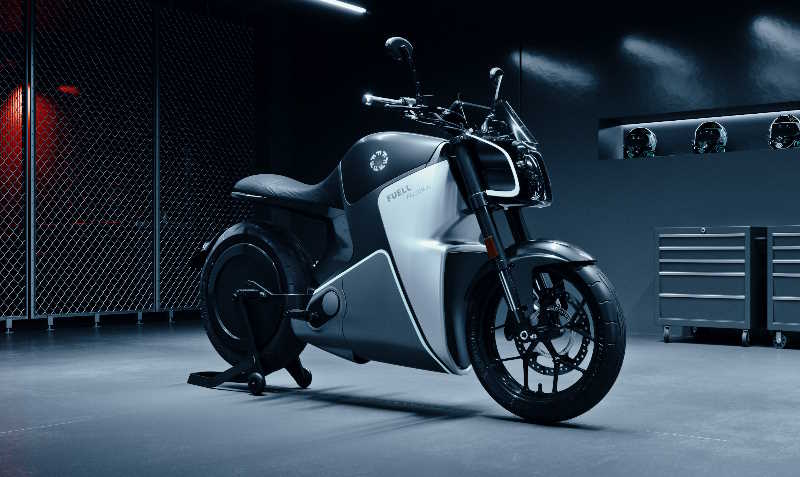
He claims that the Fllow is the most innovative design that he knows, saying that “it is the most radically innovative design that I have ever done, and from the steering head to the rear wheel is filled with new design concepts that no one has done before”
Although known mainly as a pioneer in racing technologies, the new design from Buell’s company Fuell has been designed specifically for commuters, with all the features that would be expected for that type of machine. For example, there is room for 10 gallons of storage, much like the large scooters that are popular with those who commute. This space provides space for the rider’s helmet, as well as for laptops and other work essentials. It is designed to be nimble and agile to allow the rider to weave through heavy traffic, and it has high acceleration to get away from problems. Additionally it provides 150 miles of urban range, charges quickly and weighs under 400 lbs.
One of the main changes in the way that the bike is designed is that the wheel-motor that drives the vehicle is the rear wheel. This has been specifically developed by FUELL for the Fllow to remove the secondary transmission (chain or belt) while maintaining power. The wheel is designed to work with large-diameter electric motor technology and it provides a sealed motor housing, while keeping everything as light as possible and allowing wheel/tire changes without disturbing the motor seals. Also, the design prevents wheel rim and spoke deformation from lateral and vertical loads from being transferred to the motor housings. Because the drive motor is a large diameter, the drive torsion forces go from the rotor out to the rim, therefore the spokes from the rotor carry no torsional loads, only road loads.
Other innovative features for the new vehicle is a battery pack that forms a major part of the chassis. The battery pack design is also modular to allow it to be updated in the event of new technology breakthroughs. The powertrain is optimized with components that have been integrated to maximize handling and power flow. An advanced braking system has allowed the removal of the rear brake pedal. Finally, the integrated chassis and power management has both traction and wheelie control.
.jpg)
Accelerating Isolated Power Supply Design
05/10/2017