Greater Manchester Adds 220 Electric Buses to its Fleet as Part of Ambitious Zero-Emission Target
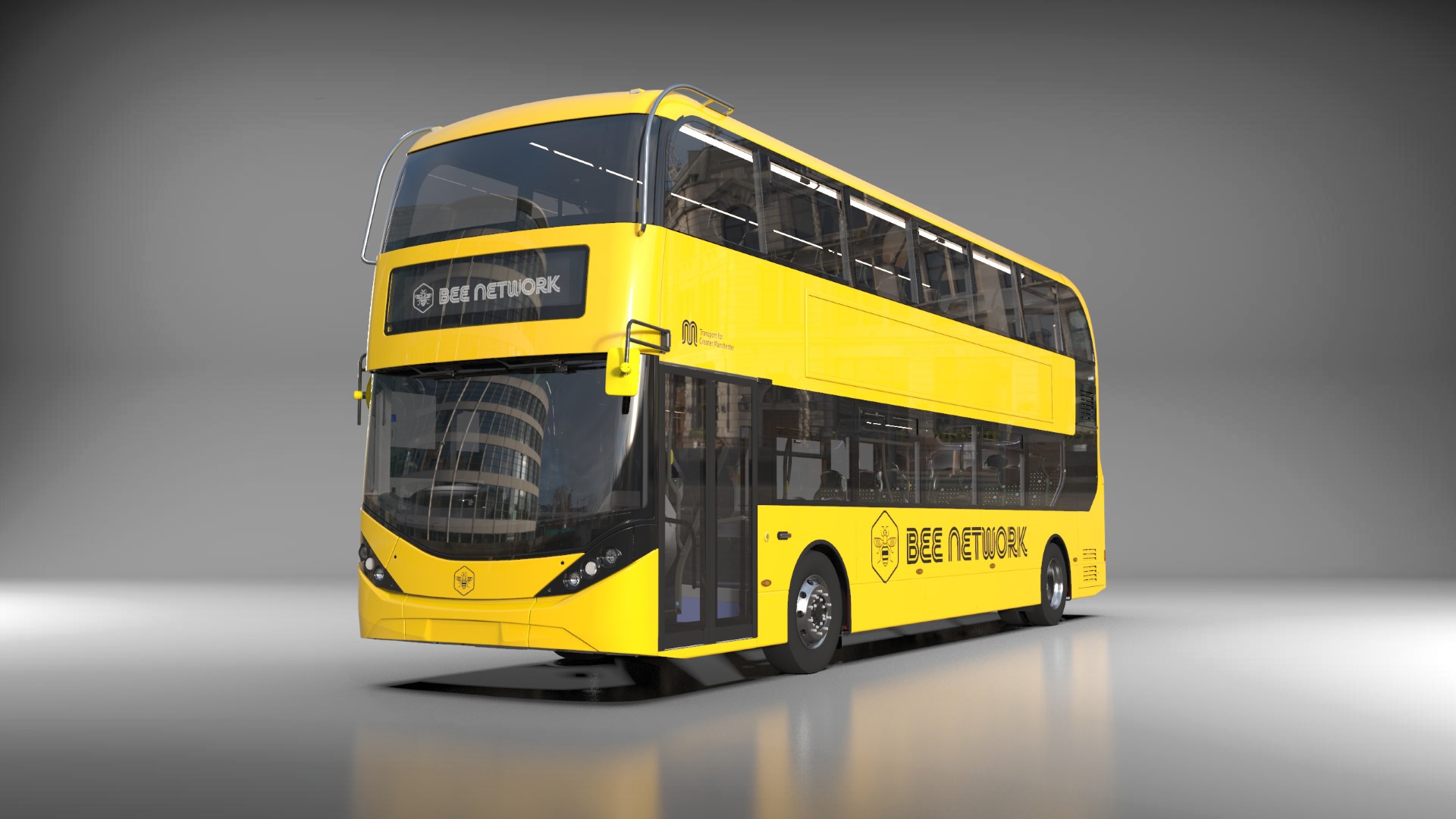
Greater Manchester has approved the purchase of an additional 220 battery-electric buses for their “Bee Network,” a county-wide initiative with an extremely ambitious renewable energy target.
To wit, Greater Manchester aims to convert its entire Bee Network bus fleet to zero-emission operation by 2030. And given that this target is at least 10-20 years ahead of similar global aspirations – including stalwart progressive enclaves like New York City, which wants to convert all 5,800 of the city’s buses to electric by 2040 – Greater Manchester has a tall task ahead of it.
All of this is part of a £1.07 billion sustainable transport program for the Greater Manchester region, with the aforementioned zero-emission target by the end of the decade.
“The Bee Network is making public transport more affordable, frequent and cleaner,” said Vernon Everitt, Transport Commissioner for Greater Manchester. “We are accelerating investment to introduce even more electric buses to add to those that already comprise 20% of our vehicles, marking another significant step towards the goal of a fully zero-emission bus fleet by 2030.”
Right now, about 20% (350 units) of the Bee Network’s total fleet is battery-electric buses, and this newest procurement initiative should switch a further 13% of their buses from diesel to fully electric operation.
As mentioned, Greater Manchester’s electric ambitions are fairly unique and more than a little ambitious. Even an early adopter like King County Metro in Seattle, WA only has 40 electric buses in service and is aiming for a 100% renewable energy-powered fleet by 2035.
The first units from Greater Manchester’s new order of 220 battery-electric buses should enter service by the end of 2026.